In a quiet Norwegian countryside, where fields rolled gently toward distant hills and narrow paths wound between stone fences and wooden farmsteads, there lived an old woman known for her thrift and determination. She was neither wealthy nor grand, but she was practical, sharp-minded, and not easily discouraged.
One market day, she decided to buy herself a pig.
Explore the warmth and wit of Mediterranean storytelling, where love and wisdom intertwine
It was a fine little pig, round, pink, and lively, with bright eyes and a curl to its tail. The old woman counted out her coins carefully, tied a rope around the pig’s middle, and began the long walk home along the narrow rural path.
The day was fair. The air smelled of hay and distant sea wind. Birds flitted from fence to fence.
Everything might have gone smoothly, had it not been for the stile.
The Pig Refuses
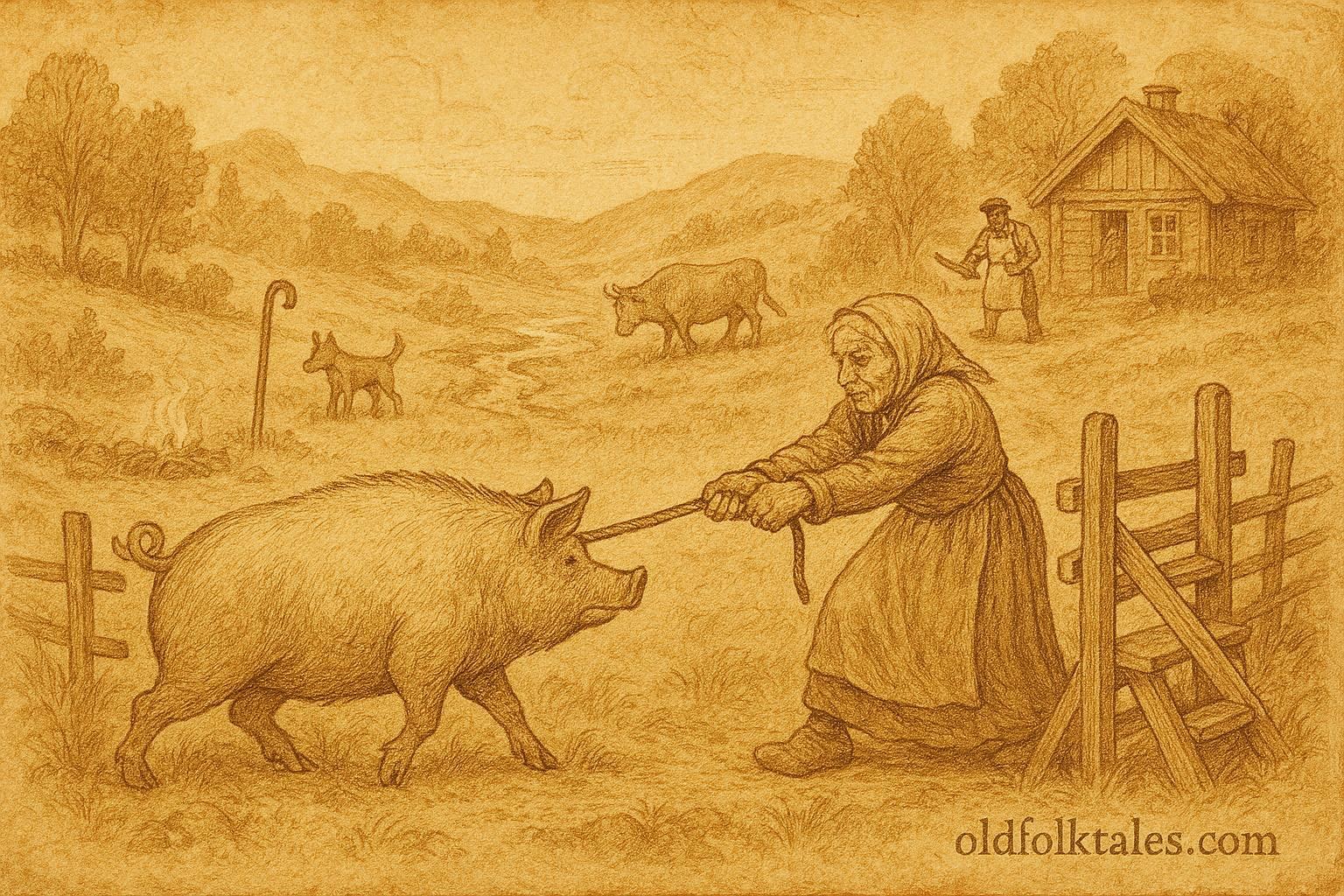
A wooden stile stood between the old woman and her home field. It was a simple crossing built over a low stone fence, two steps up, two steps down. Farmers used it daily. Sheep crossed it without complaint. Even geese managed it in their awkward way.
But when the old woman reached the stile and tugged on the rope, the pig planted its feet.
“Come along,” she said firmly.
The pig did not move.
She tugged harder.
The pig squealed and pulled back.
“Up you go!” she insisted.
The pig would not budge.
Now the old woman was patient, but not endlessly so. She reasoned with the pig. She coaxed. She scolded. She tried lifting one small hoof onto the first step.
The pig wriggled free and squealed louder.
The sun dipped lower. The shadows lengthened.
The old woman wiped her brow and muttered, “Very well. If you won’t go of your own will, I shall find someone who will make you.”
And so began the chain of requests that would ripple across the countryside.
The Dog
She marched back along the path until she found a farmer’s dog lounging in the yard.
“Dog,” she said, hands on hips, “bite the pig. The pig won’t go over the stile, and I must get home.”
The dog lifted his head lazily.
“Why should I bite the pig?” he replied in that practical manner of creatures who see no benefit in extra labor. “The pig has done me no harm.”
The old woman frowned.
“If you won’t bite the pig, I shall find someone who will make you.”
And she continued on.
The Stick
She found a sturdy stick leaning beside a shed.
“Stick,” she commanded, “beat the dog. The dog won’t bite the pig, the pig won’t go over the stile, and I must get home.”
The stick lay motionless.
“Why should I beat the dog?” it seemed to say. “I am content where I am.”
The old woman tapped her foot.
“If you won’t beat the dog, I shall find someone who will make you.”
On she went.
The Fire
Near a cottage hearth burned a steady flame.
“Fire,” she called, “burn the stick. The stick won’t beat the dog, the dog won’t bite the pig, the pig won’t go over the stile, and I must get home.”
The fire crackled softly but gave no sign of movement beyond its natural flicker.
“Why should I burn the stick?” it might have said. “I warm the house as I am.”
The old woman sighed sharply.
“If you won’t burn the stick, I shall find someone who will make you.”
And still she went on.
The Water
By the edge of a stream, she called out, “Water, quench the fire. The fire won’t burn the stick, the stick won’t beat the dog, the dog won’t bite the pig, the pig won’t go over the stile, and I must get home.”
The stream babbled pleasantly over stones.
It made no effort to rise.
“Why should I quench the fire?” the water might have murmured.
The old woman’s patience grew thin as late sunlight gilded the hills.
“If you won’t quench the fire, I shall find someone who will make you.”
She continued her determined march.
The Ox
In a nearby field grazed an ox.
“Ox,” she cried, “drink the water. The water won’t quench the fire, the fire won’t burn the stick, the stick won’t beat the dog, the dog won’t bite the pig, the pig won’t go over the stile, and I must get home.”
The ox chewed slowly.
“Why should I drink the water?” it might have wondered.
The old woman crossed her arms.
“If you won’t drink the water, I shall find someone who will make you.”
The Butcher
She found a butcher sharpening his knife.
“Butcher,” she said firmly, “kill the ox. The ox won’t drink the water, the water won’t quench the fire, the fire won’t burn the stick, the stick won’t beat the dog, the dog won’t bite the pig, the pig won’t go over the stile, and I must get home.”
The butcher blinked.
“Why should I kill the ox?” he asked. “It is not mine.”
The old woman narrowed her eyes.
“If you won’t kill the ox, I shall find someone who will make you.”
The Rope
At last she came upon a coil of rope.
“Rope,” she demanded, “hang the butcher. The butcher won’t kill the ox, the ox won’t drink the water, the water won’t quench the fire, the fire won’t burn the stick, the stick won’t beat the dog, the dog won’t bite the pig, the pig won’t go over the stile, and I must get home.”
The rope lay quietly. Why should it hang the butcher? But something in the old woman’s fierce determination must have stirred it. For at last, the rope agreed.
The Chain Reverses
The rope threatened the butcher. The butcher agreed to kill the ox. The ox agreed to drink the water. The water agreed to quench the fire. The fire agreed to burn the stick. The stick agreed to beat the dog. The dog agreed to bite the pig. And the pig, startled by the snapping teeth of the dog, leapt over the stile in one terrified bound.
The old woman followed swiftly, gathered her rope, and marched home triumphantly. The countryside settled again into calm. The pig trotted obediently beside her.
A Simple Lesson
By the time she reached her cottage, the stars were rising over the fjords. The old woman untied the pig and secured it in its pen.
She had not lifted the pig herself. She had not struck it. She had not surrendered to frustration.
Instead, she had followed the chain of cause and effect until the right pressure was applied in the right place.
And thus, order was restored.
Moral Lesson
Persistence and understanding of cause and effect can resolve even the most stubborn obstacles. Community interdependence, however reluctant, ensures that actions ripple outward and sometimes humor and determination are stronger than force.
Knowledge Check
1. Why would the pig not cross the stile?
The pig stubbornly refused, creating the central conflict of this Norwegian chain tale.
2. What type of folktale is this?
It is a chain or cumulative tale, common in Scandinavian oral tradition.
3. Who recorded this Norwegian variant?
Peter Christen Asbjørnsen and Jørgen Moe in Norske Folkeeventyr (1841).
4. What theme does the story emphasize?
Cause and effect and the interdependence of community roles.
5. Why is humor important in this folktale?
The exaggerated chain of requests creates rhythm and comic repetition.
6. What cultural setting shapes the story?
Rural Norwegian farm life, reflecting everyday concerns and practical wit.
Source: Peter Christen Asbjørnsen & Jørgen Moe, Norske Folkeeventyr, 1841.
Cultural Origin: Norwegian folklore.