In the rugged heights of the Jura Mountains, where mist curled around pine-clad slopes and clear alpine streams trickled through mossy valleys, locals spoke in hushed tones of a powerful and mysterious stone: La Pierre des Caillettes, the Rock of Punishment. Travelers, shepherds, and villagers alike told tales of its wrath, how it would roll from its resting place to crush the greedy and those who disrespected the mountains’ bounty.
This is the story of a stone both feared and revered, recorded in oral folklore and Swiss naturalist accounts from the 18th century. It is a tale of moral justice, the sanctity of resources, and the power of nature.
Explore the wit and wisdom of Western Europe, where humor and virtue often go hand in hand
A Cursed Stone
The Rock of the Caillettes was no ordinary boulder. Situated on a steep slope in the Val de Travers, it rested atop a narrow ledge, its surface scarred by centuries of wind and rain. Locals said the stone had been cursed long ago, not through magic, but through the collective outrage of nature itself. Those who dared to take more than their fair share of alpine herbs, fruits, or water would find that the mountain responded with swift retribution.
Shepherds spoke of the stone as if it were alive. “It watches,” they said, “and it punishes. No theft goes unseen, no greed goes unchallenged.” Children were warned never to play carelessly near it, and travelers were instructed to show humility when crossing the slopes.
The Tale of Two Shepherds
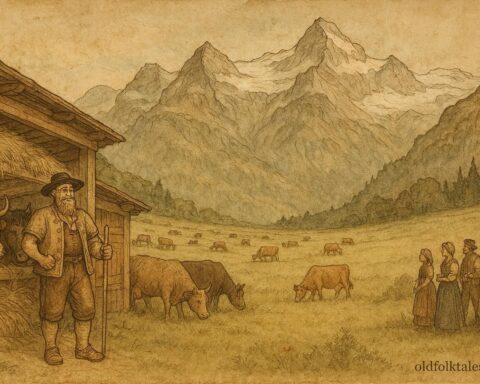
One summer, two shepherds, brothers by blood but very different in character, tended their flocks near the Rock of the Caillettes. Pierre, the elder, was careful, patient, and respectful of the mountain. He took only what he needed from the herbs and streams, leaving enough for the plants, the animals, and future travelers. His younger brother, Luc, was greedy and impatient, gathering more than necessary and trampling the ground without thought.
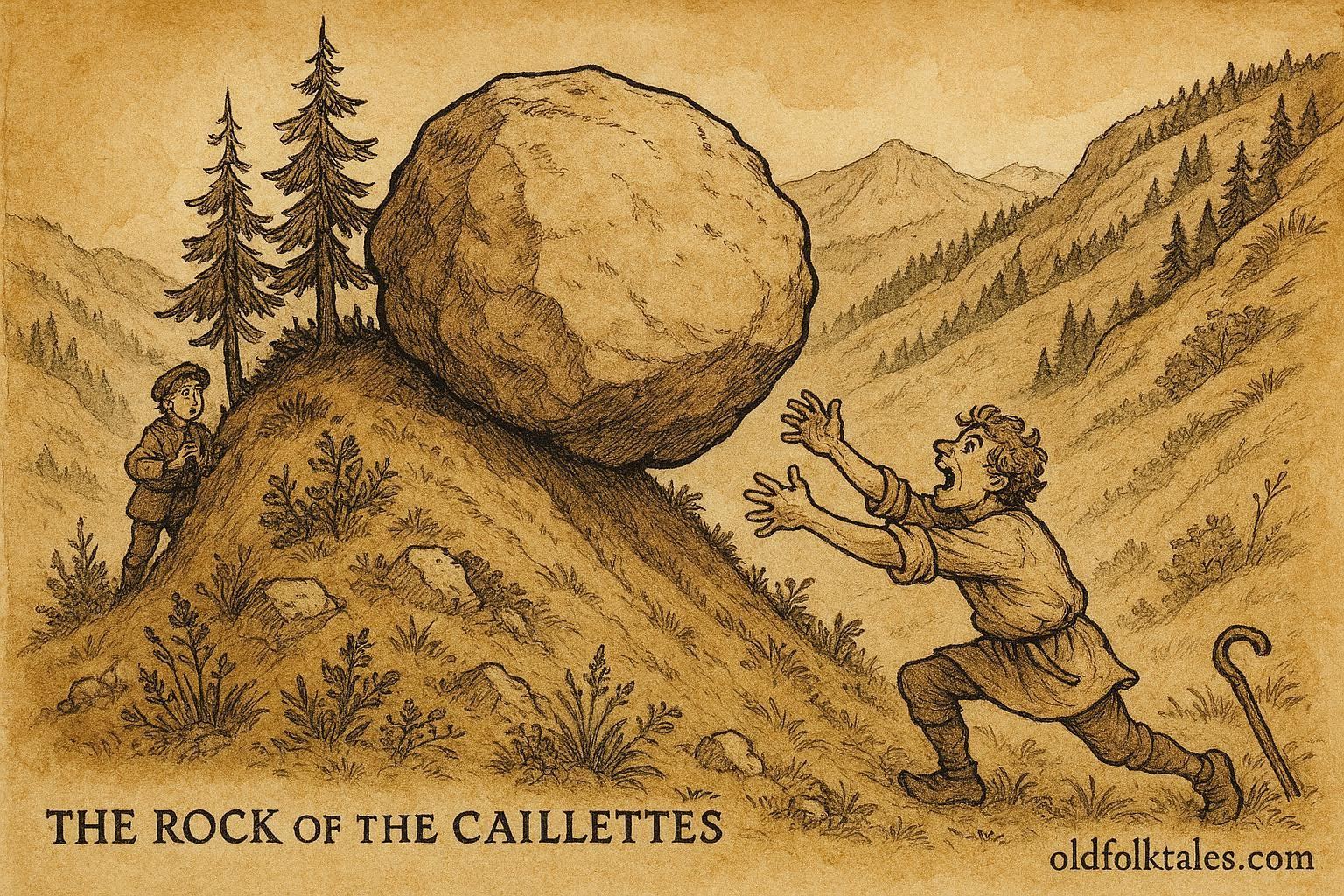
One morning, Luc spotted a patch of rare alpine herbs near the rock. Ignoring his brother’s warnings, he scooped the plants into his basket, laughing at the thought of selling them for extra coin. Pierre watched, troubled, and reminded him of the old tales. “The rock does not forgive, Luc,” he warned. “Take only what you need, or it may move against you.”
Luc scoffed. “Stories to scare children! A stone cannot punish a man!”
The Mountain’s Justice
That evening, as Luc tried to descend with his heavy basket, a deep rumble echoed through the valley. The Rock of the Caillettes began to tremble, as if awakening from a centuries-long slumber. Before Luc could react, the boulder loosened from its ledge and rolled down the slope with terrifying speed. Luc dropped his basket in terror, scrambling to avoid the advancing stone.
Miraculously, he escaped with minor injuries, but the basket was destroyed, and the herbs crushed. Luc’s greed had been punished, and the lesson of the mountain’s justice was written plainly on the ruined plants and the marks of the rolling stone.
Pierre, by contrast, had gathered his herbs carefully and respectfully, and the stone did not stir near him. His humility and diligence protected him, showing the mountain’s power was not indiscriminate but moral in nature.
Stories of Travelers
Over the years, the Rock of the Caillettes became central to local folklore. Travelers recounted seeing the stone move seemingly of its own will when someone strayed from the path or attempted to take more than necessary.
A merchant seeking rare herbs for profit once ignored the local warnings. As he loaded his pack with an excessive quantity, the ground beneath him began to shake. Stones tumbled from the ridge above, narrowly missing him, and the merchant fled in terror, leaving his ill-gotten gains behind. Villagers remarked that he had been spared for his quick repentance, but his pride and greed had not gone unnoticed.
Another tale described a shepherd who, after tending his flocks with care and respecting the mountain’s limits, discovered a patch of herbs that seemed more abundant and sweeter than usual. It was said the rock itself had rewarded his virtue, ensuring that those who honored nature were blessed.
Symbolism of the Rock
The Rock of the Caillettes symbolized more than punishment; it was a reminder of balance between humans and nature. In the Swiss Jura, where the mountains were both beautiful and dangerous, respecting resources was essential for survival. The stone’s movement served as a metaphor for natural justice: greed and disrespect had consequences, while humility and care brought reward.
The tales encouraged communities to share resources, protect the environment, and approach the mountains with reverence. Farmers, herders, and villagers taught children that every plant, stream, and slope was sacred, deserving of attention and restraint.
Lessons of the Mountains
The story of La Pierre des Caillettes reinforced moral behavior through tangible consequences. While the stone’s wrath might seem supernatural, it represented the natural and social repercussions of selfishness: destroyed crops, lost resources, and social disapproval.
In Val de Travers, these tales became part of everyday life. Families explained that the mountains were guardians of the land, rewarding those who worked honestly and punishing those who acted with greed or recklessness. The Rock of the Caillettes reminded villagers that survival depended not only on skill but on ethical conduct, humility, and respect for the environment.
Moral Lesson
Respect for shared resources and nature ensures safety, prosperity, and communal harmony. Greed and disregard for moral limits invite misfortune, while humility and care are rewarded by both nature and society.
Knowledge Check
1. What is La Pierre des Caillettes?
A cursed or enchanted rock in the Val de Travers that punishes greed and rewards respect.
2. How do the little folk, or in this case, the stone, enforce justice?
By moving or rolling to crush or intimidate those who take more than their share of herbs, water, or mountain resources.
3. Who were Pierre and Luc?
Two shepherd brothers, Pierre respectful and cautious, Luc greedy and careless.
4. What happens to greedy individuals near the rock?
They experience danger, destruction of their resources, or direct punishment from the stone.
5. What moral themes are emphasized in this folktale?
Respect for resources, humility, moral justice, and environmental stewardship.
6. Where and when was this folklore documented?
French-speaking Jura Mountains, Switzerland, recorded in oral and naturalist writings circa the 1700s.
Source: Oral folklore documented in Swiss naturalist writings, 18th century.
Cultural Origin: French-speaking Jura Mountains, Switzerland.