In the rolling hills of Northern Hungary, where green pastures stretched beneath the Carpathian slopes and streams glimmered like threads of silver, a humble village lay tucked between forests and meadows. Life was hard but simple. Villagers raised sheep, tended orchards, and fished in the clear rivers that wound through the valleys. Among them was a young shepherd named Béla, slender and wiry, with eyes bright from years of wandering the hills with his flock.
Though poor, Béla possessed a sharp mind and a courageous heart. He understood the ways of the land, the whispers of the wind, and the signs of the animals around him. Villagers often relied on him for guidance when danger approached, though they were unaware of the secret that would soon make him a legend.
One misty morning, while tending his sheep near a rocky ridge, Béla noticed a faint glimmer beneath an ancient oak. Curious, he approached and discovered a silver horn, delicate yet shining with an otherworldly light. Etched along its surface were patterns of twisting vines and small, mysterious creatures, almost imperceptible to the casual observer.
As he picked it up, a voice seemed to echo in his mind, soft and commanding:
“Blow me only in times of need. Call only for what is just, and I shall summon those who heed the call.”
Béla, though astonished, understood instinctively that this was no ordinary horn. He tucked it safely in his satchel, returning to the village with both excitement and caution.
Weeks passed, and life continued peacefully. Yet, whispers of bandits moving through the nearby hills soon reached the village. They were notorious for plundering isolated settlements, taking food, livestock, and valuables by force. Fear gripped the villagers.
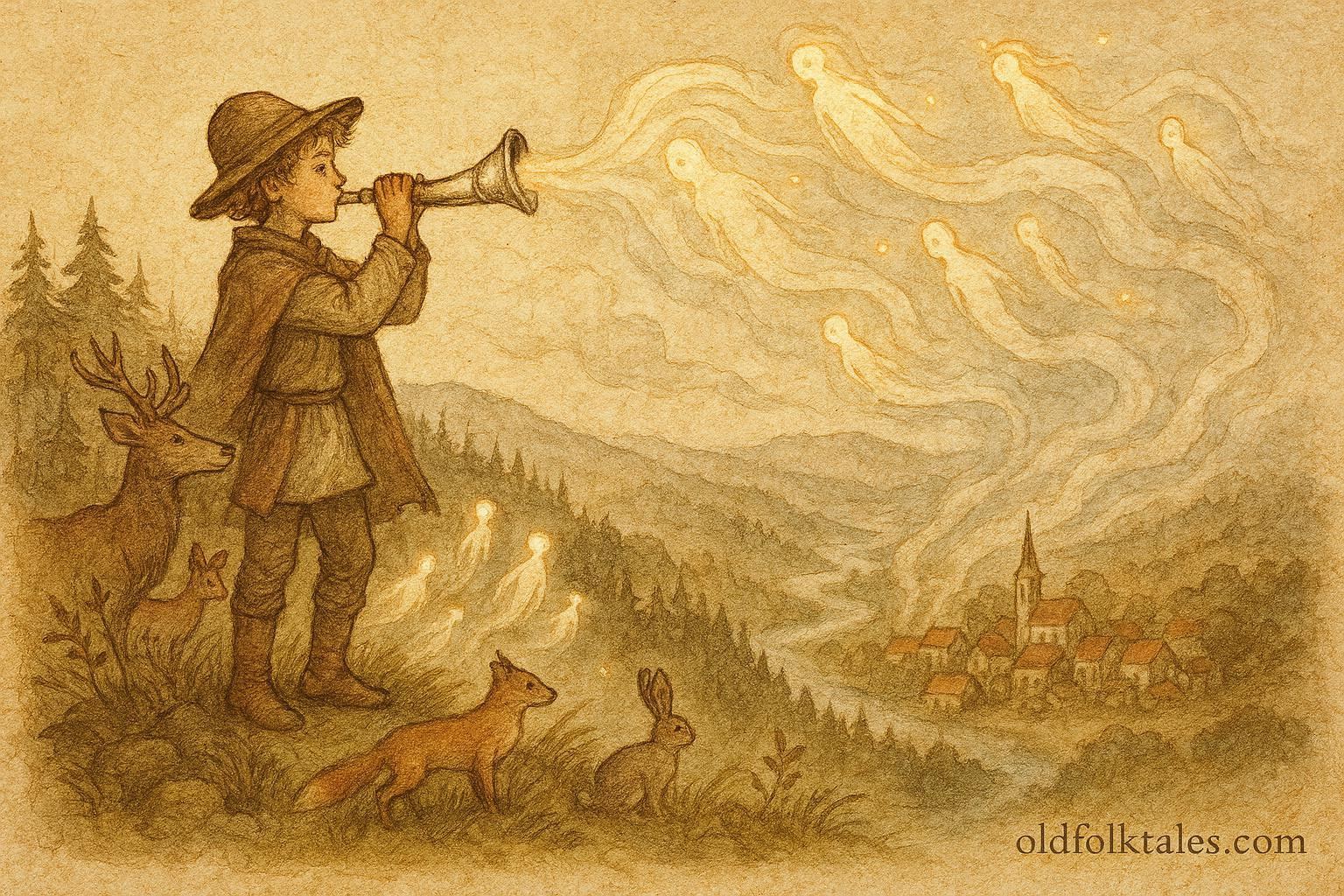
On a moonless night, Béla climbed to the ridge overlooking the valley. He could see torches flickering in the distance—bandits, moving like shadows through the trees. Heart pounding, he drew the silver horn from his satchel and lifted it to his lips.
As he blew, a clear, pure note rang across the hills, echoing off cliffs and ridges. The sound was unlike any horn the villagers had heard, mystical yet commanding. From the forests, streams, and meadows, creatures appeared: wolves with silver-tipped fur, wise owls with eyes like molten gold, and gentle deer with antlers that glimmered in the starlight. Even spirits of the forest, long unseen by humans, emerged silently, ready to defend the village.
The bandits, startled by the sudden appearance of glowing animals and strange lights, faltered in confusion. Wolves howled in unison, birds shrieked from the treetops, and deer charged with precision that seemed guided by intelligence beyond mere instinct. Bandits scattered, tripping over roots and falling into hidden gullies, while the spirits whispered illusions and shadows that misled them deeper into the forest, far from the village.
By dawn, the village was safe, untouched by the marauders. Béla, breathing heavily, realized that courage, cleverness, and the help of nature’s allies had prevailed where swords alone might have failed.
Word of the shepherd’s bravery spread, though few knew the secret of the horn. The village elders praised Béla for his wisdom and foresight. They began to treat the forests and animals with deeper respect, understanding that humans were part of a larger world, one in which harmony and prudence were as vital as strength.
Over the years, Béla used the silver horn sparingly, only in true emergencies. Each time he blew it, the forest answered, not because it feared him, but because he acted justly and with care. The animals and spirits he summoned became unseen guardians of the village, ensuring safety without causing harm to those who lived righteously.
One harsh winter, when snow piled high against the rooftops and rivers froze solid, bandits attempted another raid. This time, Béla prepared beforehand, using the horn to call animals and spirits to positions around the village. He also set clever traps, simple yet effective: hidden pits, nets, and cleverly camouflaged barriers. When the bandits arrived, they were met with a forest alive with motion, voices carried on the wind, and creatures they could not name. Panic overtook them, and they fled once more, never returning to those hills.
Béla’s fame grew beyond his village. Travelers told stories of the shepherd who commanded the creatures of the forest with a silver horn, a man who outwitted danger through intelligence, courage, and respect for the natural world. Yet Béla himself remained humble. He never used the horn for personal gain, wealth, or glory. He taught the villagers that the greatest power was not the horn itself, but the wisdom to use it wisely and the heart to act with justice.
Years later, as he grew older, Béla entrusted the silver horn to the next generation of shepherds, ensuring that its magic would serve the village only to protect, never to dominate. The animals and spirits continued their guardianship, guided by the sound of the horn and the virtue of those who wielded it.
And still, to this day, travelers say that if you climb the hills of Northern Hungary on a quiet night, you may hear a silver note echoing through the forests, calling unseen guardians to watch over the land, a reminder that cleverness, courage, and harmony with nature are forces stronger than any sword.
Moral Lesson
The Silver Horn teaches that resourcefulness, courage, and clever thinking can triumph over brute force. True strength lies in wisdom, justice, and respect for nature and community. Bravery paired with cleverness ensures protection and balance without unnecessary harm.
Knowledge Check
1. Who is Béla?
A poor shepherd from Northern Hungary who discovers the magical silver horn.
2. What does the silver horn do?
It summons helpful animals and spirits when blown, but only for just purposes.
3. How does Béla use the horn to protect the village?
He calls animals and spirits to drive away bandits and uses clever traps to ensure safety.
4. What lessons does Béla teach the villagers?
Respect for nature, harmony with the world, and the value of cleverness and courage over brute strength.
5. Where does this folktale originate?
Northern Hungary; Magyar peasant folklore, collected in the late 19th century.
6. What is the central theme of the story?
Resourcefulness, courage, clever problem-solving, and the triumph of wisdom over force.
Source: Collected in Northern Hungarian folk traditions, late 19th century (c. 1888).
Cultural Origin: Hungarian (Magyar) peasant folklore