In the northern lands of Finland, where winters stretched long and cold and the forests stood deep and silent, the sauna was more than a place of warmth.
It was a sanctuary.
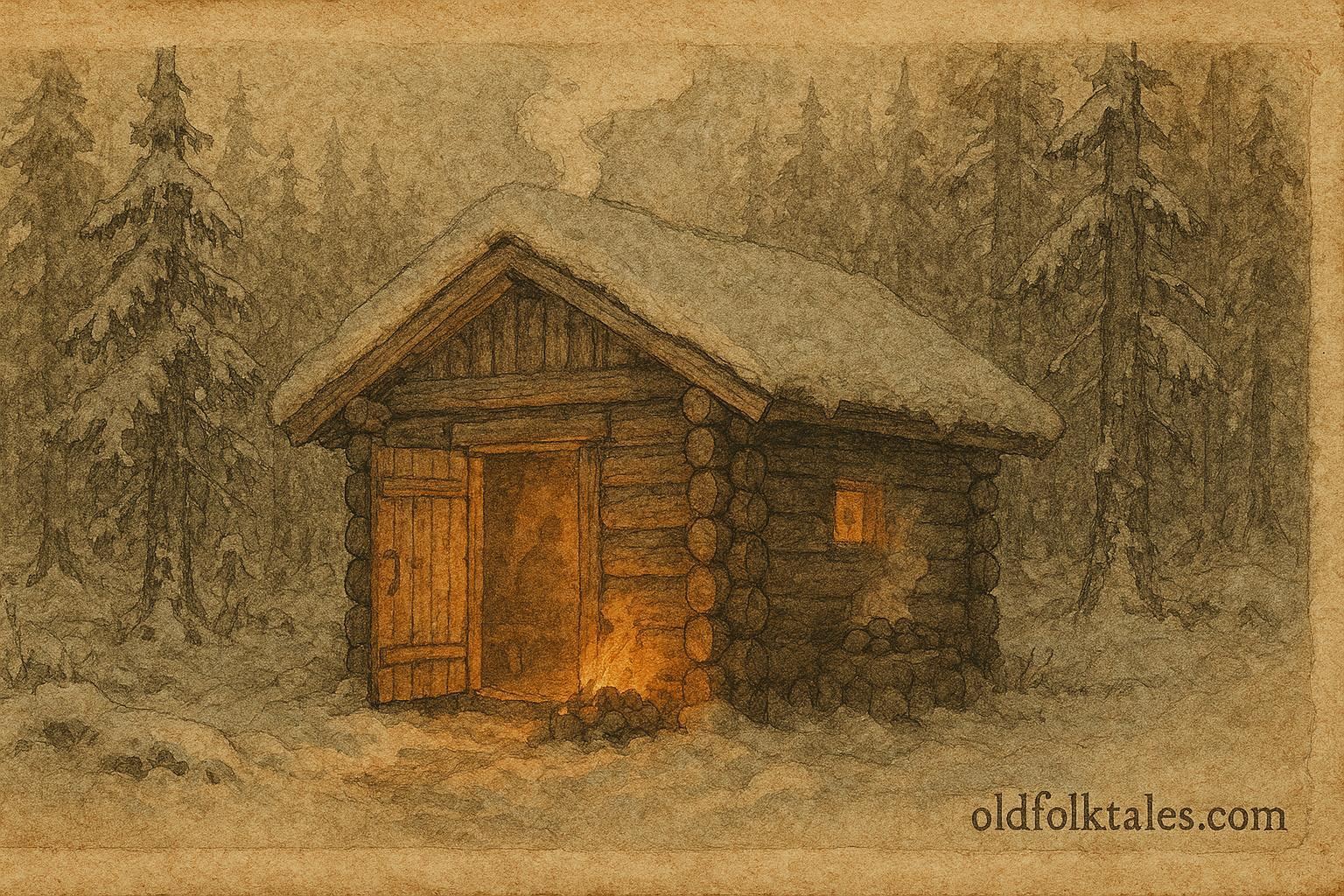
Every household, no matter how humble, held the sauna as a space apart from the rest of the home. Built carefully of wood, warmed by stones and fire, it stood not only as a place to cleanse the body, but to restore the spirit.
And within it, the people believed, something lived.
An unseen presence.
The spirit of the sauna.
It was not spoken of lightly, nor treated as a thing of fear. Rather, it was respected, honored as a quiet guardian of the space, one that ensured warmth, healing, and safety for those who entered with care.
In one such household, nestled at the edge of a quiet village, lived a family who understood these traditions well.
The father, the mother, and their children followed the old ways as they had been taught. When the sauna was prepared, it was done with attention and respect. The fire was tended carefully. The water was poured with intention. The space was entered with calm voices and mindful steps.
Before each use, a small offering was left, a gesture of acknowledgment to the unseen presence that shared the space.
And in return, the sauna gave them what they needed.
Warmth in winter.
Relief from weariness.
A place of quiet where the noise of the world seemed to fall away.
But not all remembered these ways.
One winter, a distant relative came to stay with the family. He was a man who spoke loudly, laughed without restraint, and dismissed what he did not understand.
When he was told of the sauna and its spirit, he scoffed.
“A spirit?” he said. “In a bathhouse?”
The father did not argue.
“It is not for you to believe,” he said calmly. “Only to respect.”
But the man shook his head.
“I will use it as I please,” he replied.
That evening, the sauna was prepared.
The fire burned steadily, the stones glowed with heat, and the air filled with rising steam. The family entered first, as was their custom, moving quietly, speaking softly.
When they finished, they left the space as they had found it, clean, calm, and undisturbed.
Then the visitor entered.
He did not pause.
He did not acknowledge the space.
Instead, he moved carelessly, throwing water onto the stones without thought, speaking loudly, his voice echoing against the wooden walls.
The air, once balanced, seemed to shift.
The warmth grew uneven.
The steam became heavy, almost stifling.
Still, the man laughed.
“See?” he called out. “Nothing is here!”
But something was.
Though unseen, the spirit of the sauna was not absent.
It had watched.
And now, it responded.
The fire began to falter.
The heat, once steady, turned unpredictable, rising sharply, then fading without warning.
The man paused.
“This place is poorly built,” he muttered.
He reached for more water, pouring it again over the stones.
This time, the steam rose too quickly.
It burned.
Not with fire, but with a sharp, stinging heat that forced him back.
The man coughed, wiping his face.
The air felt thick, pressing in around him.
He moved toward the door, but for a moment, it seemed heavier than before, harder to open.
A flicker of unease passed through him.
Outside, the family waited.
When he emerged, his expression had changed.
“You did not tell me it was like that,” he said.
The father looked at him steadily.
“We told you enough,” he replied.
The man said nothing more.
But the lesson was not yet complete.
In the days that followed, small things began to go wrong.
The sauna, once reliable, no longer behaved as it should. The fire was difficult to light. The stones did not hold heat as they once had. The warmth that had always come easily now required effort.
The family understood.
Something had been disturbed.
The mother spoke quietly.
“It must be made right,” she said.
That evening, they prepared the sauna again, but this time, with greater care.
They cleaned the space thoroughly. They tended the fire with patience. And before entering, they left a simple offering, placed with intention and respect.
They spoke softly.
They moved gently.
And as the heat rose, it did so evenly.
The air returned to balance.
The warmth became what it had always been, steady, comforting, and calm.
The visitor, watching from a distance, said nothing.
But when he was invited to enter again, he hesitated.
This time, he removed his shoes carefully.
He stepped inside with quiet movements.
He spoke little.
And before he sat, he paused, just for a moment.
It was not belief that guided him.
It was understanding.
From that day on, the sauna returned to its proper state.
The warmth was restored.
The balance remained.
And though the spirit was never seen, its presence was felt, not as something to fear, but as something to honor.
For the people of the village knew that not all guardians make themselves known.
Some exist in the quiet spaces of daily life, asking only for respect.
And in return, they give more than can be easily seen.
Moral Lesson
Respect for tradition and unseen forces preserves harmony in everyday life. When we honor what we do not fully understand, we maintain balance and avoid unnecessary hardship.
Knowledge Check
1. What role does the sauna play in the folktale?
It is a sacred space for cleansing, healing, and spiritual balance in Finnish culture.
2. Who is the sauna spirit?
An unseen guardian believed to protect the sauna and maintain its harmony.
3. What mistake did the visiting man make?
He disrespected the sauna by behaving carelessly and ignoring traditions.
4. What happened after the spirit was disrespected?
The sauna became unstable, with uneven heat and discomfort.
5. How did the family restore balance?
They cleaned the sauna, made offerings, and followed traditional rituals with respect.
6. What is the central theme of the story?
Respecting traditions and unseen forces ensures harmony and well-being.
Source: Mythologia Fennica (1789)
Cultural Origin: Finnish domestic folklore