In a quiet Serbian village, nestled between green hills and whispering streams, there once lived a poor widow with her daughter and stepdaughter. The maiden, gentle and hardworking, spent her days spinning, cleaning, and tending to every chore in the house, while her stepmother and the lazy stepsister sat idly by the hearth, gossiping and eating the fruits of her labour.
The stepmother’s heart was filled with envy, for though the girl wore rags and had only coarse bread to eat, her beauty shone through her humility like sunlight breaking through storm clouds. The stepsister, pampered and spoiled, could not bear to be compared to her kind and diligent companion.
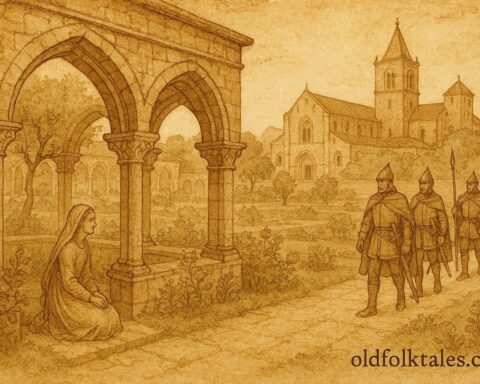
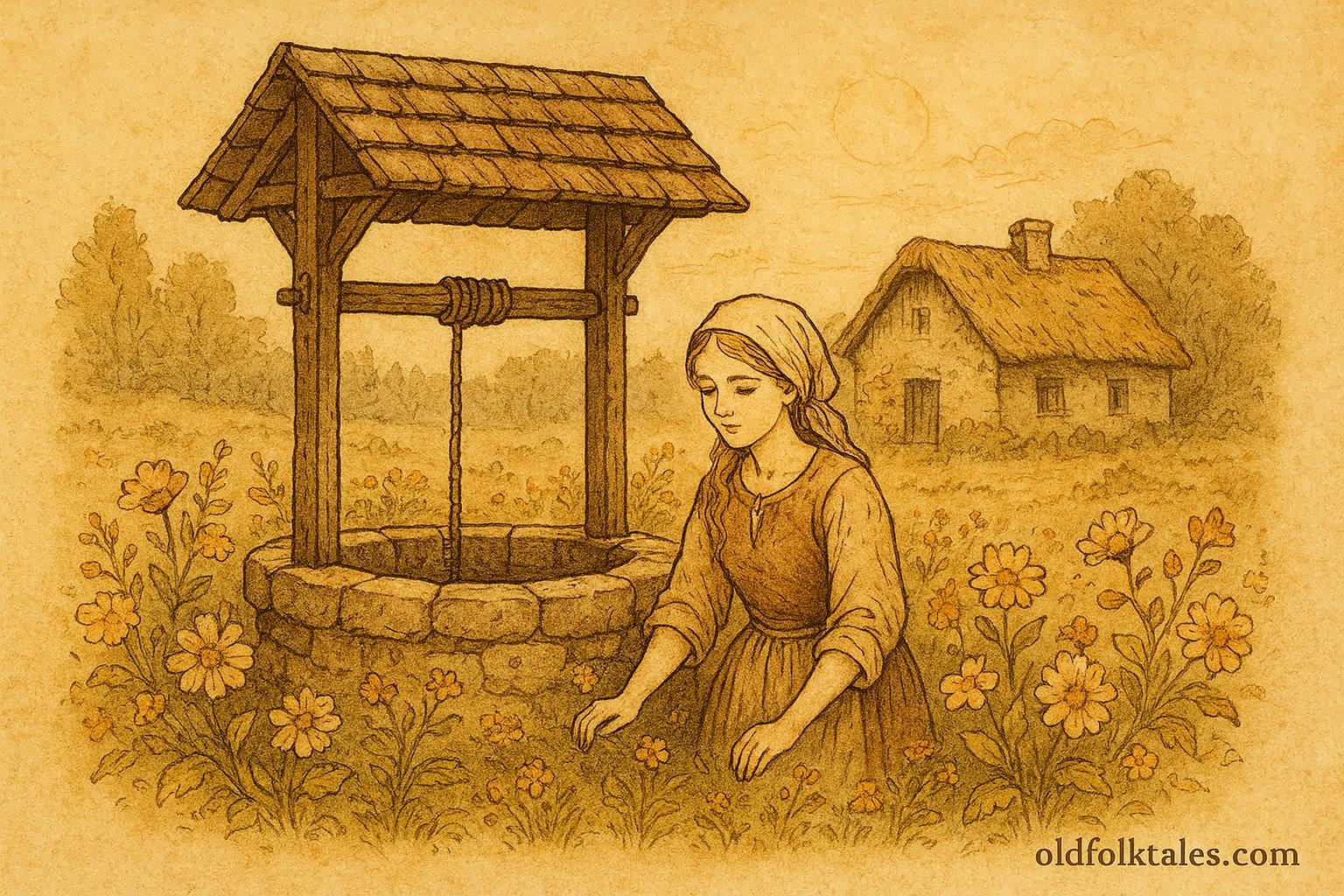
One winter afternoon, the good maiden sat spinning by the old well in the courtyard. Her fingers were numb from the cold, and her spindle slipped from her grasp, tumbling into the dark water below. Terrified, she ran to her stepmother to confess what had happened.
“You careless, useless creature!” the woman shouted, her face red with anger. “You will go down the well and fetch it yourself! At once!”
The poor girl, trembling with fear, obeyed. She climbed to the rim of the well and looked down into its deep, glimmering darkness. Taking a deep breath, she jumped.
When she awoke, she found herself in a meadow bathed in sunlight, filled with singing birds and the scent of wildflowers. Bewildered, she followed a narrow path that led her to a little cottage where an old woman sat spinning at her door. The woman’s eyes were kind and her smile gentle.
“Good day, child,” said the old woman. “You have come to my world. If you serve me faithfully and work with a willing heart, I will reward you well.”
Grateful for the kindness, the girl agreed and began her work. She swept the cottage, fetched water, and spun flax until her fingers ached. Yet she never complained, for her heart was humble and pure. The old woman saw her goodness and loved her dearly.
After some time, the girl grew homesick and asked if she might return to her own world. The old woman nodded. “You have been diligent and kind,” she said, “and for that, you shall be rewarded.”
She led the maiden to a large chest and said, “Take the one your heart tells you to.” Among many glittering boxes, the girl chose the smallest and simplest. The old woman smiled and placed it in her hands. “Go now, my child. When you return home, open it and see what awaits.”
As the girl stepped out of the meadow, she felt a strange lightness in her feet. When she looked down, flowers bloomed wherever she walked—roses, violets, and lilies sprang up on the path behind her.
She climbed out of the well and hurried home. Her stepmother and stepsister gaped in amazement at the blossoms that marked her every step. When she opened the small chest, out poured gold coins, shining jewels, and threads of silver light.
Greed burned in the stepmother’s heart. That night, she turned to her own daughter. “You will do exactly as she did,” she whispered. “Then we too shall live in wealth and ease.”
The next morning, the lazy girl threw her spindle into the well and jumped after it. Like her stepsister, she found herself in the meadow and came upon the same old woman spinning at her door.
“Good day,” said the old woman kindly. “If you will serve me faithfully, I shall reward you.”
The girl scoffed. “I did not come here to work for you, old woman,” she said, crossing her arms. “Give me my riches and be done.”
Still, the old woman gave her a chance, but the girl refused every task—she would not sweep, fetch water, or spin. Instead, she slept all day and complained about the food.
At last, the old woman said, “Your heart is proud and your hands are idle. You shall have the reward you have earned.” She led her to the same chests and told her to choose. Greedy for wealth, the girl snatched the largest and most ornate box.
When she returned home and opened it before her mother, out burst dark pitch, snakes, and croaking toads. They clung to her and covered her face and hands. Wherever she stepped, no flowers grew, only mud and thorns.
The good maiden’s fame spread far and wide, until even the prince of that land heard of the girl whose steps brought forth blossoms. He came to see her, and upon meeting her kind eyes and gentle heart, he fell deeply in love. They were married in great joy, and she lived in peace and grace ever after.
As for the stepmother and her daughter, their envy consumed them, and they were left to dwell alone, surrounded by their own bitterness.
Moral Lesson
This Serbian folktale teaches that true beauty and reward come from humility, kindness, and honest work. Greed and envy, no matter how cleverly disguised, always lead to one’s downfall.
Knowledge Check
-
Who is the main character in “The Stepmother and Her Step-Daughter”?
The kind and humble stepdaughter who earns her blessings through goodness and hard work. -
What happens when the maiden jumps into the well?
She enters a magical realm where her virtue is tested and rewarded. -
What does the blooming of flowers symbolize in this Serbian folktale?
It symbolizes purity, grace, and the beauty of a kind heart. -
How is the stepmother’s daughter punished?
She returns covered in pitch and toads, symbolizing greed and corruption. -
What lesson does this story teach?
That humility, compassion, and diligence bring blessings, while greed leads to ruin. -
From which culture does this folktale originate?
It originates from Serbia, representing Southern Slavic storytelling traditions.
Source: Adapted from the Serbian folktale “The Stepmother and Her Step-Daughter” in Serbian Folk-Tales, collected by Vuk Stefanović Karadžić; trans. Elodie Lawton Mijatovich (1915), London: George Allen & Unwin.
Cultural Origin: Serbia (Southern Slavic folklore, ATU 480 “The Kind and Unkind Girls”)