In the rolling hills and fertile plains of 19th-century Wallachia, a kingdom of bustling villages, shadowed forests, and grand castles, there lived a young man of humble birth named Ionel, though everyone simply called him “the servant.” His family owned little land and barely enough to live on, and yet Ionel possessed a sharp mind and a clever tongue that often set him apart from those around him.
Though the peasants laughed at his jokes and admired his cunning, it was the royal court of Bucharest that would eventually bear witness to the full measure of his intellect. For in this land, riddles and challenges were not mere games, they were tests of worth, cunning, and the favor of rulers who prized wisdom as much as courage.
Experience legends where mountains breathe magic and heroes face moral choices that shape destiny
The Servant and the Impossible Riddles
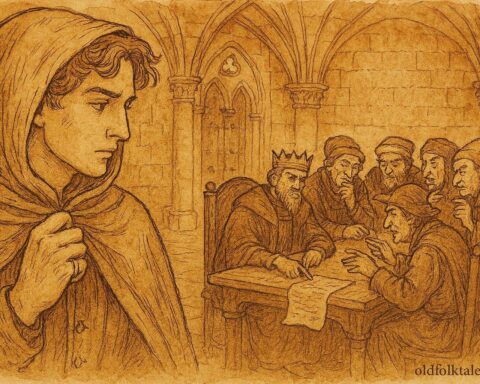
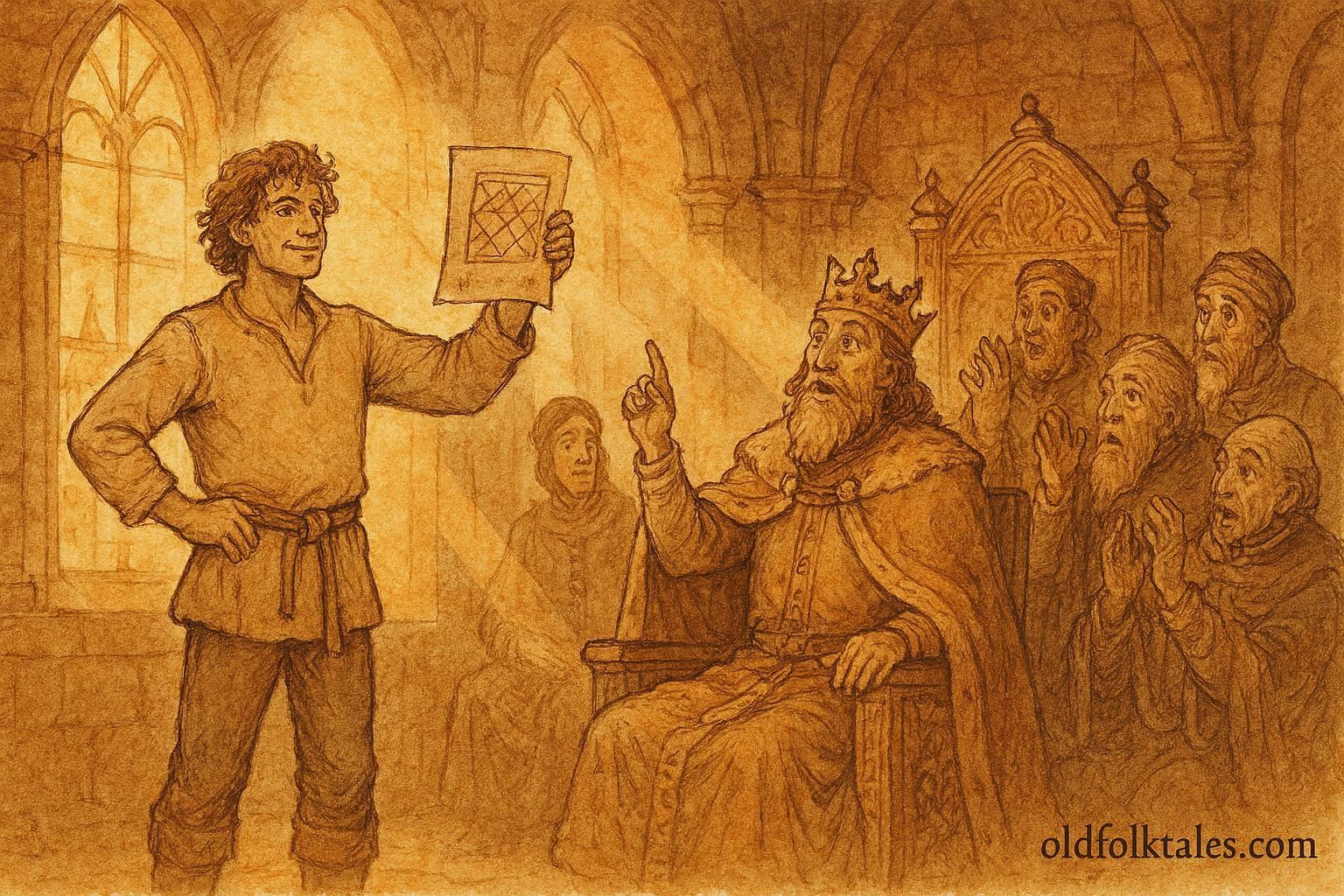
One day, Ionel’s master, a minor noble who had long underestimated him, was summoned to the royal palace to attend a grand feast. Among the guests was the king himself, a wise but capricious man who adored cleverness and tested all who sought his favor with riddles. On a whim, the king declared that whoever could answer his riddles would be rewarded with gold, land, or even a place within the court.
The nobles and courtiers scoffed, believing that none of the lowly servants or peasants could succeed. But Ionel, quietly observing from the edge of the hall, whispered to himself:
“No riddle is impossible if one looks beyond the words and sees the meaning beneath.”
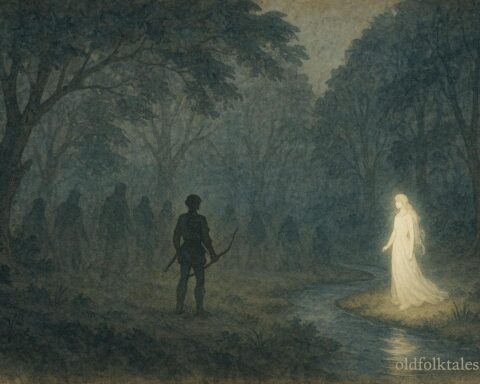
When the first riddle was posed, a puzzle about a river that ran backward only at night, the courtiers hesitated, offering guesses that revealed little understanding. Ionel stepped forward, calm and deliberate, and spoke the correct answer: the reflection of the moon on the water. The king’s eyes sparkled with amusement and admiration. “Indeed,” he said, “wisdom often comes in humble forms.”
Word of Ionel’s cleverness spread quickly. By the end of the feast, the king had offered him a place in the palace, not as a servant, but as a trusted aide capable of solving problems that others could not. Yet Ionel’s ambitions were measured; he sought neither wealth nor power for its own sake, only the satisfaction of using his wit to overcome challenges and help others in need.
Outsmarting Thieves and Nobles
It was not long before Ionel faced his first real test. A gang of thieves, clever and bold, had begun to terrorize the kingdom’s villages, stealing grain, jewelry, and even livestock. The king tasked Ionel with capturing them, confident that the young man’s intelligence might succeed where soldiers had failed.
Ionel devised a cunning plan. He spread word in the villages that a grand treasure would be transported along the forest road at midnight. The thieves, tempted and greedy, hid among the shadows, eager to seize it. When the hour came, Ionel left a decoy cart laden with stones and tied to a pair of noisy oxen, while he slipped quietly along a parallel path, alerting the soldiers hidden in the trees.
As the thieves attacked the decoy, the soldiers sprang forth, capturing them without a single loss of life. The king praised Ionel’s ingenuity, noting that cleverness and careful planning were often more powerful than brute force. “A sharp mind,” the king said, “can conquer even the most cunning of hearts.”
Not long after, Ionel was challenged by envious nobles who sought to humiliate him. They posed riddles meant to trap him, phrased in twisted language and layered logic. Each time, Ionel listened patiently, untangling the words and revealing answers that were at once simple and profound. His humility, as much as his brilliance, impressed even those who had intended to embarrass him. The nobles could only bow, secretly acknowledging that intellect, not birth, held true authority.
Lessons of Humility and Justice
Throughout his rise in favor, Ionel never let pride cloud his judgment. He aided villagers who had suffered injustice, advising farmers on how to protect their crops, helping merchants negotiate fair prices, and ensuring that disputes in the marketplace were resolved fairly. Where others might have demanded recognition, Ionel worked quietly, trusting that wisdom would be noticed by those who truly valued it.
One famous account tells of a riddle involving a locked chest and three keys, which had confounded the court for weeks. Each key seemed plausible, yet none opened the chest. The courtiers argued, insulted one another, and grew frustrated. Ionel studied the chest, turned it over, and finally lifted it to reveal a hidden latch beneath—a solution that no one else had considered. When the chest opened, it revealed both gold coins and a message from the late king, reminding all that patience and observation were virtues equal to cunning.
Through such acts, Ionel’s reputation grew, and people from across Wallachia sought his counsel. He became a living example of how intelligence, careful observation, and humility could elevate even the humblest servant to a place of honor.
The Servant’s Cleverness as Power
The tale of Ionel reminds us that wit is a form of power distinct from wealth or birthright. In one memorable episode, a nobleman accused Ionel of plotting treason, hoping to have him removed from court. Ionel, calm and composed, asked only that the nobleman provide proof of his claim. The nobleman presented a forged letter. With a thoughtful gaze, Ionel deciphered inconsistencies in the handwriting and phrasing, presenting the evidence to the king in such a way that the nobleman was exposed as deceitful and punished.
The king, amused and impressed, said:
“See, my friends, the cleverness of a humble servant can unmask even the pride of nobles. True strength lies not in sword or title, but in mind and heart.”
This became a lesson repeated in Wallachian villages: that humility combined with intelligence could achieve justice even against powerful and corrupt individuals.
Final Triumph and Recognition
By the end of Ionel’s story, he had risen from a simple servant to a trusted adviser, honored by the king and revered by villagers. His cleverness had solved riddles, captured thieves, outwitted nobles, and restored justice to those who had been wronged. Yet, he remained humble, using his intellect to serve others rather than inflate his ego.
The king granted Ionel a small estate and the right to oversee matters of dispute throughout the kingdom. Still, Ionel continued to live modestly, mentoring young servants, offering guidance to villagers, and solving riddles that would have confounded the wisest of men. His legacy became one of ingenuity, courage, humility, and service, inspiring future generations to value intelligence and cunning as virtues as important as strength or birthright.
Moral Lesson
The Tale of the Clever Servant teaches that intelligence and wit are powerful tools that can change destiny, overcome adversity, and promote justice. True cleverness is accompanied by humility, moral integrity, and the desire to help others rather than oneself. In every challenge, from riddles to treachery, the servant demonstrates that wisdom, patience, and moral courage are the keys to success and respect.
Knowledge Check
1. Who is the main character in the story?
Ionel, the clever servant who rises from humble beginnings through intelligence.
2. How does Ionel solve problems for the kingdom?
Through clever thinking, solving riddles, outwitting thieves, and advising the king.
3. What values does Ionel demonstrate?
Humility, moral integrity, intelligence, courage, and fairness.
4. What kinds of challenges does Ionel face?
Impossible riddles, theft, deceitful nobles, and threats of false accusations.
5. What is the central theme of the story?
Intelligence as power, combined with humility and justice.
6. What is the cultural origin of the tale?
Romanian folklore, Wallachia, 19th century.
Source: Adapted from Petre Ispirescu, Basme românești (1882)
Cultural Origin: Romanian folklore, Wallachia, 19th century