In a quiet village nestled among the rolling hills and olive groves of Tuscany, there lived a tailor named Giovanni. He was a modest man, with nimble fingers and a kind heart, known for mending the garments of villagers for little more than a warm meal. Though poverty marked his household, he and his family lived with dignity, for Giovanni believed that integrity was worth more than gold.
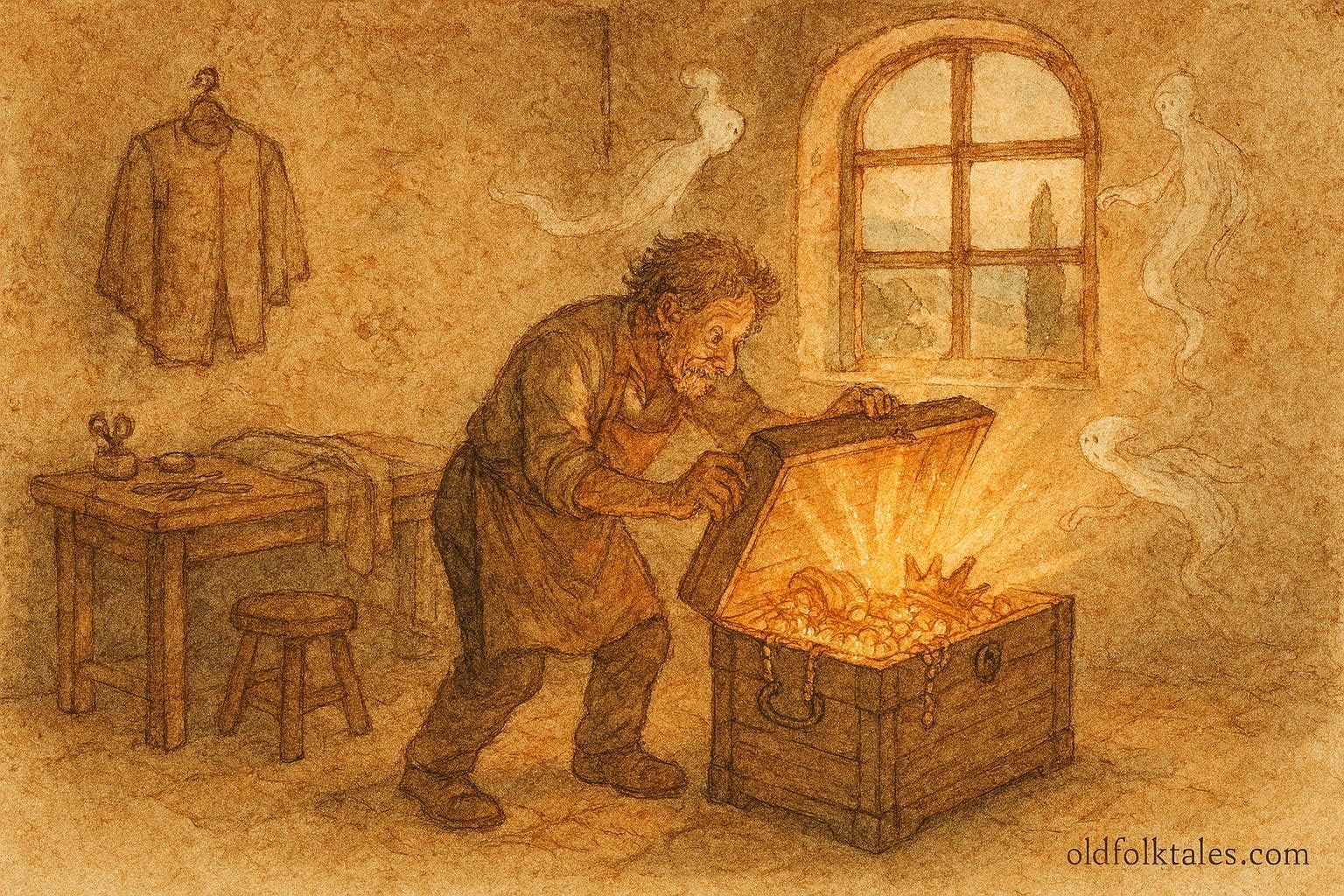
One morning, as the sun cast golden light across the cypresses and vineyards, Giovanni was walking home from the market when he noticed an old chest leaning against the stone wall of an abandoned house. Its wood was darkened with age, and the iron bands glimmered faintly in the morning sun. Curiosity pricked at him, and he brushed the dust off its lid.
To his astonishment, the chest spoke:
“Who opens me must have a heart free of deceit. I reveal treasures to the honest, but those driven by greed shall find only disappointment.”
Giovanni stepped back, startled yet intrigued. “I am a simple tailor,” he said softly. “I seek no wealth, only to care for my family.”
The chest creaked open. Inside lay gold coins, jewels, and silks finer than any he had seen. But a faint, melodic voice cautioned, “Take only what you need, and my magic will bless you. Take more, and misfortune will follow.”
Giovanni’s mind raced. Though he could take much, he carefully chose only enough to provide food, clothing, and warmth for his household. The chest seemed to nod, as though approving his choices, and silently closed itself.
Word of the chest soon reached the ears of a wealthy but greedy merchant, Don Paolo, who coveted riches without labor. He visited Giovanni, pretending friendship, and learned of the magical chest. One moonless night, Don Paolo sneaked into Giovanni’s workshop, intent on claiming the treasure for himself.
The chest, however, was no ordinary object. As Don Paolo pried open the lid, it cried out in a stern, echoing voice:
“Greed blinds you! Integrity is required!”
The chest sprang shut, trapping his fingers, and left him with nothing but bruised hands and a sense of shame. Meanwhile, Giovanni, awakened by the noise, arrived in time to see Don Paolo stumbling away, muttering curses.
From that night forward, the chest remained in Giovanni’s home, but only he knew how to approach it with honesty and care. He used its magic sparingly, always for necessity, and never for personal vanity or greed. Each time he opened it, treasures appeared that provided food for neighbors in need, warm clothes for children in winter, and small luxuries that brought joy without extravagance.
One winter, a harsh storm struck the village. Rivers overflowed, winds tore through roofs, and many families were left in distress. Giovanni, guided by the chest’s magic, distributed provisions, reinforcing homes with silks and linens, and even assisting with repairs. Villagers marveled at the tailor’s generosity, never knowing that the chest had chosen him for his virtue, not his cleverness or wealth.
As the years passed, the chest also became a teacher. It spoke of lessons in humility, restraint, and the true value of honesty. Giovanni’s children grew up understanding that real treasure lay not in gold alone, but in trust, kindness, and careful choices.
One day, a traveler from a distant city arrived, claiming to be a collector of rare artifacts. He offered Giovanni a fortune for the chest. The tailor smiled gently. “This chest is not mine to sell,” he said. “Its gifts are meant for those who act rightly, not for those who seek only profit.”
The traveler left, humbled and awed, while Giovanni continued his quiet life, knowing that he had been chosen not because he sought wealth, but because he lived with integrity.
By the time Giovanni was an old man, the chest had transformed the fortunes of his family and the village. Villagers respected honesty, and children were raised to value cleverness, generosity, and moral choice over material greed. The chest itself remained ever silent to those who approached with dishonest hearts, a magical guardian ensuring that only virtue could unlock its treasures.
Even today, the villagers say that if one walks through the Tuscan hills near the old tailor’s house, on quiet mornings when the sun glints off the olive trees, a soft voice can be heard from a chest tucked beneath the eaves, reminding all who listen that honesty brings true and lasting reward.
Moral Lesson
The Talking Chest teaches that honesty, integrity, and moral courage are more valuable than wealth. Greed may promise gain, but only virtue brings enduring reward. True treasure lies in choices guided by justice, humility, and care for others.
Knowledge Check
1. Who is Giovanni?
A poor tailor from Tuscany who discovers the magical talking chest.
2. What does the talking chest do?
It reveals treasures only to those with honesty and integrity.
3. How does Giovanni use the chest?
He takes only what is necessary to care for his family and community, helping neighbors in need.
4. What happens to those who approach the chest with greed?
They are denied the treasure and may even face misfortune, as seen with Don Paolo.
5. Where does this folktale originate?
Central Italy, specifically Tuscany; collected in Fiabe italiane by Italo Calvino (1956).
6. What is the central theme of the story?
Honesty rewarded, greed punished, and the value of moral choice over material wealth.
Source: Fiabe italiane by Italo Calvino, 1956
Cultural Origin: Central Italy (Tuscany)