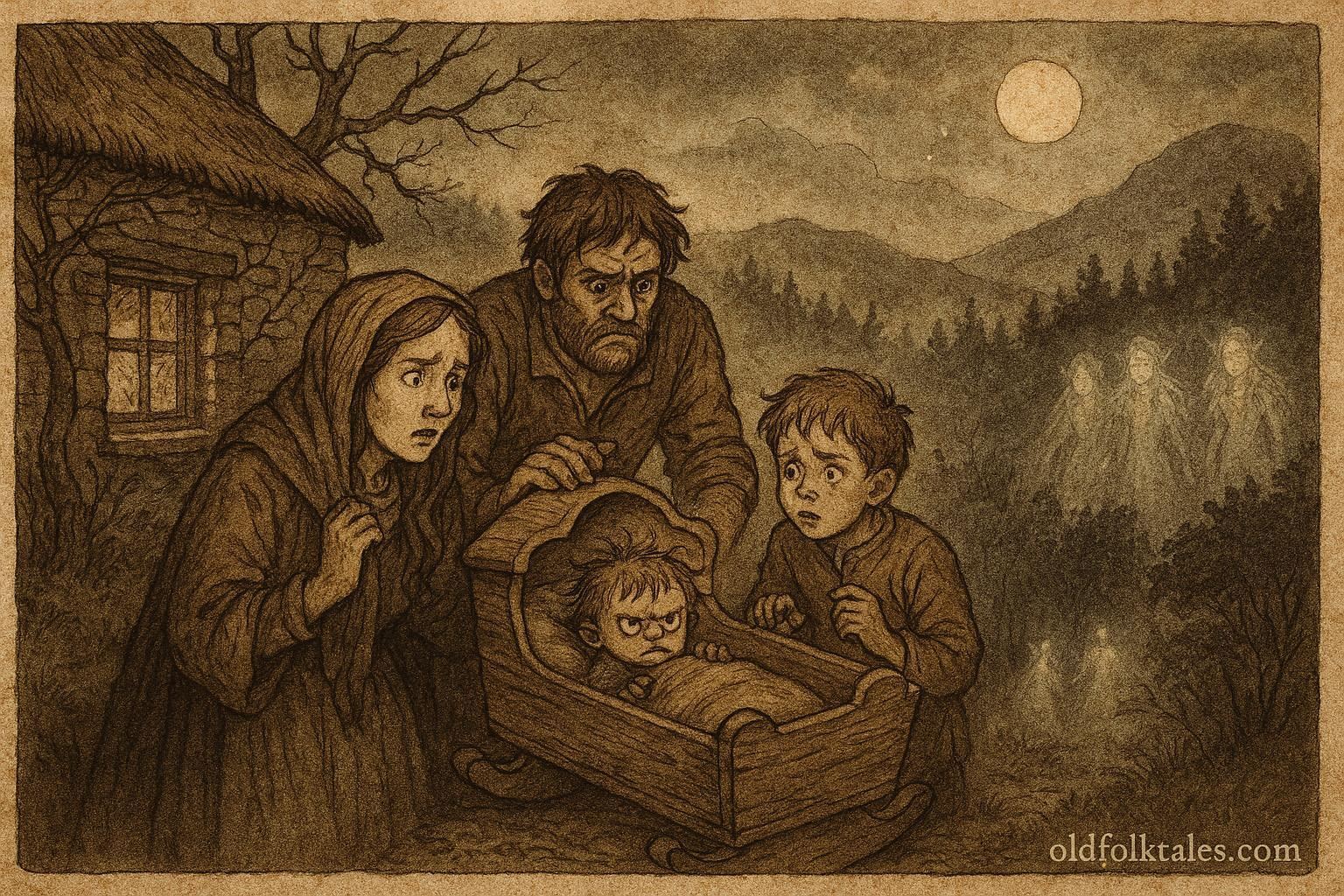
In the rolling hills and misty valleys of Wales, where stone walls divide fertile fields and streams wind like silver ribbons, tales of the Tylwyth Teg, the fair folk, are as common as the sheep grazing on the slopes. Among these stories, one stands out for its blend of fear, cunning, and parental devotion: the tale of the changeling child. It is a story whispered in cottages across the countryside, passed down through generations, a reminder that the unseen world may touch mortal lives in ways both subtle and alarming.
The story begins in a quiet village, nestled between green hills and dense woods. A young family, living in a modest stone home, had been blessed with a healthy, lively child. The boy laughed easily, ran through the fields with boundless energy, and brought joy to all who saw him. But as often happens in folk tales, happiness drew the attention of the Tylwyth Teg, the fair folk who dwell in the hidden hollows and rocky outcrops of Wales.
One night, while the child slept in his cradle, the mother awoke to a strange feeling of unease. The air seemed heavy, and the shadows in the room flickered unnaturally. By morning, the child appeared changed. His once-bright eyes now held a strange, restless gleam. His voice was sharp and unpleasant, his temper quick to flare over trivial matters. The family, though disturbed, initially thought the child unwell, yet the oddness persisted and grew.
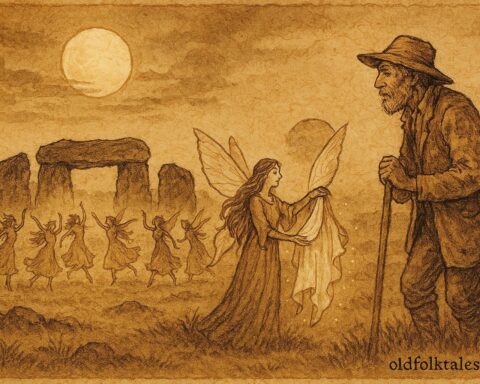
Neighbors whispered of fairy mischief. Some spoke of the Tylwyth Teg and their habit of replacing human children with fairy substitutes, changeling children, taken to live in the secret world while the fairy left behind a being to mimic the child. The villagers, wary of invoking the fair folk’s ire, advised caution and discreet action.
The parents, though terrified, refused to lose hope. They consulted local wise women, known for their knowledge of fairy customs and protections. These women suggested careful observation and cunning, for the Tylwyth Teg respected those who demonstrated both patience and intelligence. They warned against anger or violence, for the fair folk were clever and would punish rashness.
The family learned to recognize the changeling’s telltale signs: an unusual dislike for sunlight, fascination with stones or metal, avoidance of sacred spaces, and an unnatural knowledge of things beyond human comprehension. They began a quiet plan to expose the fairy’s deception.
At dusk, the parents placed a row of iron objects around the child’s cradle. Iron was known to repel the fair folk, as were salt, fire, and certain prayers. They also set a pot of water to boil on the hearth, observing the child’s reactions carefully. The changeling, curious yet cautious, displayed unnatural fear at the sight of the iron and steam. The family noted these signs, confirming their suspicions.
One evening, the father prepared a clever ruse. He placed a small cradle outdoors, covered with a blanket scented with herbs thought to appeal to the fair folk. He whispered words taught by the wise women, calling out in a voice both firm and respectful, inviting the Tylwyth Teg to return the stolen child if they desired their own offspring. The changeling, sensing the deception, grew restless and agitated, revealing strange abilities: it could vanish partially into shadows, move in ways no human child could, and speak in riddles about places the family had never visited.
The family, patient and cunning, persisted. They enacted rituals over several nights, using iron, herbs, and mirrors to confuse and reveal the changeling. Mirrors, in particular, were believed to show the true form of a being, reflecting the soul rather than the outward appearance. When the changeling peered into the mirror, it recoiled, and its ill temper worsened.
Finally, under the careful guidance of the wise women, the family enacted the ultimate test. They prepared a ritual involving a circle of iron, water, and a candle flame at each point. As the changeling was placed within the circle, it began to reveal its true nature. Its voice, no longer human, carried the cadence of the fairy world, and it confessed that the real child was held in a hidden fairy dwelling, safe but distant, awaiting the cunning of mortal parents to reclaim him.
With courage and persistence, the family followed the remaining signs the changeling unwittingly revealed. They journeyed to a moss-covered hollow in the forest, a place where the air shimmered unnaturally in sunlight. There, through the clever application of knowledge and respect for the fair folk’s rules, they found the child, unharmed and sleeping peacefully on a bed of moss and soft ferns. With gentle words and careful hands, they reclaimed him, bringing him back to the human world.
The story concludes with the child restored, healthier and more lively than before. The changeling was left behind, returned to the fairy world, unable to harm the mortal family further. The tale serves as both warning and instruction: the Tylwyth Teg, though capricious and often invisible, can be dealt with using patience, intelligence, and a knowledge of ancient customs. Mortals are reminded that devotion, caution, and understanding of the unseen are as crucial as bravery and love.
Over time, the story spread throughout Wales, carried by storytellers and written accounts alike. Parents told it to children as a lesson in careful observation, respect for forces beyond comprehension, and the power of steadfast devotion. It became a cornerstone of Welsh fairy lore, illustrating the delicate balance between the human and supernatural worlds, and the care required when these worlds intersect.
Even today, in valleys where mists roll down from the mountains and streams shimmer with silvery light, villagers speak quietly of the Tylwyth Teg. They tell of careful rituals, whispered words, and the cleverness required to protect loved ones from the capricious attention of the fair folk. In this way, the tale of the changeling child endures, bridging the gap between past and present, human and magical, and serving as a reminder that courage combined with wisdom is often the most potent protection of all.
Moral Lesson
The story of the Tylwyth Teg and the changeling child emphasizes the power of patience, knowledge, and cunning in protecting those we love. Devotion and intelligence can safeguard families against forces beyond human understanding, teaching respect for both the unseen and the natural order.
Knowledge Check
1. Who are the Tylwyth Teg?
The fair folk of Welsh folklore, known for interacting with humans in both benevolent and mischievous ways.
2. What is a changeling child?
A fairy-replaced human child, often ill-tempered or strange, left in the human world while the real child is taken.
3. How did the family expose the changeling?
By using iron, mirrors, herbs, fire, and rituals guided by local wise women.
4. Where does this story originate?
Welsh fairy tradition, based on nationwide oral lore and documented by Wirt Sikes (1880).
5. What themes are explored in the story?
Parental devotion, fear of the unknown, superstition, patience, and cunning.
6. Why is knowledge of fairy customs important in the tale?
Because the fair folk respect intelligence and patience; understanding their rules allows humans to reclaim what is lost.
Source: Wirt Sikes, British Goblins: Welsh Folk-Lore, Fairy Mythology, Legends and Traditions, 1880
Cultural Origin: Wales (nationwide oral folklore)