In the low rolling fields of northern Bulgaria, where rivers bend lazily past wheat and sunflower and wind creaks against the old wooden beams of watermills, there once stood a mill that no one would pass after dusk. It had not always been so.
The mill had belonged to a man known simply as the miller, hard-working, sharp-eyed, and careful with every coin. Too careful, some said. He weighed grain as though measuring gold. He lent flour grudgingly and never without interest. His storehouses were full, yet his door was seldom open in generosity.
Experience legends where mountains breathe magic and heroes face moral choices that shape destiny
When storms damaged the roofs of poorer cottages, he offered loans instead of help. When widows brought sacks of barley thin as cloth, he deducted more than seemed fair. None could accuse him of theft, his measures were legal, his accounts tidy, but his heart was counted lighter than his purse.
People muttered. They did not protest.
Then one autumn evening, after the river had swollen from rain and the wind had howled against the mill’s sails, the miller was found dead inside his own building.
No wound marked him. No struggle was visible. He lay near the grinding stones, eyes wide, mouth parted as if caught mid-breath. Some said lightning had frightened him to death. Others whispered that fear had found him for reasons unseen.
He was buried swiftly, as custom required.
Yet burial alone does not quiet every spirit.
Within days, livestock grazing near the mill began to sicken. Cows gave less milk. Chickens refused to roost in nearby sheds. Dogs barked toward the riverbank at nothing visible. And at night, pale flickers of light, cold and wavering, were seen through the cracks of the abandoned mill doors.
Children were forbidden from playing near it. Shepherds altered their routes. Travelers crossed themselves when the wind carried a hollow grinding sound though the wheel had long stopped turning.
It was then that the word began to form in hushed voices:
Talasăm.
In Bulgarian village belief, a talasăm is no mere ghost. It is a restless spirit, sometimes likened to a vampire, born when death comes wrongfully or burial rites are neglected, or when grave moral imbalance binds a soul to earth. Such beings do not roam aimlessly. They linger where attachment is strongest.
And where had the miller loved most?
His mill.
One evening, as the sun sank into copper light and shadows stretched across the fields, the village gathered before the home of the oldest among them, an elder versed in ancient burial customs and protective rites handed down through generations.
He listened without interruption.
Lights in the mill. Illness among livestock. Strange winds from the river. The suddenness of death. The miller’s reputation for greed.
The elder stroked his beard thoughtfully.
“Sometimes,” he said at last, “a man’s hands cling to what his heart could not release.”
It was not accusation. It was warning.
The elder did not rush to action. Bulgarian rural tradition held that hasty interference could worsen unrest. Instead, he asked careful questions.
Was the burial performed before sunset?
Was earth taken from consecrated ground?
Was the body watched through the night?
Were prayers spoken properly?
The villagers answered as best they could. Yes, the burial was timely. Yes, candles had burned. Yes, prayers were said.
But doubt crept in like fog.
Had anyone placed protective herbs within the coffin?
Had iron been set to guard the body from rising?
Had his debts been reconciled?
Silence followed.
In many villages, unresolved grievances were believed to tether the dead. A man who wronged others without restitution might not rest easily beneath soil.
The elder nodded slowly.
“We must look,” he said.
Under a waning moon, a small group accompanied him toward the mill. They did not enter immediately. Instead, the elder circled the building, pressing his palm against the wood, listening, not with ears alone, but with intuition shaped by long tradition.
The door creaked when opened.
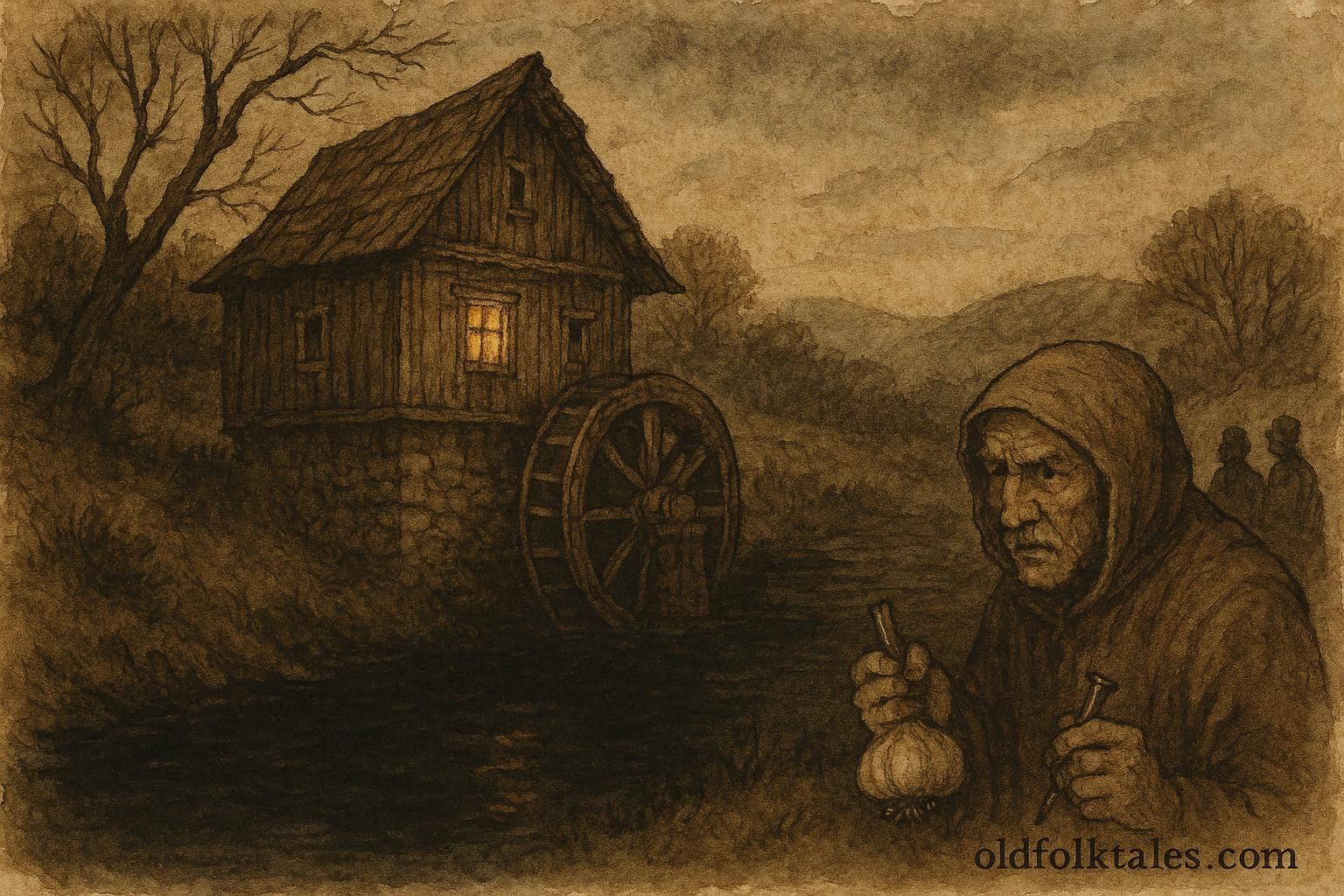
Inside, dust lay thick. The grinding stones were still. Yet in one corner, near sacks long emptied, faint luminescence pulsed as though the air itself breathed.
No form stood visible.
But the atmosphere was heavy.
The elder knelt and placed upon the floor a sprig of garlic and a small iron nail, protective elements known in regional belief to ward restless spirits. He murmured words passed down from ancestors, not shouted but steady, calling for balance between earth and soul.
The flickering light trembled.
Outside, the river seemed to hush.
Still, the elder did not declare victory.
“Tomorrow,” he said, “we visit the grave.”
At dawn they walked to the cemetery. The earth above the miller’s burial site appeared undisturbed, no clawed soil, no broken ground. Yet tradition taught that a talasăm might not leave visible marks.
The elder directed them to carefully uncover the coffin lid.
No detail is given in village retellings of what they saw, and perhaps that silence is deliberate. Some say the body showed signs that unsettled them. Others insist it appeared unchanged.
What mattered was not spectacle, but correction.
The elder performed rites older than memory, ensuring proper protection, speaking blessings, placing iron and sacred herbs within the coffin before sealing it once more. He urged the villagers to reconcile any outstanding grievances, to forgive small debts, and to offer alms in the miller’s name to those he had treated harshly.
For unrest, he explained, is rarely solved by fear alone.
It requires restoration.
In the days that followed, the strange lights ceased. Livestock recovered. The grinding echoes stopped. The mill remained abandoned, not from terror now, but from solemn respect.
The villagers did not speak of the talasăm lightly again.
The miller’s story became caution, told beside hearth fires and during harvest evenings. Children learned not only of vampires and wandering spirits, but of generosity, fairness, and the weight of one’s actions.
In Bulgarian rural folklore, vampires are not always monstrous creatures of fangs and blood. Sometimes they are reminders, figures born from imbalance. A talasăm can emerge from greed, injustice, or improper rites. It is a symbol that the community must guard not only its fields, but its moral order.
The elder who guided them lived many more years. He never claimed triumph over darkness. Instead, he reminded the village that communal harmony protects more surely than any charm.
“Bury properly,” he would say.
“Live properly.”
For what binds the dead most tightly is often what they refused to release in life.
And so the abandoned mill stands in memory, not as haunted terror alone, but as warning.
Greed can echo longer than the grindstone’s song.
Moral Lesson
Greed and injustice can bind a person to unrest even after death. True peace requires fairness in life and proper ritual in death.
Knowledge Check
1. What is a talasăm in Bulgarian folklore?
A talasăm is a restless spirit or vampire-like being believed to arise from improper burial or moral imbalance.
2. Why did villagers suspect the miller became a talasăm?
Strange lights, livestock illness, and his reputation for greed suggested his spirit was unsettled.
3. How did the elder respond to the haunting?
He investigated burial rites, used protective elements like garlic and iron, and restored moral balance.
4. What role does greed play in the legend?
The miller’s miserliness symbolizes moral imbalance that can disturb rest after death.
5. What protective traditions appear in the story?
Use of iron, garlic, sacred herbs, prayers, and careful burial rites.
6. What is the central theme of this Bulgarian vampire tale?
That communal harmony and proper ritual prevent unrest among the living and the dead.
Source: Documented in Bulgarian ethnographic studies by Dimitar Marinov, 1894.
Cultural Origin: Northern Bulgarian rural folklore.