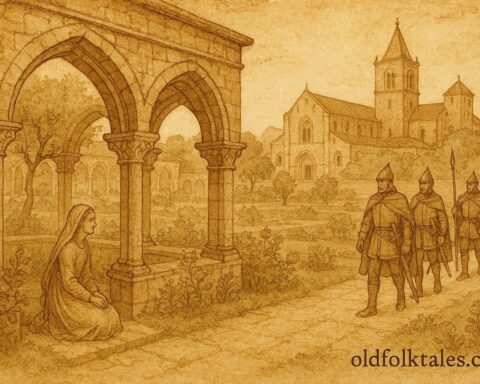
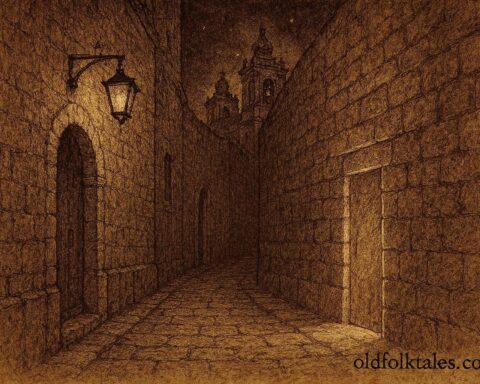
In the stone citadel of Berat, high above the Osum River, there once lived a young woman named Lule, famed for her beauty and gentleness. Her father was a mason, her mother a weaver, and her life quiet but happy—until the Pasha’s son, Arben, saw her drawing water from the spring.
He loved her at once and sent word that he would make her his bride. But Lule’s heart already belonged to Nikoll, a shepherd who played the flute so sweetly that even the doves circled to listen.
When Lule refused Arben, saying, “My heart is not yours to command,” his pride turned to rage. He accused Nikoll of theft and had him thrown into the castle dungeon.
Lule pleaded for his release, but the Pasha was firm. “A poor shepherd cannot love above his station,” he said. “Forget him, or lose more than your heart.”
That night, Lule climbed to the dungeon wall and whispered through the bars. “Hold fast, Nikoll. I will find a way.”
He answered softly, “Even if they silence me, my song will find you.”
At dawn, the guards dragged him away. The river ran red where they threw his flute.
Lule’s grief hollowed her like drought hollows a spring. For forty days she neither spoke nor ate. Then, one morning, she climbed the same wall and leapt into the river below.
But as her body struck the air, a thousand white feathers burst from her cloak, and she rose, transformed into a white bird that circled the citadel three times before vanishing into the sky.
The people of Berat wept and built a shrine by the spring. That night, a white bird perched upon it and sang with Nikoll’s voice—clear, mournful, forgiving. The Pasha and his son heard it and could not sleep. The song followed them until their deaths.
To this day, the people of Berat say that when a white bird circles the citadel at dusk, it sings not of sorrow, but of release. Lovers whisper their wishes into the wind, and the river carries them toward peace.
Moral of the Story
Cruelty builds walls; love builds wings. Forgiveness frees the heart even when life cannot.
Knowledge Check
- Where did the story take place?
In Berat, Albania, near the Osum River. - Who were Lule and Nikoll?
A mason’s daughter and a shepherd in love. - Why did the Pasha’s son imprison Nikoll?
Out of jealousy when Lule rejected him. - How did Lule die?
She leapt from the citadel wall in grief. - What happened after her leap?
She transformed into a white bird that sang forgiveness. - What is the story’s moral?
True love transcends cruelty; forgiveness brings peace.
Origin: Albanian folktale (Berat region oral tradition)