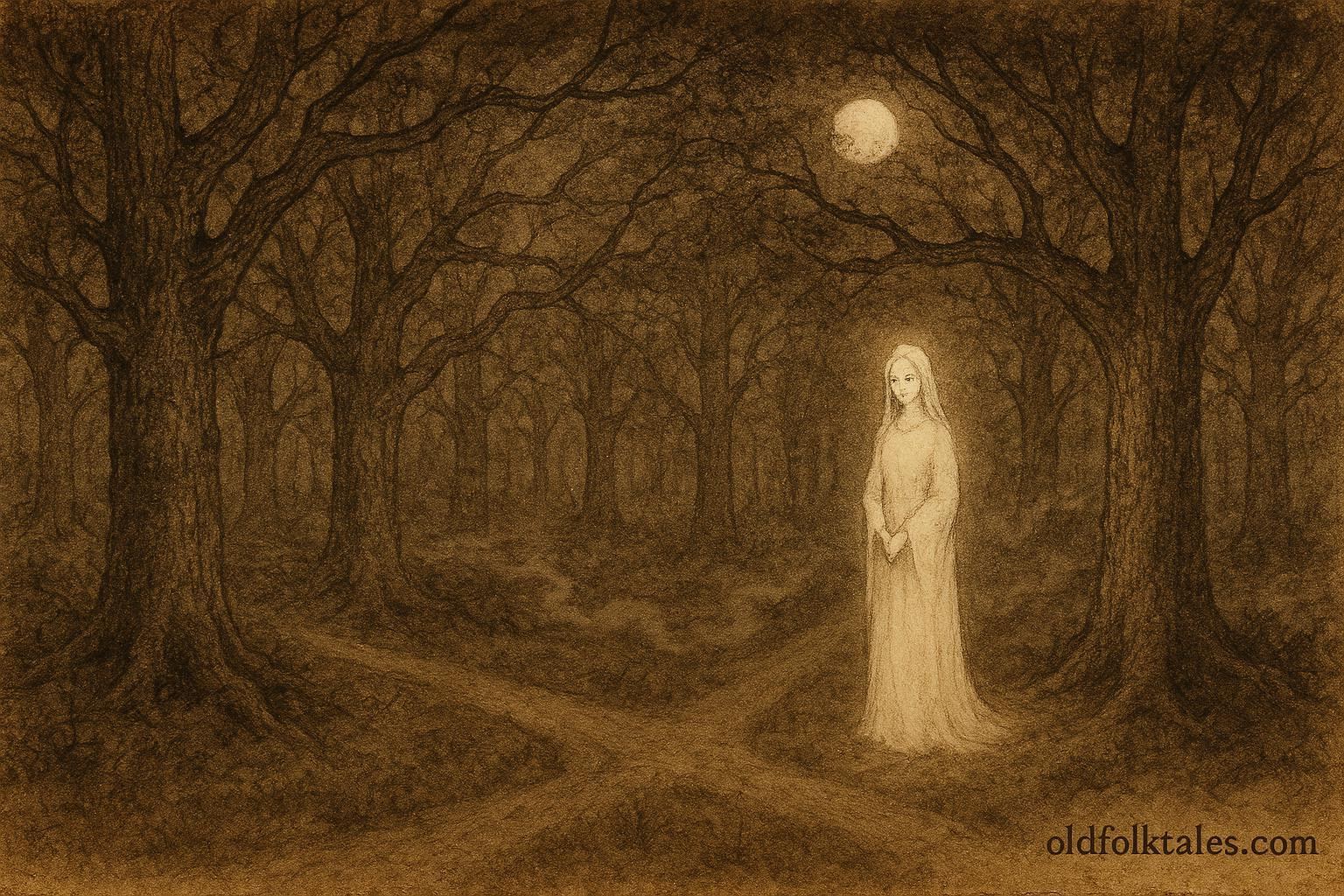
In the deep, shadowed forests of the Ardennes, where ancient oaks stretch their twisted branches toward the sky and mist coils low among moss-covered stones, travelers have long spoken of an apparition known as the White Lady. She appears most often at crossroads, those quiet places where paths diverge and decisions must be made, and her presence is said to carry both warning and judgment.
The Ardennes has always been a land shaped by memory. Its forests have witnessed wars, betrayals, secret meetings, and silent crimes. Streams murmur beneath dense foliage, carrying stories no one dares to speak aloud. In such a place, it is said, the land itself remembers, and sometimes, it speaks.
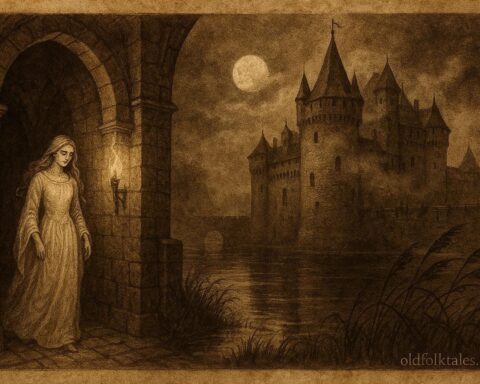
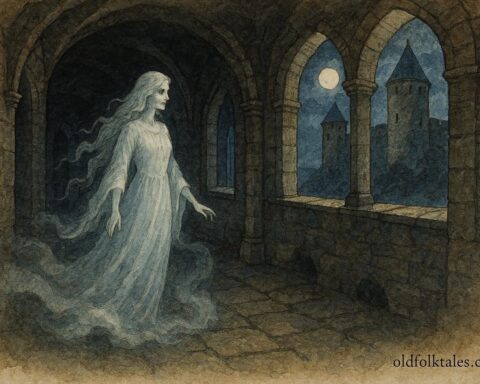
Those who claim to have seen the White Lady describe her as a woman clothed in pale garments that shimmer faintly in the moonlight. Her figure is slender and still, her face sorrowful yet composed, framed by long hair as light as frost. She does not approach travelers unbidden, nor does she cry out. She simply stands where paths meet, watching.
Some say she appears before storms or misfortune. Others insist she comes only when a traveler’s heart is being tested.
Kind-hearted souls tell of encounters marked by quiet mercy. A weary woodcutter, lost after nightfall, once claimed the White Lady gestured silently toward a safer path, guiding him away from a ravine hidden by fog. A merchant traveling alone said she warned him with a raised hand, preventing him from continuing down a road where thieves lay in wait. In such stories, the White Lady vanishes as soon as her warning is heeded, leaving behind only the rustle of leaves and a lingering sense of unease.
But for those burdened by cruelty, deceit, or violence, the tales take a darker turn.
It is said that dishonest travelers who mock her presence or ignore her silent guidance find themselves hopelessly lost. Paths twist unnaturally. Familiar landmarks disappear. The forest closes in, and fear replaces certainty. Some emerge days later, shaken and silent. Others are never seen again.
The villagers of the Ardennes did not speak lightly of the White Lady. Elders warned children to mind their actions, reminding them that the forest watched and remembered. To show kindness to strangers, to walk with honest intent, these were protections as strong as any charm or prayer.
As for the White Lady’s origin, the stories vary, but all are bound by sorrow and betrayal.
According to one telling, she was once a noblewoman betrayed by those she trusted most. Promises were broken, loyalty discarded, and justice denied. Cast out or abandoned, she wandered the forests in despair, her wrongs unanswered in life. When death claimed her, her spirit could not rest. The land itself, witness to her suffering, bound her to its paths and crossings.
Another version speaks of lost love, a woman deceived, her devotion used and discarded. She waited at a crossroads for one who never returned, hope slowly turning to grief. Her vigil continued beyond death, transforming her into a guardian of choices, warning others where she herself had been misled.
Whatever the truth, all versions agree on one thing: the White Lady did not haunt the Ardennes for revenge alone. She became a keeper of balance, a reminder that justice, though delayed, is never forgotten.
Travelers learned to greet the forest with respect. Hunters lowered their voices. Wayfarers offered quiet prayers at crossroads. Even hardened men felt unease when moonlight filtered through the trees in just the right way, illuminating pale shapes among the trunks.
There were those who doubted the legend, dismissing it as superstition born of fog and fear. Yet even skeptics admitted that the Ardennes felt different at night. Sounds carried strangely. Shadows lingered too long. And sometimes, standing where paths divided, one could feel watched, not with malice, but with judgment.
In time, the White Lady became more than a ghost. She became a moral presence woven into the landscape itself. Her story reminded people that actions leave traces, that the land remembers cruelty as surely as kindness, and that justice may follow long after the moment of wrongdoing has passed.
Long after the original tales were first told, travelers still claimed encounters. Some returned grateful, others shaken. But all agreed on one thing: the White Lady never acted without reason.
She was not a spirit of random terror, but of consequence.
And so, in the Ardennes, where forest paths still cross beneath ancient trees, people walk carefully. They choose their words, weigh their intentions, and remember that every path taken leaves an imprint, not only on the earth, but on the soul.
Explore the wit and wisdom of Western Europe, where humor and virtue often go hand in hand
Moral Lesson
The legend of the White Lady of the Ardennes teaches that kindness and integrity guide us safely through life’s crossroads, while cruelty and deceit lead us astray. Justice may be delayed, but it endures, witnessed by both nature and memory.
Knowledge Check
-
Q: Where does the White Lady appear in the Ardennes?
A: At forest crossroads where travelers must choose their path. -
Q: How does the White Lady treat kind-hearted travelers?
A: She warns them of danger and guides them to safety. -
Q: What happens to cruel or dishonest travelers?
A: They are led astray or become lost in the forest. -
Q: What themes does the legend explore?
A: Guilt, redemption, justice after death, and moral consequence. -
Q: What is the White Lady’s origin tied to?
A: Betrayal, lost love, and unfinished justice. -
Q: Which cultural tradition does this folktale belong to?
A: Walloon folklore from the Ardennes region.
Source: Walloon oral tradition, compiled by Jean d’Outremeuse and later folklorists, c. 1880s (oral tradition much older)
Cultural Origin: Walloon (Ardennes region)