In the green countryside of Nottinghamshire, England, there lies the village of Gotham, forever associated with foolishness. Yet beneath its reputation for absurdity hides a story of wit, political awareness, and communal survival.
When King John planned to travel through Gotham in the early 13th century, the villagers faced a serious threat. According to English law at the time, if the king passed through a village, he could claim the land for the Crown. For a small agricultural community, this meant potential ruin, loss of fields, homes, and generational livelihood.
Rather than protest openly or defy the king directly, the villagers chose an unexpected strategy: they pretended to be mad.
This story, preserved in the 16th-century jest book The Merry Tales of the Mad Men of Gotham (c. 1540), became one of England’s most enduring pieces of political satire.
The Fear of Royal Passage
News traveled quickly through medieval England. When word reached Gotham that King John intended to pass through their village, anxiety spread. The king was known for heavy taxation and assertive royal authority. Villagers understood that royal presence was rarely neutral, it often meant control.
The people gathered in secret. They were farmers, laborers, families tied to the land by heritage and survival. Confrontation was impossible. Resistance by force would be crushed.
So, they turned to something subtler: performance.
“If the king believes us mad,” they reasoned, “he will see no value here.”
Thus began the carefully staged foolishness of Gotham.
Drowning the Eel
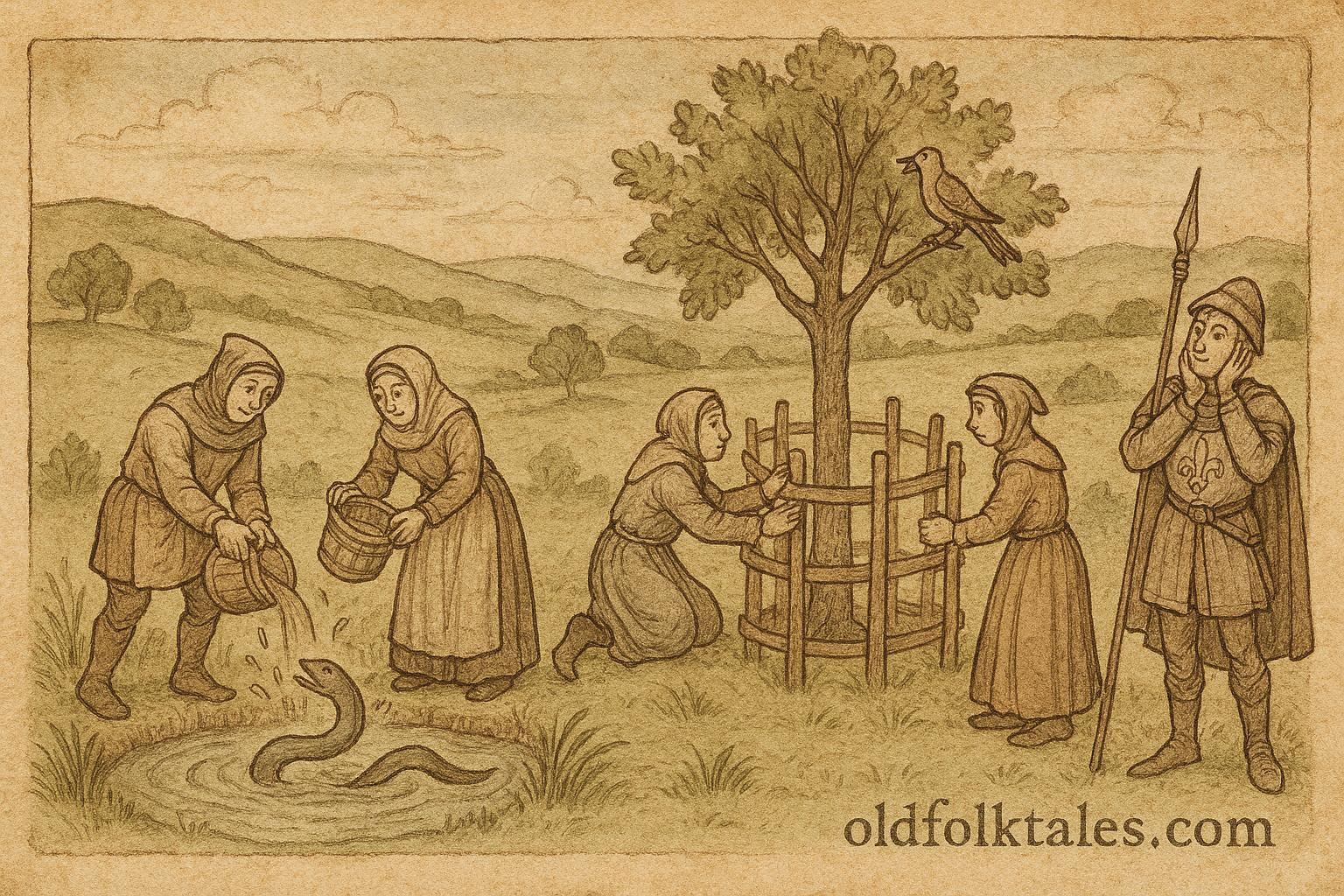
One of the first spectacles occurred at a nearby pond. When royal scouts approached, they found villagers attempting to drown an eel.
The men stood waist-deep in water, shouting instructions at one another while poking at the slippery creature with sticks.
“Hold him under! He breathes the water!” one cried.
The scouts watched in disbelief. “Why drown a creature that lives in water?” they asked.
The villagers replied with straight faces: “Because he has swallowed our fish, and if we drown him, he will release them!”
The absurdity was complete. Word spread quickly, Gotham was inhabited by fools.
Fencing the Cuckoo
In another episode, villagers were seen frantically building a fence around a tree.
“What are you doing?” asked a passing traveler.
“We are trapping the cuckoo,” they answered.
“Why trap a bird?”
“So that spring will stay with us all year!”
They believed, they explained, that if the cuckoo, the herald of spring, remained in Gotham, eternal warmth and prosperity would follow.
Of course, the cuckoo flew away before the fence was finished. The villagers lamented loudly at their “failure,” reinforcing their image as simpletons.
Dragging Carts Up a Roof
On another occasion, royal observers reported seeing villagers attempting to haul carts onto a rooftop.
When questioned, they claimed they were trying to bring sunlight down into the house to save it for winter.
Each act was meticulously exaggerated, just believable enough to suggest madness, yet absurd enough to ensure dismissal.
The King’s Decision
Reports of Gotham’s strange inhabitants reached King John.
“They try to drown fish in water, trap birds with fences, and store sunlight,” advisors said. “The village is full of fools.”
The king, who had no interest in claiming barren or worthless land, decided to avoid Gotham entirely. There would be no royal passage, no legal seizure, no disruption.
The villagers’ land remained theirs.
Through coordinated foolishness, they had protected their homes.
Folly as Intelligence
At first glance, the tale appears to mock rural ignorance. Yet beneath the humor lies sharp political commentary.
The villagers understood power. They knew that appearing threatening would invite destruction. Appearing clever might attract control. But appearing worthless? That ensured safety.
Their “madness” was strategy.
The tale suggests that intelligence is not always loud or confrontational. Sometimes wisdom lies in disguise. Sometimes survival depends on understanding how authority perceives value.
The Wise Men of Gotham were not fools at all, they were tacticians.
Political Satire in Tudor England
When The Merry Tales of the Mad Men of Gotham was printed around 1540, England was experiencing dramatic political change under Henry VIII. Centralized authority was expanding, and tensions between crown and community were real.
Stories of villagers tricking royal power would have resonated strongly with readers.
The tale allowed ordinary people to laugh at authority without directly challenging it. It celebrated common wit over institutional dominance.
It also preserved a deeper cultural theme found throughout European folklore: the “wise fool.”
Like trickster figures across traditions, the Wise Men of Gotham invert expectations. Their absurd behavior conceals insight. Their performance becomes resistance.
Community Over Individual Glory
An important feature of the tale is that no single hero emerges. Gotham’s success depends on collective action. Every villager participates in the ruse.
This emphasizes another moral lesson: community solidarity protects more effectively than individual bravery.
No one betrayed the plan. No one broke character. Their unity was their shield.
Moral Lesson
Cleverness does not always look like intelligence. Sometimes the wisest course is to appear harmless. Unity and strategic thinking can protect a community more effectively than confrontation.
Knowledge Check
1. Why did the villagers fear King John’s visit?
Because royal passage could result in the Crown claiming their land.
2. What strategy did they use to prevent this?
They pretended to be foolish and insane.
3. Name one absurd act they performed.
Trying to drown an eel, fencing in a cuckoo, or dragging carts onto a roof.
4. What was the king’s response?
He avoided Gotham, believing it worthless and mad.
5. What deeper message does the tale convey?
Wisdom can be disguised, and clever resistance can protect a community.
6. When was the story first printed?
Around 1540 in The Merry Tales of the Mad Men of Gotham.
Source: The Merry Tales of the Mad Men of Gotham, early printed jest book, c. 1540.
Cultural Origin: Nottinghamshire, England.