In the deep forests surrounding Plitvice, where the rivers ran clear and the air was filled with the scent of pine and moss, villagers spoke in hushed tones of a witch who lived among the trees. They said she could curse crops, wither livestock, and bring misfortune to any who dared enter her domain. Her cottage, hidden in a glade overgrown with ferns, was said to appear and vanish at will, and the occasional smoke curling from her chimney was believed to signal impending doom.
No child dared to wander near the forest alone, and even adults tread carefully when passing its borders. Fear had become a part of daily life, and the villagers’ whispered warnings were passed from one generation to the next: “Do not anger the witch of Plitvice, for she sees all.”
Explore the warmth and wit of Mediterranean storytelling, where love and wisdom intertwine
Among these villagers lived a young girl named Marica. She was known for her curiosity and keen mind, often asking questions that adults found troublesome. Unlike her friends, who trembled at the mention of the witch, Marica felt a strange pull toward the forest. She wondered why such a place, full of beauty and life, would be associated with fear and harm.
One morning, when the fog still clung to the treetops and dew sparkled like scattered diamonds, Marica ventured into the edge of the forest. She carried a small satchel of bread and herbs, just in case she met any of the forest’s creatures, or, perhaps, the witch herself.
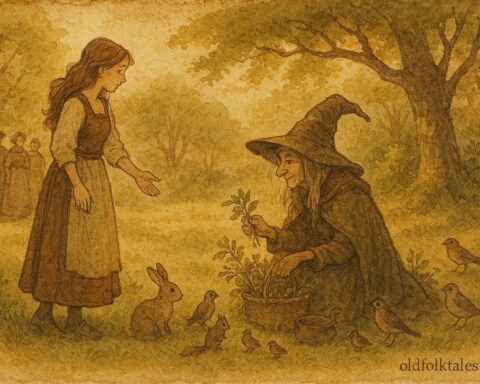
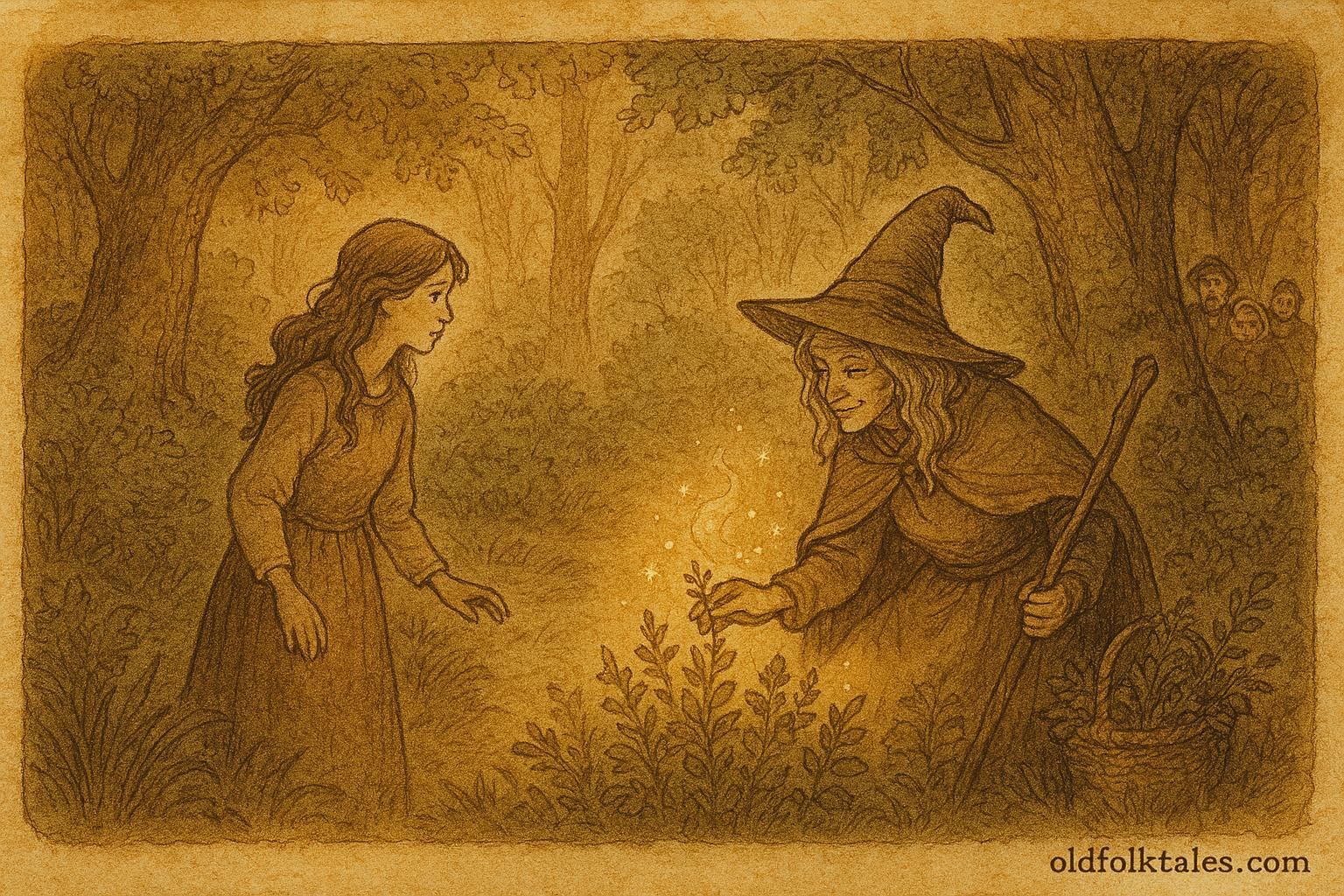
As she wandered deeper, the trees grew taller and the light dimmer, creating a sense of both wonder and caution. Birds chirped nervously, and the rustling leaves seemed to whisper warnings. Suddenly, she glimpsed movement near a stream: a figure draped in flowing robes, tending to plants and muttering softly under her breath. Her hair, dark and streaked with silver, fell over her shoulders, and her hands moved with care and precision.
Marica’s heart raced. Could this be the feared witch? Summoning all her courage, she stepped closer.
“Excuse me,” she said gently. “Are you… the witch the villagers speak of?”
The woman turned slowly, her eyes kind but wary. “I am called many things,” she replied, her voice calm like the river, “but I mean no harm. Why do you enter the forest alone, child?”
Marica bowed slightly. “I wished to understand. The villagers fear you, but I do not believe fear tells the whole story.”
The woman studied her thoughtfully. “Few enter these woods with an open heart. Most come with suspicion or malice. You are different, little one.”
Over the next several days, Marica returned to the forest, observing the woman from a distance at first. She noticed that the “witch” never harmed anyone, and that her spells were not curses but protective charms for the land and its creatures. She healed sick animals, nurtured plants, and purified water for the streams. Each action demonstrated care and wisdom, not malice.
One afternoon, as Marica approached quietly, she saw a small field where the woman had planted medicinal herbs. The leaves glimmered with dew, and tiny blossoms swayed in the breeze. The woman knelt, whispering instructions to the plants.
“Why do you help the forest?” Marica asked.
“Because it is fragile,” the woman answered. “Because humans often forget that the land is alive. My magic is not meant to punish, but to protect. Yet fear blinds people, and so they call me a witch.”
Marica’s mind raced. She realized that the villagers’ fear was born not from true danger, but from misunderstanding. She thought of her own village, the parched fields, the sick animals, and how easily fear had governed their actions.
“I want to help them understand,” she said. “Will you let me?”
The woman smiled. “Only if you are willing to listen, learn, and act with courage. You must see the forest with both eyes: the eyes of the heart and the eyes of reason.”
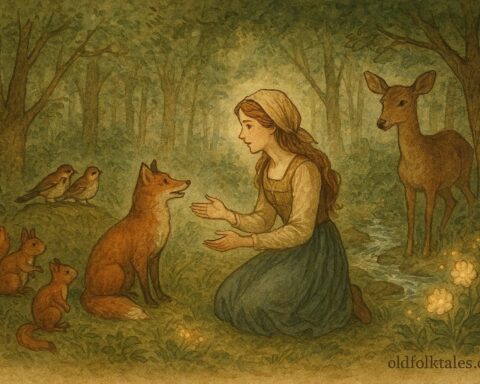
And so, Marica began her lessons. She learned how to recognize herbs, heal minor ailments, and communicate with the birds and animals of the forest. She discovered that every plant, every tree, every creature had a role, and that true magic was in preserving balance and harmony.
Weeks later, disaster struck the village. A sudden blight threatened the wheat and barley, and livestock began falling ill. The villagers, in panic, blamed the witch, certain that her anger had caused the misfortune. They gathered torches and pitchforks, marching toward the forest with shouts and threats.
Marica knew that only she could prevent tragedy. She ran ahead to meet the villagers, her voice firm but calm. “Stop!” she called. “The witch does not harm us. She protects the forest and the land we depend on!”
The villagers hesitated, confused. “You speak of the witch?” one elder demanded. “She curses us, surely you have seen it!”
“I have seen her,” Marica replied. “She heals, nurtures, and protects. The forest thrives because of her. If we threaten her, we endanger ourselves even more. I have learned her ways, and I can prove it.”
With the villagers watching skeptically, Marica led them into the forest. She demonstrated the protective charms, showing how herbs could heal the sick cattle and prevent disease. She guided them to streams where water had been purified by the woman’s magic and pointed out plants that could restore the blighted crops.
Slowly, understanding replaced fear. The villagers saw the woman not as a threat, but as a guardian, a healer who had been misjudged. Their torches were lowered, their pitchforks dropped, and murmurs of apology filled the glade.
The woman, once hidden and feared, stepped forward and welcomed the villagers with a nod. “Fear is easy, but understanding requires courage,” she said. “Thanks to this brave girl, you have learned to see with both eyes.”
From that day forward, the forest and the village of Plitvice entered a new era of harmony. Villagers learned to respect the healer’s knowledge, visiting her not with suspicion but with questions and requests for guidance. Crops flourished, animals thrived, and the forest remained a sanctuary, watched over by the woman who had once been called a witch.
Marica’s bravery became legend. Children were told the story of the clever girl who overcame fear with understanding, and how courage and knowledge could transform even the deepest suspicion into friendship.
Even in years to come, when fog crept across the hills and shadows danced among the trees, the villagers of Plitvice no longer whispered in fear. They remembered the lesson: that true power lay not in magic or might, but in seeing clearly, understanding fully, and acting with a courageous heart.
Moral Lesson
Fear can blind communities, but knowledge, courage, and empathy can transform misunderstanding into harmony. True wisdom comes from seeing beyond appearances and valuing those who protect and nurture life.
Knowledge Check
1. Why did the villagers fear the witch of Plitvice?
They believed she could curse crops and livestock, causing misfortune.
2. Who was the witch really?
A misunderstood healer who protected the forest and its creatures.
3. How did Marica first approach the forest and the witch?
With curiosity, patience, and respect, carrying bread and herbs and speaking gently.
4. What lessons did Marica learn from the witch?
Herbal medicine, balance in nature, the importance of observation, and protecting the forest.
5. How did Marica help her village?
By demonstrating the witch’s protective magic, healing the crops and animals, and convincing the villagers to see the truth.
6. What cultural origin does this story represent?
Croatian folklore, highlighting human-nature harmony, cleverness, and courage.
Source: Dragutin Tadijanović, Croatian Oral Tales (1928)
Cultural Origin: Croatia