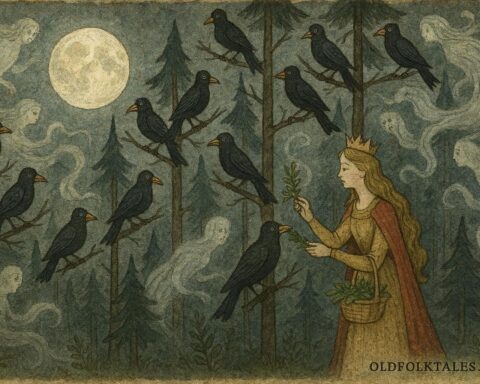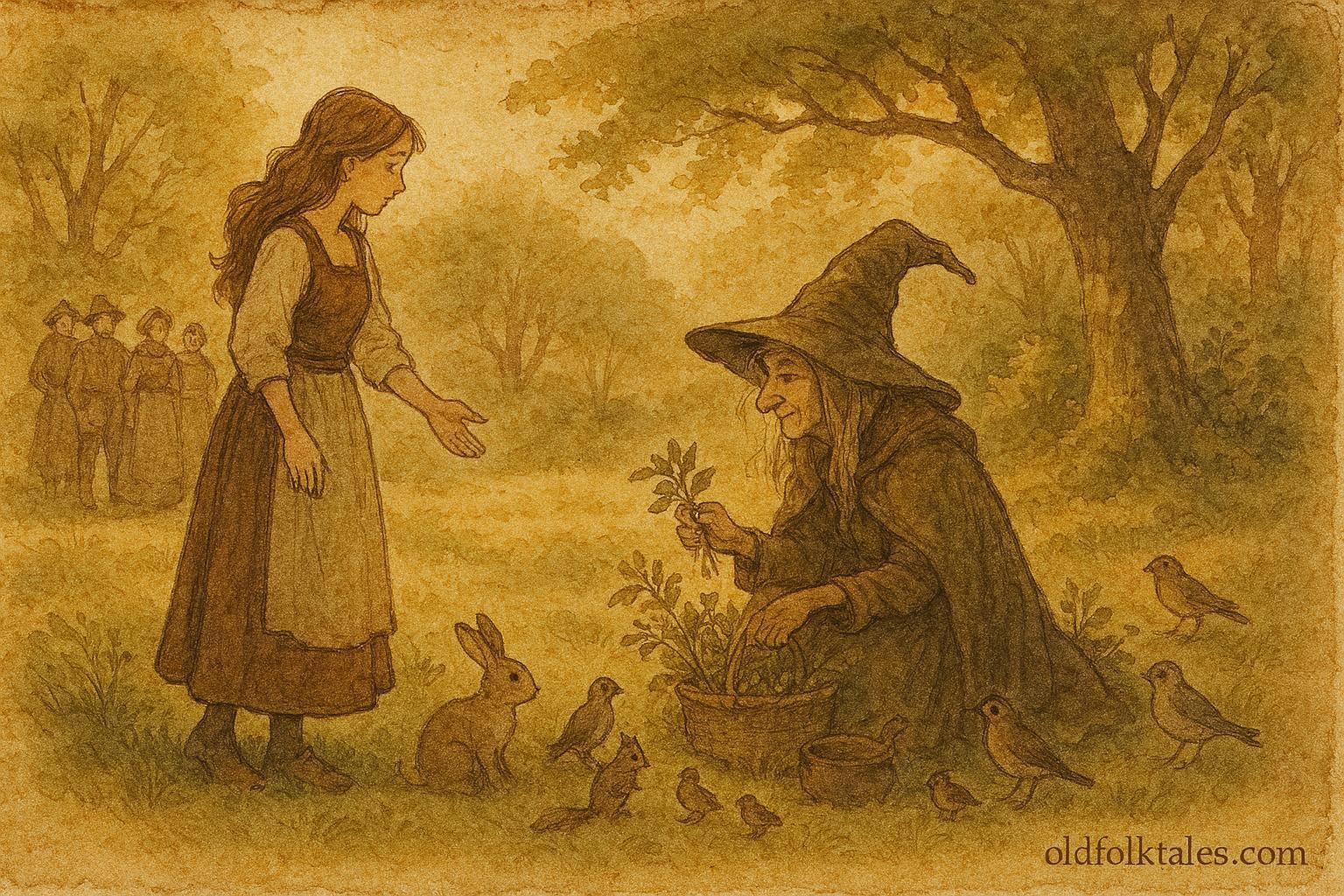
In a remote Hungarian village, nestled on the edge of a great and shadowy forest, the villagers whispered of a witch who lived among the trees. For generations, they blamed her for every misfortune, the withering of crops, the disappearance of livestock, and sudden storms that ruined their harvests. Children were warned not to stray near the forest, and adults crossed themselves when they walked its borders.
Yet amid this fearful community, there lived a young girl named Ilka. Though small and quiet, Ilka had a curious mind and a courageous heart. She often wandered to the forest’s edge, listening to birds, observing animals, and marveling at the streams and flowers that grew there. Unlike the other villagers, she did not see the forest as a place of only danger, it was full of life, mystery, and secrets waiting to be understood.
One spring, the village suffered a terrible drought. The fields cracked, the wells ran low, and the livestock grew thin and weak. Desperation took hold, and the villagers turned with increasing suspicion toward the forest witch. “It is her doing!” they cried. “She must be stopped before she brings ruin upon us all!”
Despite the fear surrounding her, Ilka could not ignore the plight of the people, nor the signs she had noticed in the forest. She observed that some areas of the woods seemed unusually green and vibrant, with streams flowing steadily, even as the village wells dried up. Birds chirped merrily among certain trees, and animals thrived near a particular clearing deep within the forest.
One morning, when the village elders organized a plan to confront the witch, Ilka quietly packed a small satchel with bread, water, and a lantern, and slipped away toward the forest. The villagers had long warned her to stay away, but her courage outweighed her fear.
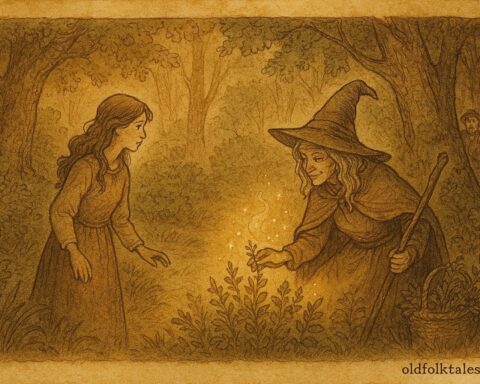
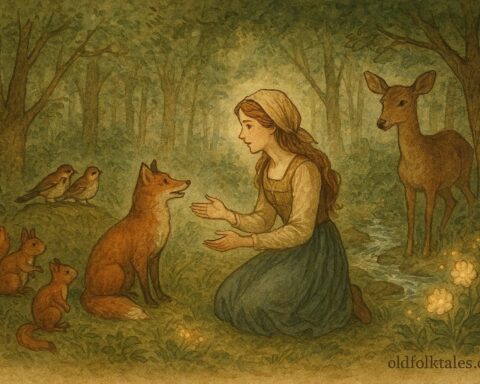
The deeper Ilka went, the more she noticed signs of careful tending, flowers neatly watered, small bundles of herbs arranged on rocks, and clearings where birds and deer found safety. Finally, she reached a small cottage hidden beneath the thick branches of ancient trees. Smoke curled gently from the chimney, and a warm light glowed within.
Standing at the doorway was a woman, neither frightening nor cruel, but with eyes that seemed to hold both wisdom and sorrow. Her hair, streaked with silver, fell like a waterfall over her shoulders, and her hands were rough but skillful, marked by years of tending both plants and animals. Ilka recognized her at once as the feared forest witch.
“Do not be afraid,” the woman said, her voice soft yet firm. “I have waited for someone with courage and understanding, not fear.”
Ilka stepped forward, bowing slightly. “I have come to understand,” she said. “The village believes you bring misfortune, but I see the forest thriving where you dwell. Who are you, truly?”
The woman smiled gently. “I am called many names,” she replied, “but I am a healer of the land. I care for the plants, the streams, the animals, and all who live near them. When humans fail to honor the balance of the forest, they suffer. But I do not cause suffering, I protect what is sacred.”
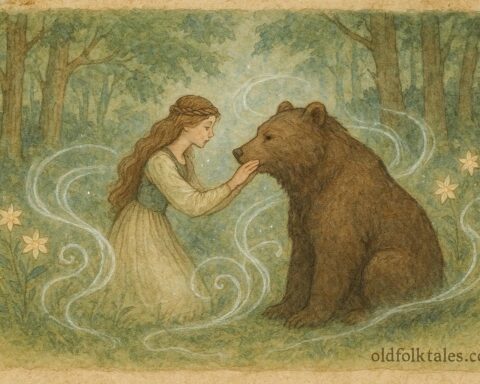
Ilka listened carefully as the woman explained her role. She tended herbs that could cure illnesses, guided lost travelers back to safety, and ensured that rivers did not flood or dry up entirely. The witch’s knowledge of nature allowed the land to recover when humans failed to act wisely.
“Why do the villagers fear you so?” Ilka asked.
“They fear what they do not understand,” the woman said. “They see only the forest’s power, not its harmony. When misfortune strikes, they blame me, rather than learning to live in balance with the land.”
Ilka felt a surge of empathy. “Then I will help them understand,” she said. “I will show them that fear is not the answer, and that knowledge, courage, and respect can bring peace.”
Returning to the village, Ilka first sought out the elders. She spoke gently, recounting what she had learned, describing the ways the witch protected the forest and healed those in need. Some elders scoffed at first, but Ilka’s sincerity and evidence, the herbs she carried, the small birds that followed her into the village, began to soften their hearts.
The next day, Ilka guided a group of villagers into the forest. At first, they were hesitant, eyes wide with fear, fingers clutching amulets and charms for protection. But as they walked, they saw streams carefully diverted to water the fields, medicinal plants left in orderly bundles for anyone to gather, and animals that approached them without fear. The witch appeared, smiling warmly.
“See,” Ilka said, “she protects us all. The forest is not our enemy, it is a source of life. Respect and understanding, not fear, will keep us safe.”
Gradually, the villagers’ fear melted away. They learned to leave offerings for the forest, to gather herbs responsibly, and to respect the creatures and streams that sustained their lives. They also began to recognize the witch not as a source of danger, but as a guardian of balance and wisdom.
Over time, harmony was restored. Crops flourished, livestock thrived, and even during difficult seasons, the villagers trusted in the guidance of both Ilka and the forest healer. And though the witch remained in her cottage deep in the woods, she was no longer a figure of fear. She became a teacher and a friend, bridging the world of humans with the rhythm of the natural world.
Ilka herself grew into a respected figure in the village. She had demonstrated that courage, curiosity, and understanding could overcome fear and prejudice. Her bravery reminded all that wisdom often comes from seeing the world not through panic or suspicion, but with open eyes, an open heart, and a willingness to learn.
Thus, the tale of the Witch of the Forest endured across generations, a story of courage, insight, and the enduring harmony between humans and the natural world.
Moral Lesson
Fear often arises from misunderstanding. Courage, curiosity, and empathy allow humans to see the truth, resolve conflicts, and live in harmony with nature and others.
Knowledge Check
1. Why did the villagers fear the forest witch?
They blamed her for droughts, missing livestock, and storms, fearing her supposed magical powers.
2. How did Ilka’s approach differ from the villagers’?
She approached with courage, curiosity, and a desire to understand, rather than with fear or prejudice.
3. What was the witch’s true role in the forest?
She was a healer and protector, tending plants, streams, animals, and the balance of nature.
4. How did the villagers’ perception change?
By observing the witch’s care for the land and guided by Ilka, they came to respect her and the forest rather than fear them.
5. What qualities allowed Ilka to succeed where others failed?
Courage, empathy, curiosity, and insight into the workings of nature and human behavior.
6. What cultural origin does this story represent?
Hungarian folklore, emphasizing respect for nature, understanding the misunderstood, and courage in the face of fear.
Source: Béla Bartók, Hungarian Folk Tales (1915)
Cultural Origin: Hungary