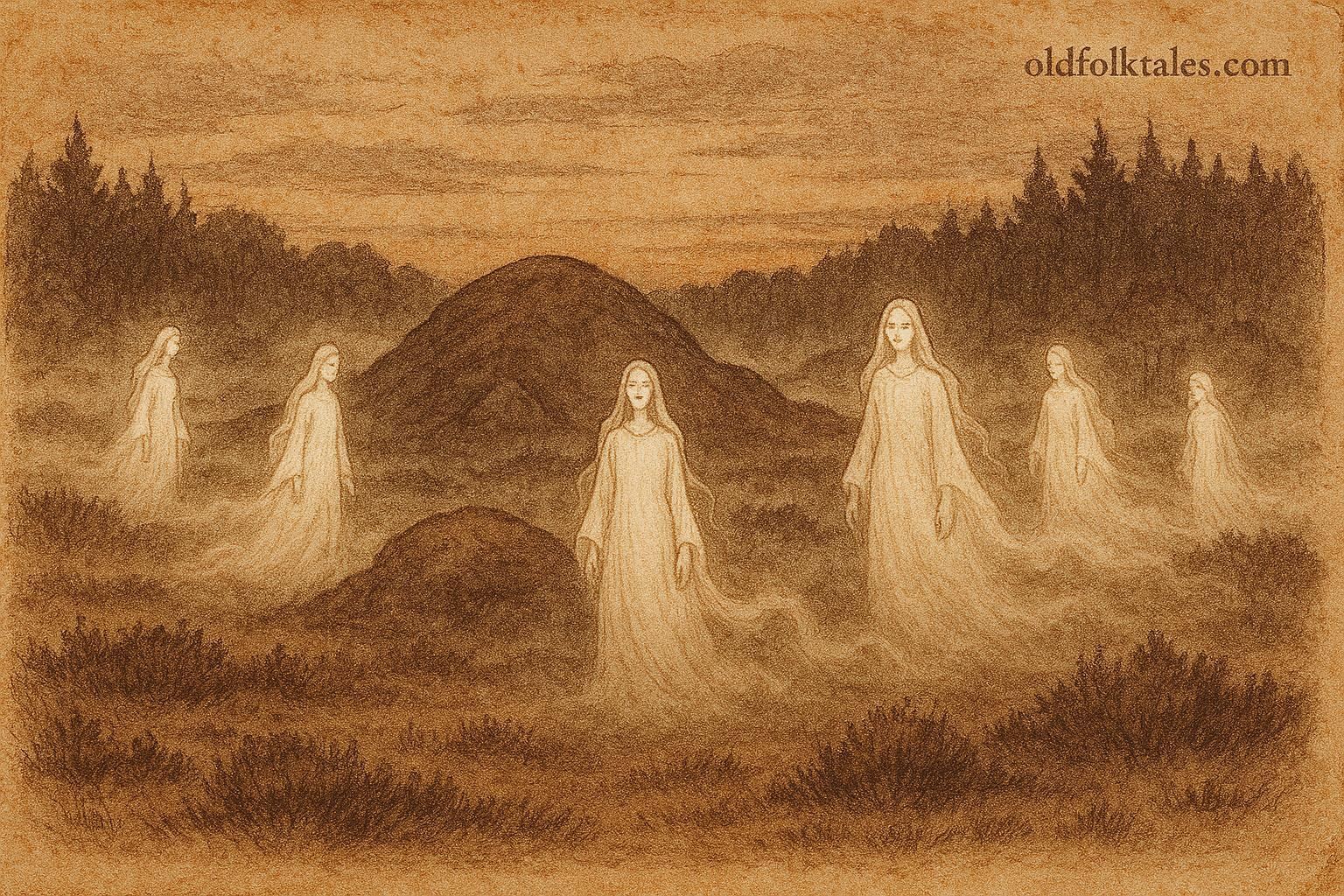
Long before church bells rang across the lowlands of the Netherlands, before villages were neatly bordered by roads and canals, the land itself was believed to breathe. The hills, the drifting mists, and the ancient burial mounds were not empty places, but thresholds, points where the world of the living brushed against something far older and unseen. It was in these places that the Witte Wieven were said to dwell.
They were known as the White Women, though this name did not always mean women of flesh and blood. Some believed the word witte referred not only to their pale appearance, but to wisdom, holiness, and the whiteness of ancient knowledge. Others said it described the fog itself, for the Witte Wieven often appeared as figures woven from mist, rising silently from the land at dusk or dawn.
Discover the moral heart and wild spirit of the north through timeless Nordic storytelling
Across the regions of Drenthe, Gelderland, and Overijssel, their presence was both feared and respected. To speak of them carelessly was considered dangerous. To mock them was unthinkable.
The Witte Wieven were said to dwell in places untouched by human order, heathlands where the wind whispered through tall grass, forests where the sunlight rarely reached the ground, and ancient burial hills raised long before memory. These hills, known as wievenheuvels, were believed to be doorways between worlds. To walk too close without reverence was to risk crossing a boundary never meant to be crossed.
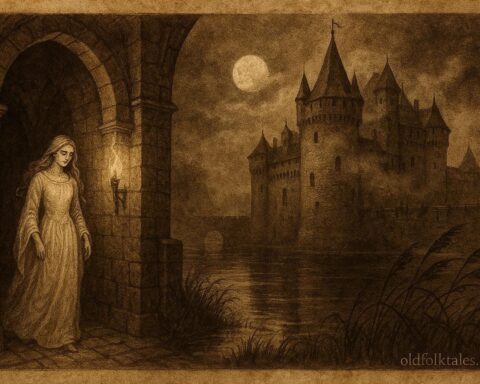
Those who glimpsed the Witte Wieven described them as tall, pale figures clothed in flowing white garments, their faces sometimes hidden by veils of mist. At times, they appeared almost human, elderly women with long white hair, bent with age and knowledge. At other times, they were little more than glowing shapes drifting above the earth, silent and watchful.
They were not spirits of simple good or evil.
To those who showed humility, respect, and restraint, the Witte Wieven could be protectors and healers. They were said to possess deep knowledge of herbs, remedies, and the hidden powers of the land. In times of sickness, some villagers would leave offerings near the hills, bread, milk, or cloth, hoping to earn the favor of the White Women. If the offering was accepted, a cure might follow: a fever broken, a wound healed, a child spared.
But the Witte Wieven were also guardians of boundaries.
Those who entered their domains with arrogance or greed often met a far different fate. Stories were told of travelers who mocked the old tales, wandering into the mists at night only to lose their way completely. Paths twisted where none had twisted before. Familiar landmarks vanished. Voices whispered from the fog, calling them deeper into the hills.
Some were never seen again.
Others returned changed, confused, aged beyond their years, or unable to speak of what they had witnessed. A few were said to have angered the White Women so deeply that they were struck ill or driven mad, their punishment a reminder that the land itself demanded reverence.
In these tales, the Witte Wieven were not cruel without reason. They punished intrusion, disrespect, and the breaking of ancient laws, laws older than kings or churches. To dig into a burial mound, to cut sacred trees, or to disturb the land for selfish gain was to invite their wrath.
Yet they were also deeply tied to ancestral memory.
Some believed the Witte Wieven were the spirits of ancient women, wise healers, seeresses, and midwives who lived before Christianity reshaped the land. In life, these women were said to have guided their communities, understood the rhythms of nature, and preserved sacred knowledge. In death, they did not fully depart, but became bound to the hills and mists they once protected.
Others believed the White Women were not human spirits at all, but beings older still, nature entities who existed long before humanity, shaped from earth, fog, and wind. In this telling, they were keepers of balance, ensuring that the boundary between the living world and the Otherworld remained intact.
At twilight, when the day gave way to night, the presence of the Witte Wieven was said to be strongest. Farmers returning home would sometimes see white shapes moving across the fields or hovering near burial hills. Wise elders warned children never to follow such figures, no matter how gentle or inviting they seemed.
“Respect them,” the elders would say, “and they will leave you in peace.”
As Christianity spread through the Netherlands, the old beliefs did not disappear overnight. Instead, they shifted. The Witte Wieven were increasingly spoken of as ghosts or dangerous spirits, their ancient roles misunderstood or feared. Burial mounds were avoided. The hills became places of superstition rather than reverence.
Yet the stories endured.
Even as churches rose and villages expanded, people continued to speak of strange mists that moved against the wind, of unexplained healings, and of travelers who vanished after mocking the old ways. The White Women became a quiet reminder that not all power belonged to humanity, and not all wisdom could be controlled or erased.
In later centuries, folklorists began to record these tales, capturing fragments of beliefs that had survived only through whispered warning and memory. Though shaped by time, the core of the legend remained unchanged: the Witte Wieven were guardians of the land and the unseen, demanding humility and respect from those who walked upon their territory.
Even today, when mist rises over the heathlands of the eastern Netherlands, the old stories are remembered. Whether one believes in spirits or not, the presence of the land itself carries weight, ancient, watchful, and deserving of care.
And in the drifting fog, some still say, the White Women linger, reminding the living that the world is layered, and that every step taken without respect echoes far beyond what the eye can see.
Discover the timeless charm of French, Dutch, and Belgian stories filled with cleverness and heart
Moral Lesson
The tale of the Witte Wieven teaches that nature and the unseen world demand humility. Respect for boundaries, ancestors, and the land brings protection and wisdom, while arrogance and intrusion invite loss and punishment.
Knowledge Check
1. Who are the Witte Wieven in Dutch folklore?
They are white-clad spirits associated with mist, hills, and ancient burial grounds.
2. Where are the Witte Wieven traditionally found?
In eastern Netherlands, especially Drenthe, Gelderland, and Overijssel.
3. Are the Witte Wieven good or evil spirits?
They are neither; they reward respect and punish arrogance or intrusion.
4. What places are associated with the Witte Wieven?
Mists, forests, heathlands, and ancient burial mounds.
5. What do the Witte Wieven symbolize?
Nature’s power, ancestral memory, and the boundary between worlds.
6. How should humans treat the Witte Wieven according to folklore?
With humility, offerings, and respect for sacred land.
Source & Cultural Origin
Source: Pre-Christian Dutch oral folklore, later documented by folklorists, Pre-Christian era; first written records 16th–17th century CE
Cultural Origin: Eastern Netherlands (Drenthe, Gelderland, Overijssel)