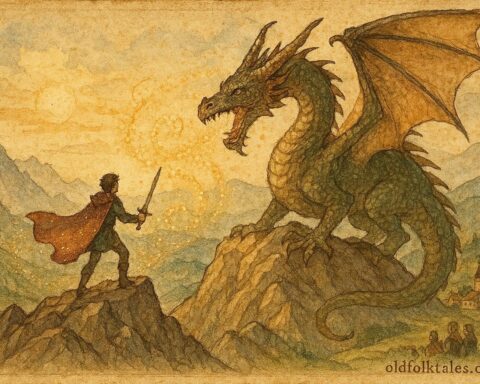
Long ago, in a village tucked between the steep slopes of the Albanian highlands, life was peaceful but fragile. The villagers tended their flocks, tilled the rocky soil, and celebrated the rhythm of seasons with simple joy. Yet, a shadow loomed over the valley, a fearsome dragon that demanded tribute from the villagers, a beast whose roar shook the mountains and whose breath could ignite the tallest pines. No one dared defy it, for those who failed to meet its demands were consumed by fire or fear.
The village lived in dread. Each year, the dragon’s hunger grew, and so did the despair of the people. Fathers and sons attempted to fight it, but brute strength alone could not match the cunning and power of the dragon. The women and children watched from the hillsides, praying that some miracle might save them.
Discover Polish, Russian, Ukrainian, and Belarusian folktales where magic and morality meet
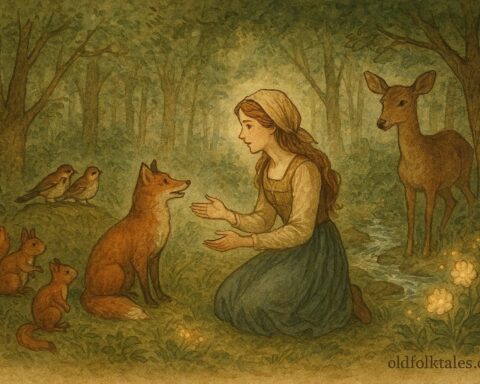
Among the villagers was a young woman named Elira. She was known not for her physical strength, but for her clever mind and fearless heart. She had grown up listening to the whispers of the elders, learning to read the patterns of the wind, the stars, and the creatures of the mountains. She understood the ways of animals, the secrets of the forest, and the subtle signs that others often overlooked.
When the dragon demanded a tribute of livestock yet again, the villagers despaired. Elira, however, stepped forward. “We will not cower,” she declared. “There is a way to defeat this beast, but it will require cunning, patience, and courage.” The villagers were hesitant; none had dared face the dragon directly, but Elira’s determination inspired hope.
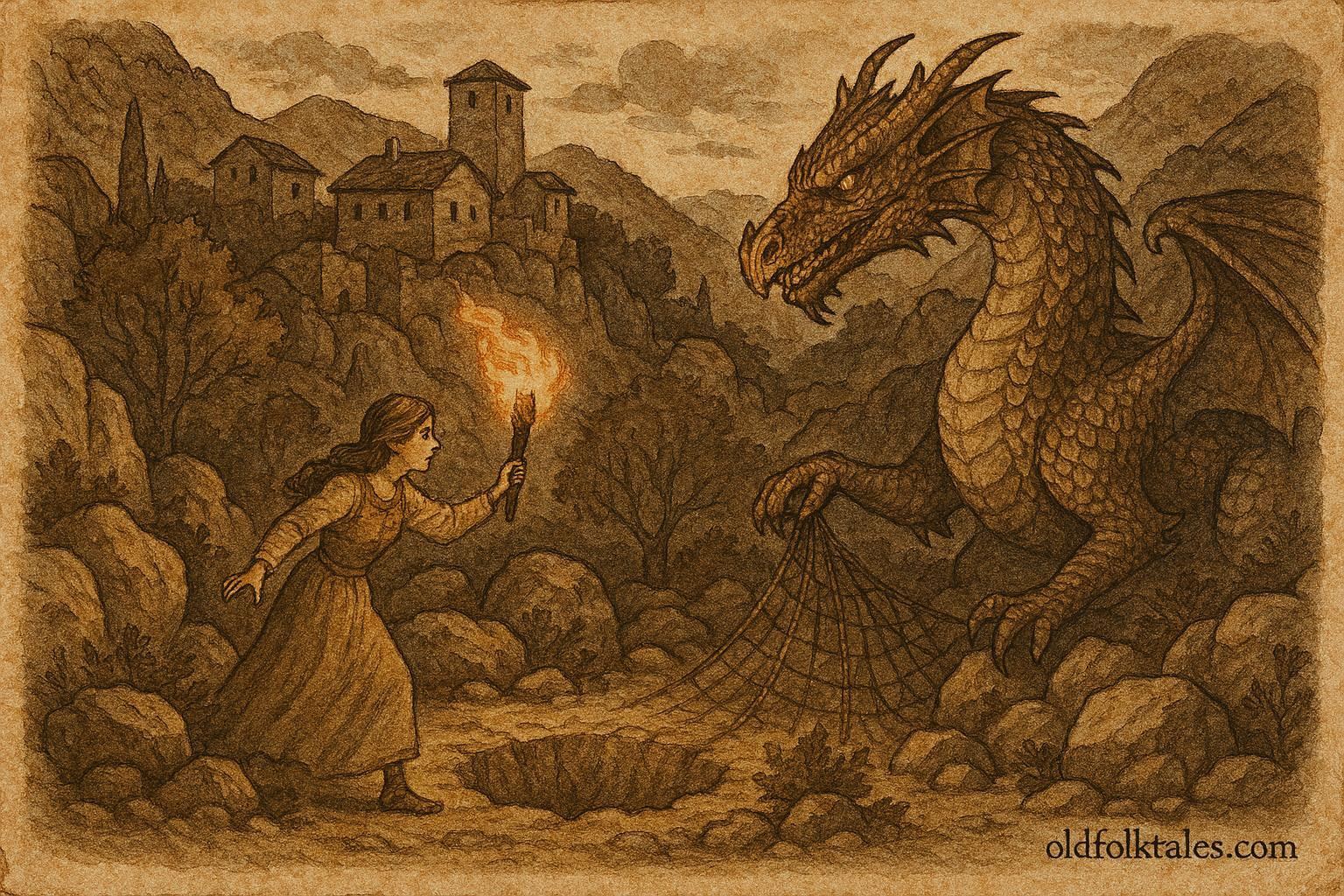
She devised a trap that relied not on force, but on deception. First, she instructed the villagers to gather the largest, most succulent sheep and goats and to leave them in a clearing near the edge of the forest. Then she worked through the night, weaving a web of ropes, pits, and nets camouflaged with branches and leaves. Every step of the trap was carefully calculated, exploiting the dragon’s predictable habits and the narrow terrain where it hunted.
When the dragon approached the village at night, its scales glimmering under the moon, it smelled the livestock and advanced with feral excitement. Elira had positioned herself behind a rocky outcrop, keeping careful watch. As the dragon lunged for the first goat, it triggered the concealed pit. The ground beneath the dragon gave way, and it fell, momentarily stunned.
Recovering quickly, the dragon thrashed, trying to break free, but it became entangled in the nets Elira had stretched across the clearing. The ropes tightened with each movement, designed to restrain without harming the creature permanently. Elira moved with precision, using torches to guide the dragon into deeper traps and away from the village, her calm focus unwavering even as the beast roared in fury.
Finally, the dragon, exhausted and ensnared, was caught securely within the final net. Elira approached carefully, speaking in a steady voice. “Leave this valley, and harm us no more. Seek your meals elsewhere, but do not return to torment these people.” The dragon’s eyes, filled with both rage and acknowledgment of her cunning, regarded her silently. It understood that brute power alone could not conquer those who possessed intelligence and courage. With a final shudder, the dragon spread its wings and disappeared into the night sky, leaving the village in peace for generations to come.
The villagers celebrated, praising Elira not only for her bravery but for her ingenuity. She had demonstrated that strength was not the only measure of heroism; a clever mind, strategic thinking, and courage could triumph over even the most terrifying adversary. Songs were sung of her deeds, and her story became a guiding lesson for children and adults alike: that wit and courage together can overcome even the greatest dangers.
From that day forward, the village flourished. Livestock thrived, fields grew abundant, and no dragon dared return. The elders reminded everyone that Elira’s victory was not simply a triumph of one person, but a triumph of foresight, intelligence, and communal cooperation. The young woman who outwitted the dragon became a symbol of hope, wisdom, and the power of cleverness over brute force.
Moral Lesson
The folktale of Elira teaches that courage paired with intelligence can overcome overwhelming challenges. Ingenuity, strategy, and communal care are often more powerful than strength alone, and those who use their minds wisely can protect and lead their communities.
Knowledge Check
1. Who is Elira in the story?
Elira is a clever and courageous young woman who devises a plan to defeat the dragon threatening her village.
2. How does Elira defeat the dragon?
She sets a series of traps using ropes, nets, and pits, relying on cleverness and strategy rather than brute force.
3. What themes are central to this folktale?
Ingenuity, courage, communal protection, and triumph of intelligence over raw strength.
4. Where does the folktale originate?
From Kosovo and northern Albanian oral tradition, collected by Anton Çetta in 1958.
5. What lesson do villagers learn from Elira’s actions?
That cleverness, planning, and bravery can protect a community and overcome dangers that physical strength alone cannot.
6. How is the dragon portrayed in the story?
As a powerful, fearsome, but ultimately outwitted adversary, representing danger that requires intelligence to overcome.
Source: Anton Çetta, Përralla Popullore Shqiptare, 1958.
Cultural Origin: Kosovo and northern Albania.