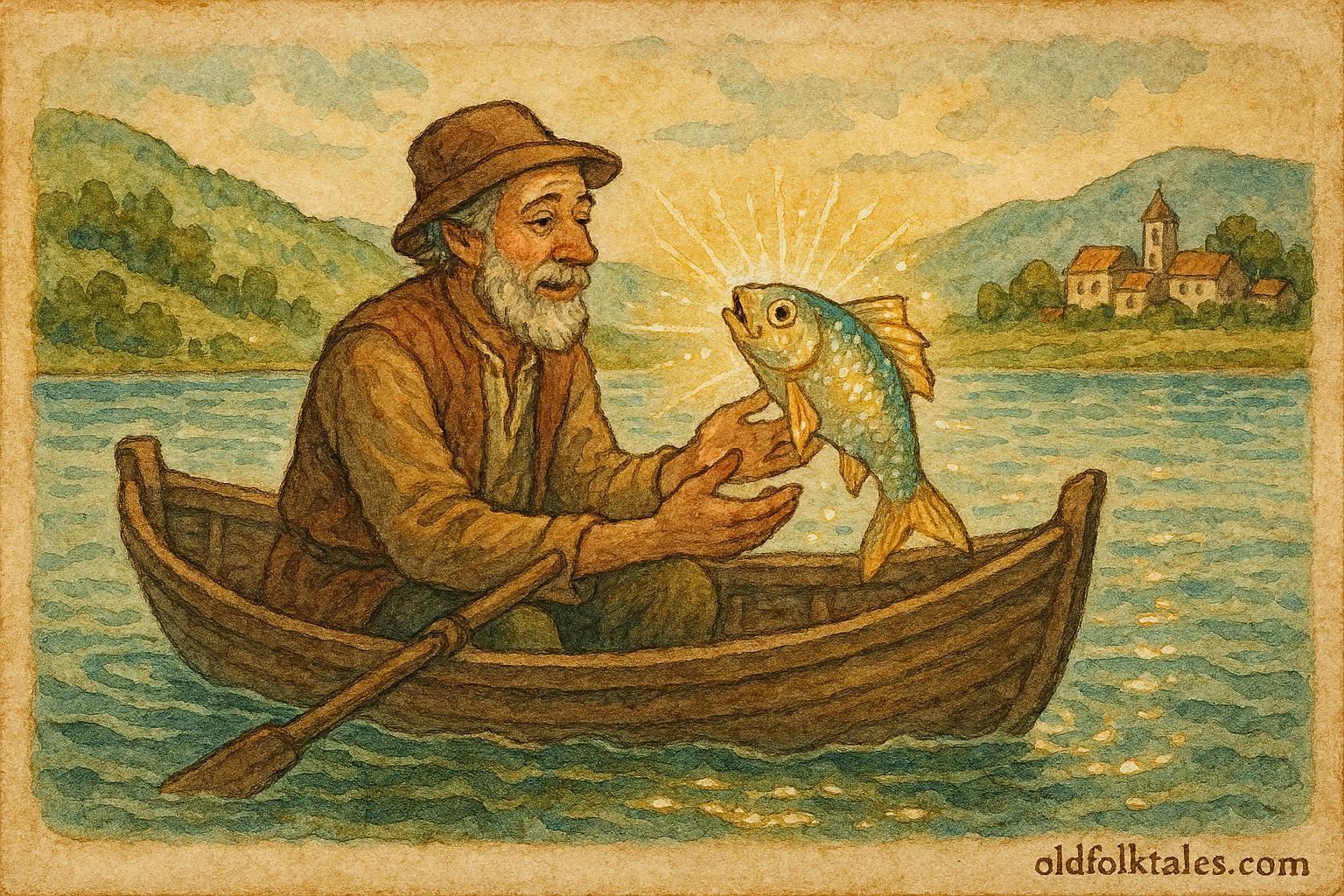
In a quiet Bulgarian village cradled by green hills and flowing rivers, there lived a fisherman named Vasil. His life was simple: every day he would set out in his small wooden boat, paddle down the winding river, and cast his nets for fish. Though the villagers lived in modest homes, Vasil’s was the humblest of all, with a thatched roof, worn floorboards, and a hearth that never blazed brighter than the modest firewood he could gather. Yet despite his poverty, Vasil’s heart was content.
He took pleasure in the gentle ripple of the water, the call of birds over the riverbanks, and the laughter of children playing along the shore. Unlike many of his neighbors, he never envied the wealthier villagers who owned larger boats, sturdier homes, or more livestock. Still, as he mended his nets under the golden morning sun, a small longing stirred in his heart, a wish that life could be a little easier, that he might provide not only for himself but also for his aging parents, who had worked tirelessly all their lives.
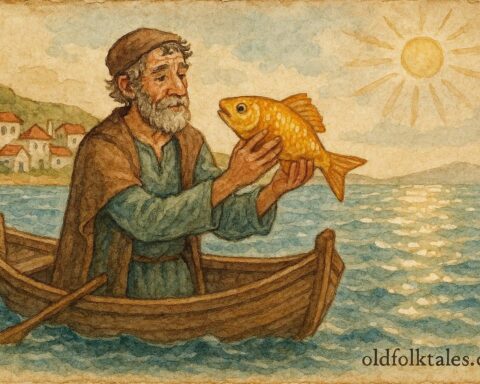
One dawn, as a soft mist clung to the river and the mountains shimmered pink and gold in the first light, Vasil pushed his boat into the calm current and cast his net. He hummed quietly, listening to the river’s gentle murmur and the distant crowing of roosters from the village. Hours passed, and his net came up with the usual silver-gray fish. But then, as the sunlight struck the water, one fish shimmered like no other. Its scales sparkled in brilliant hues of sapphire and silver, and its eyes reflected a strange, intelligent light.
Vasil leaned closer, and gasped. The fish opened its mouth, and to his astonishment, it spoke in a voice as clear as a bell:
“Kind fisherman, release me from your net, and I will grant you three wishes. But be warned: the choices you make will shape not only your life but the lives of those around you.”
Vasil’s heart pounded. Magic, he had read about it in old scrolls and heard whispered in folktales, but he had never imagined it would appear before him. “Three wishes?” he asked, trembling with awe. “Anything I desire?”
“Yes,” the fish replied. “Yet wisdom must guide your heart. Greed and recklessness will turn gifts into curses. Choose with care.”
For a long moment, Vasil sat in silence, holding the magical fish. His mind wandered to his parents’ worn home, the village that often struggled to survive the lean seasons, and the river that had sustained him all his life. Then, with humility and thoughtfulness, he spoke his first wish:
“I wish for my village to have a bountiful harvest this year, that no family should go hungry.”
The fish shimmered and leapt from Vasil’s hands into the air, scattering golden light across the river and the fields beyond. Suddenly, the meadows were lush and green, the wheat ripened to golden perfection, and the villagers who walked through the fields felt a joy unlike any other. News of the miraculous harvest spread quickly, and though many marveled at the sudden bounty, they also whispered curiosity about who had caused it.
Vasil smiled quietly, satisfied that his first wish had helped others rather than himself alone.
For his second wish, he thought of his aging parents, who labored each day to keep food on the table and mend their small home. “I wish for enough gold to provide for my parents and myself for the rest of our days,” he said.
The river sparkled again, and soon a mound of gleaming gold coins appeared in his tiny home. Vasil’s eyes widened, yet as he gazed upon the treasure, he felt a strange unease. Though he now had wealth beyond imagination, the villagers began to look at him with envy, and neighbors whispered behind his back, questioning how such riches had come to a poor fisherman. Even his parents, though grateful, cautioned him to use the gold wisely, warning that misused wealth could bring misfortune.
Vasil realized the truth in the fish’s warning: riches alone could not buy peace or contentment. They could bring comfort, yes, but also jealousy, suspicion, and temptation.
For his third and final wish, Vasil pondered deeply. He watched the river flow past his boat, glimmering in the afternoon sun, and thought of the villagers who now lived more comfortably, the fields that would never again wither, and the lessons he had learned from the first two wishes. Many in his position might have wished for castles, power, or more gold, but Vasil understood that such desires could corrupt the heart.
“I wish,” he said at last, “for the wisdom to live rightly, to know when enough is enough, and to use what I have to help others, not harm them.”
The fish glowed brighter than ever, leaping in a rainbow arc above the river before slipping back into the water. “You have chosen wisely, Vasil,” it said. “The greatest treasures are not gold or silver, but the heart that knows balance, humility, and foresight.”
In the days that followed, Vasil became a guide and counselor for the villagers. He used the gold and bounty of the river wisely, helping those in need, teaching children about the importance of moderation, and advising neighbors on fair and honest practices. Though he remained a simple fisherman in appearance, the villagers came to respect him for his wisdom, not his wealth.
Stories of Vasil and the magical talking fish traveled far and wide. Fishermen along other rivers spoke of the enchanted creature and the clever, humble man who had been granted three wishes. Parents told their children of the dangers of greed, the value of thoughtful choices, and the enduring power of humility.
Even as years passed, Vasil continued his life on the river, content with the simple joy of work, the happiness of his family, and the knowledge that he had acted wisely. The fish was never seen again, but its lesson remained: magic may grant desires, but wisdom determines their true worth.
The villagers never forgot the tale. Every year, when the first fish appeared in the river or the harvest ripened in golden abundance, elders would recount the story of Vasil and the talking fish. They reminded all who would listen that human desires have consequences, that wealth and power can be fleeting, and that the truest riches lie in humility, wisdom, and the ability to choose what is right.
And so, Vasil lived a long, respected life, known not for the gold in his home, but for the heart that guided his every choice, a heart that had learned, through the magical gift of a talking fish, that humility and wisdom surpass all treasures.
Moral Lesson
True wealth lies not in gold or power, but in humility, wisdom, and thoughtful choices. Greed may grant temporary rewards, but lasting fulfillment comes from balance, foresight, and selflessness.
Knowledge Check
- Who is the main character in Vasil and the Talking Fish?
Vasil, a humble and thoughtful fisherman living by a Bulgarian river. - What magical creature grants Vasil three wishes?
A talking fish with scales of sapphire and silver. - What is Vasil’s first wish?
A bountiful harvest for his village to ensure no family goes hungry. - What lesson does Vasil learn from his second wish for gold?
That material wealth can bring envy, suspicion, and unforeseen consequences. - How does Vasil wisely use his third wish?
He asks for wisdom and understanding to use his gifts responsibly and help others. - What overarching moral does the story teach?
Humility, wisdom, and moderation are more valuable than greed or temporary riches.
Source: Collected by Georgi Strezov, Bulgarian Folk Tales, 1895
Cultural Origin: Bulgaria