In the rugged heart of Central Switzerland, where steep mountains rise like ancient guardians and clear lakes mirror the sky, lived a man named William Tell, a hunter and skilled marksman from the canton of Uri. He was known throughout the valleys for his quiet strength, steady hands, and unmatched skill with the crossbow. Though not a nobleman or ruler, Tell was respected as a man of honor, devoted to his family and fiercely loyal to his homeland.
At that time, the people of Uri lived under harsh foreign rule. The Austrian Habsburgs governed the region through appointed officials, one of whom was Hermann Gessler, the imperial bailiff. Gessler ruled with cruelty and arrogance, enforcing his authority through fear rather than justice. He imposed heavy taxes, ignored local customs, and treated the mountain people with open contempt.
To demonstrate his power and demand submission, Gessler ordered his hat to be placed atop a tall pole in the town square of Altdorf. Every passerby was commanded to bow before it, as though the empty hat itself embodied imperial authority. Guards watched closely, punishing anyone who failed to show obedience.
William Tell, who valued dignity and freedom, passed through the square one day with his young son, Walter. Seeing the hat, Tell walked past without bowing, neither acknowledging it nor showing disrespect, only refusing submission to a symbol he believed unjust. This act did not go unnoticed.
Gessler, enraged that a simple hunter would defy him publicly, ordered Tell to be seized. Recognizing Tell as the famed marksman, the bailiff devised a cruel punishment meant to humiliate and terrify the people. He ordered that an apple be placed on Walter’s head and commanded Tell to shoot it off with a single bolt from his crossbow.
The crowd fell silent. Mothers turned away in fear. Fathers clenched their fists helplessly. Walter stood still, trusting his father completely, though the danger was clear to all.
Tell protested, pleading for his child’s life, but Gessler only smiled coldly. Refusal meant immediate execution for both father and son.
With steady breath and iron resolve, Tell took two arrows from his quiver. He placed one in his crossbow and concealed the other in his clothing. He raised the weapon, narrowed his eyes, and focused entirely on the apple. The mountains seemed to hold their breath.
The arrow flew true.
The apple split cleanly in two and fell to the ground. Walter stood unharmed.
The crowd erupted in relief and awe. But Gessler’s suspicion was aroused when he noticed the second arrow. He demanded to know its purpose. Tell answered honestly: had the first shot harmed his son, the second arrow was meant for Gessler himself.
Furious, Gessler ordered Tell arrested and bound. He commanded that Tell be taken by boat across Lake Lucerne to imprisonment in a distant fortress.
As fate would have it, a violent storm rose over the lake. The guards, fearing for their lives, unbound Tell so he could steer the boat safely through the treacherous waters. Seizing the moment, Tell leapt ashore at a narrow rocky ledge, later known as Tell’s Leap, and vanished into the mountains.
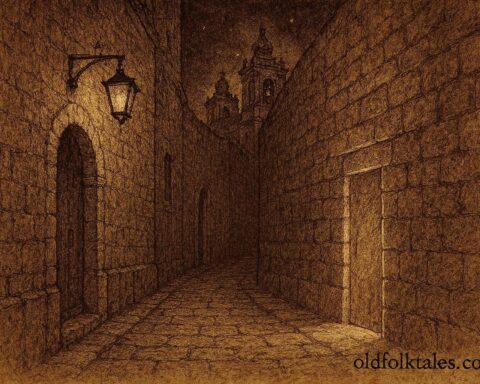
Days later, as Gessler traveled through a narrow mountain pass known as the Hohle Gasse, William Tell lay in wait. When the tyrant appeared, Tell stepped from the shadows and loosed his arrow. Gessler fell, struck down by the very skill he had tried to weaponize against innocence.
The death of Gessler sent shockwaves through the region. Inspired by Tell’s courage, the people of Uri, Schwyz, and Unterwalden rose together against foreign oppression. Their unity and resolve laid the legendary foundation for what would become the Swiss Confederacy, built on principles of freedom, justice, and self-rule.
William Tell did not seek power or glory. His legacy lived on not as a ruler, but as a symbol, a reminder that personal courage can awaken collective freedom, and that even the mightiest tyranny can fall before justice and resolve.
Moral Lesson
True freedom is born from courage and integrity. When individuals stand firm against injustice, their actions can inspire unity, resistance, and lasting change for generations.
Knowledge Check
-
Q: Who was William Tell in Swiss folklore?
A: William Tell was a legendary Swiss marksman from Uri known for defying tyranny and defending freedom. -
Q: Why was William Tell ordered to shoot the apple?
A: He refused to bow to the tyrant Gessler’s hat, leading to the cruel test involving his son. -
Q: Who was Hermann Gessler?
A: Gessler was an oppressive Austrian bailiff ruling Central Switzerland under Habsburg authority. -
Q: What role did William Tell’s act play in Swiss history?
A: His defiance inspired rebellion and helped form the Swiss Confederacy. -
Q: What does the apple symbolize in the story?
A: The apple represents innocence threatened by tyranny and the test of moral courage. -
Q: What is the cultural origin of the William Tell legend?
A: Central Swiss folklore, especially from the canton of Uri.
Source: White Book of Sarnen (c. 1470); later chronicled by Aegidius Tschudi in Chronicon Helveticum (mid-1500s)
Cultural Origin: Central Swiss folklore (Uri)