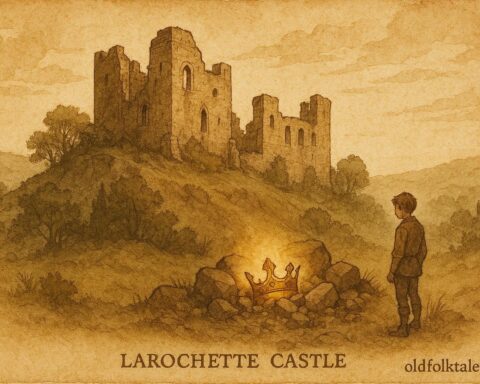
In the wooded valleys near Schandel and Vichten, long ago, there stood the proud Scheuerburg Castle. Perched upon a hill, it overlooked deep forests, fertile meadows, and winding paths that cut through the heart of western Luxembourg. The land was peaceful, until it fell under the rule of a cruel and reckless knight.
Explore the wit and wisdom of Western Europe, where humor and virtue often go hand in hand
He was known across the countryside for his ruthless temper and insatiable desire to hunt. The knight rode every day, regardless of weather or season, driving his dogs deep into the forests to chase deer, boar, and anything else that dared to cross his path. To him, the woods were not a living sanctuary but his personal domain, a place to satisfy his pride and power.
The villagers who lived beneath the castle feared him. They whispered of his harshness, how he would seize their crops, punish them without cause, and laugh when his hounds tore through their fields. No prayer nor plea softened his heart. Even the church bells that called men to humility seemed to mock him.
But pride and cruelty seldom go unpunished.
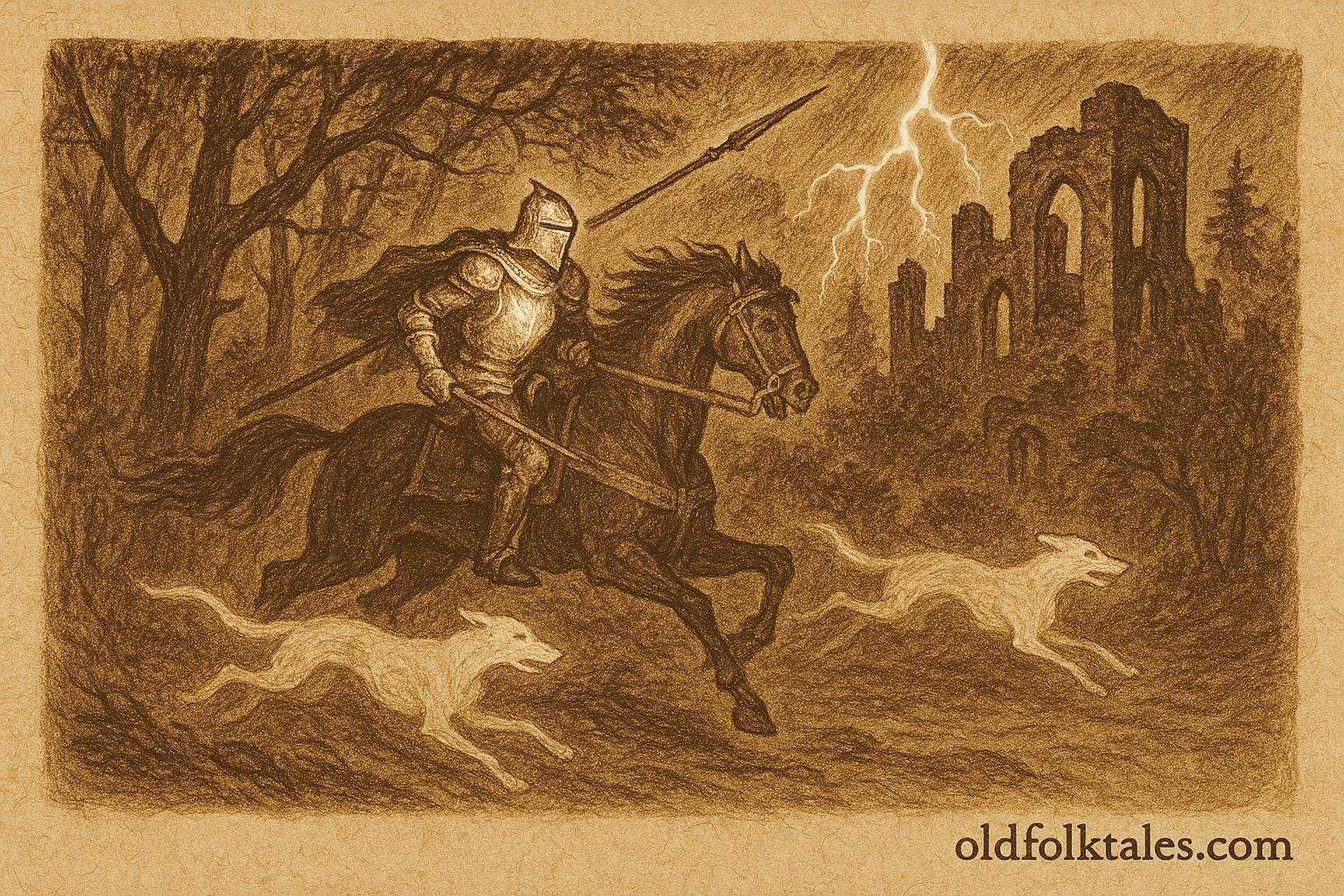
One autumn evening, as the crimson sun sank behind the trees, the knight rode out again. The wind howled through the bare branches, and the dogs barked wildly, sensing something unseen. The huntsmen begged their master to turn back, the storm clouds were thick and the forest paths treacherous, but the knight only sneered.
“Do you think I fear the dark?” he shouted. “The forest belongs to me, and no storm can command me!”
He spurred his horse forward. The thunder cracked, the rain poured down, and in a flash of lightning, the knight vanished into the depths of the woods.
Hours passed. The dogs returned to the castle gate, soaked and trembling, but their master did not follow. The servants searched by torchlight until dawn, and at last they found him, lying lifeless beside his horse, his body twisted, his armor scorched as if by fire. Some said he had fallen from his steed; others whispered that lightning had struck him down. Whatever the cause, his death marked the end of his tyranny, but not his story.
The Haunting
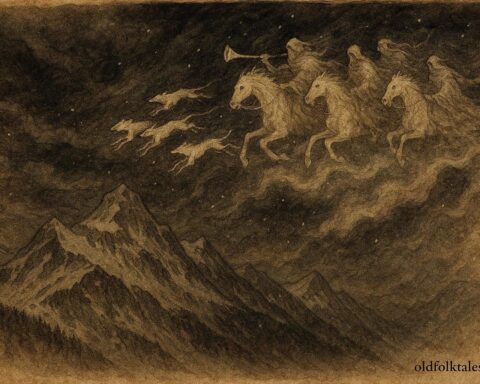
From that night onward, the people of Schandel and Vichten spoke of strange sights in the forest. On stormy evenings, when the wind howled through the trees and the thunder rolled across the hills, the Wild Hunter-Knight was said to ride again.
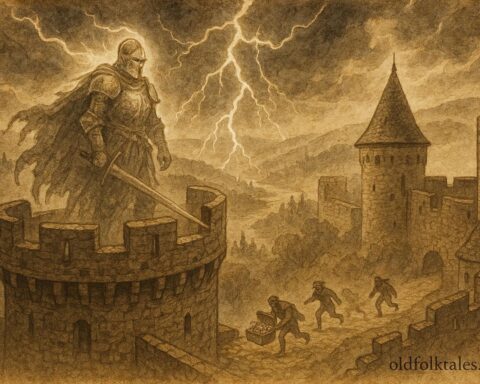
Travelers reported seeing a spectral horseman, shrouded in flame, galloping through the woods with blazing eyes and ghostly hounds at his side. His horn would echo through the valleys—a deep, dreadful sound that froze the heart of anyone who heard it. Some claimed he appeared as a dark shadow, others as a burning figure, and a few swore they saw him surrounded by fire and smoke, his armor glowing like molten iron.
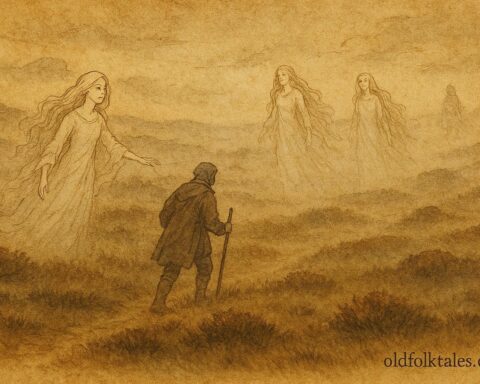
The villagers gave him a name, the Grieselmännchen, the little gray man, though there was nothing small about his presence. He was said to wander the hills endlessly, unable to rest, driven by the same hunger for the hunt that had doomed him.
Old shepherds told that when his horn sounded across the meadows, the air grew heavy, and the animals fell silent. No one dared to walk near Scheuerburg’s ruins after dusk, for fear of meeting the Wild Hunter’s fiery gaze.
And yet, some said the Grieselmännchen was not only a terror, but a warning. When villagers forgot their faith or became too greedy, the sound of his spectral hunt would fill the night, a grim reminder of what becomes of those who put pride above mercy.
The Curse of the Wild Hunt
The legend of the Wild Hunter-Knight soon became part of the land itself. The people of Schandel would say that the storms carry his voice, crying out in eternal torment. Farmers crossing the fields near Vichten swore that they saw hoofprints appear in the mud after heavy rain, though no horses had passed.
Children were told to behave or the Wild Hunter would come riding in the night, his ghostly dogs howling at their doors. And when lightning struck a tree or set the forest ablaze, the elders would cross themselves and murmur, “The Grieselmännchen rides again.”
Centuries passed, yet the story endured. It became a piece of Luxembourg’s living folklore, a tale not only of fear, but of justice. For in the haunting of the cruel knight lies a truth the people understood well: nature and conscience will not be mocked forever.
Even now, on wild and windy nights, some say you can still hear the faint echo of the Wild Hunt in the distance, the rush of hooves, the baying of hounds, and the mournful cry of a knight who rides forever through the forests he once destroyed.
Explore the wit and wisdom of Western Europe, where humor and virtue often go hand in hand
Moral Lesson
The story of the Wild Hunter-Knight teaches that pride, cruelty, and excess bring their own punishment. Those who abuse their power and disrespect the balance of nature and humanity may find themselves haunted by the very forces they sought to command. In the end, arrogance burns itself out, but not before leaving a lasting mark on the world.
Knowledge Check (SEO-Optimized Q&A)
- Who is the Wild Hunter-Knight in Luxembourgish folklore?
He is a cruel knight from Scheuerburg Castle who is condemned after death to ride eternally as a fiery ghost known as the Grieselmännchen. - What caused the knight’s curse in the Grieselmännchen legend?
His arrogance, cruelty, and relentless hunting led to divine punishment, condemning him to roam forever as a ghostly hunter. - Where does the Wild Hunter-Knight’s haunting take place?
The legend is set in the forests and valleys around Schandel and Vichten in Luxembourg. - How does the Grieselmännchen appear to witnesses?
He appears as a spectral rider surrounded by flames, sometimes with ghostly hounds and a glowing horn. - What moral lesson does the Wild Hunter-Knight legend teach?
It warns against pride, greed, and cruelty, showing that those who abuse their power face eternal consequences. - Why is the Grieselmännchen story important in Luxembourgish culture?
It connects the moral lessons of old European folklore with the local landscapes and traditions of Luxembourg, preserving cultural identity through storytelling.
Source: Adapted from “Luxembourg Myths: Grieselmännchen”, Chronicle.lu; and Nicolas Gredt’s Sagenschatz des Luxemburger Landes (1963).
Cultural Origin: Luxembourgish Folklore (Schandel and Vichten, Western Luxembourg).