There are places in the heart of Luxembourg where the land itself seems to breathe with memory. Among the rolling hills and deep, winding valleys of central Luxembourg, silence is never truly empty. It carries weight, an unseen presence, as though the earth remembers more than it reveals.
The people who have lived among these valleys for generations speak of a strange and solemn phenomenon. It does not come every night, nor can it be summoned. It arrives quietly, without warning, and leaves no trace but the lingering echo of something not meant to be forgotten.
They call it The Midnight Choir of the Seven Valleys.
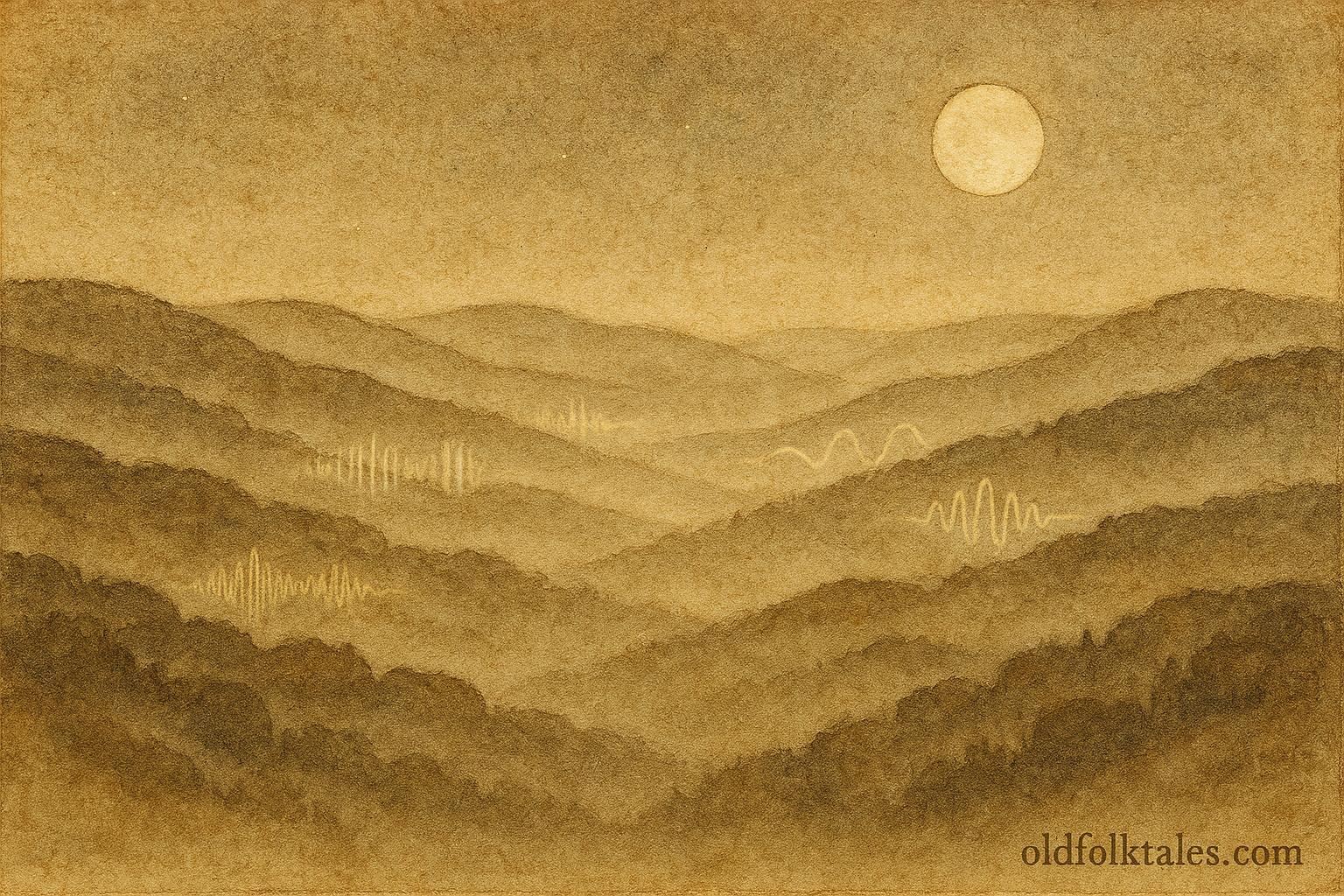
It is said that when the night is at its deepest, when the world has settled into stillness and even the wind holds its breath, a sound begins to rise from the valleys below. At first, it is faint, almost indistinguishable from the whisper of leaves or the distant murmur of water moving through stone. But then it grows clearer.
Voices.
Not one, not two, but many.
A choir.
Those who have heard it describe the sound as unlike any earthly singing. It is neither joyful nor mournful, yet it carries the weight of both. The voices move together in perfect harmony, rising and falling as though guided by a rhythm older than memory itself.
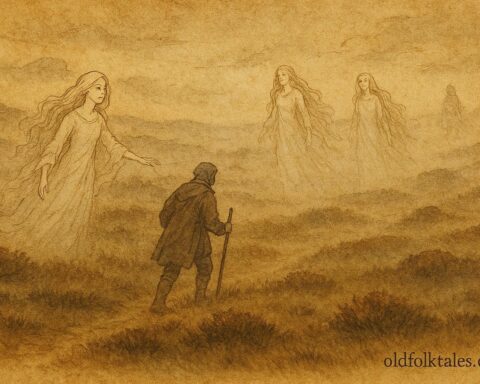
And yet, no singers are ever seen.
Long ago, villagers living among the seven valleys first began to speak of the choir. Shepherds returning late with their flocks would pause along the ridges, straining to listen as the strange music drifted upward from the darkness below. Travelers passing through the region at night would stop in their tracks, overcome by a sound that seemed to surround them without source.
Some said the voices came from the valleys themselves, as though the earth had found a way to speak. Others believed they echoed from a time long past, fragments of lives once lived, now carried through the night like a memory that refused to fade.
In the small homes scattered across the hills, families would sometimes wake in the dead of night, stirred not by fear, but by something deeper, an unexplainable pull. They would listen in silence as the choir filled the air, their hearts heavy with a feeling they could not name.
It was not a sound that frightened. It was a sound that remembered.
As the years passed, the stories spread, carried from one valley to the next, until the legend belonged to all who lived there. Each telling differed slightly, but the essence remained unchanged: the choir came from those who were no longer among the living.
Some believed the voices were those of ancient villagers, men, women, and children who had once walked the same paths, tilled the same soil, and stood beneath the same sky. Their lives, though long gone, had left an imprint upon the land, and in the stillness of midnight, that imprint found its voice.
Others spoke more softly, suggesting that the choir was made up of lost souls, those who had wandered too far from the world of the living and now lingered between time and memory. Their song, it was said, was not one of sorrow, but of connection, a reminder that no life is ever truly erased.
There were even those who believed the choir did not belong to the dead alone. They claimed that it was something greater, a gathering of voices from across time itself, where past and present met for a brief and fleeting moment.
No one could say for certain.
One story tells of a man who, unable to resist the mystery, set out one night to find the source of the singing.
He waited until the hour when the valleys were cloaked in darkness, when the moon cast only the faintest light across the hills. Then, as the first notes of the choir began to rise, he made his way down into the valley, guided by the sound.
The deeper he went, the clearer the voices became.
They seemed close, so close he felt certain he would soon come upon the singers themselves. The harmony wrapped around him, filling the air, vibrating through the ground beneath his feet.
And yet, when he reached the valley floor, there was nothing.
No figures. No movement. No sign of life.
Only the sound.
It surrounded him, as though the voices came from every direction at once. He turned, searching, calling out, but no answer came. The choir continued, untouched by his presence, indifferent to his search.
At last, as suddenly as it had begun, the singing faded.
The valley fell silent once more.
The man returned home before dawn, carrying with him no proof, no explanation, only the memory of something he could not understand.
He never went searching again.
Over time, the people of the valleys came to accept the choir not as something to be solved, but as something to be heard. They no longer sought to explain it, nor did they try to follow its sound into the darkness.
Instead, they listened.
For in the voices, they felt something that no explanation could capture, a quiet connection to those who had come before them. The choir became a reminder that the land they walked was not empty, but filled with the echoes of lives that had shaped it.
The past, they realized, was not gone.
It lingered, in the valleys, in the air, in the silence between one breath and the next.
There are still those today who claim to have heard the Midnight Choir.
A traveler passing through on a still night may pause, uncertain at first of what they are hearing. A lone walker might stand at the edge of a valley, listening as the voices rise and fall like a tide.
And though the world has changed in countless ways, the choir remains unchanged.
It does not belong to any one time.
It does not belong to any one people.
It belongs to the valleys themselves, and to the memory they carry.
Moral Lesson
The Midnight Choir of the Seven Valleys reminds us that the past is never truly lost. The lives, voices, and stories of those who came before us continue to shape the present, echoing quietly through time and memory.
Knowledge Check
1. What is the Midnight Choir of the Seven Valleys in Luxembourg folklore?
It is a mysterious, unseen choir heard at midnight across Luxembourg’s valleys, believed to be voices from the past.
2. Who are believed to be the singers in the Midnight Choir legend?
They are thought to be lost souls or ancient villagers whose voices echo across time.
3. What themes are explored in this Luxembourg folktale?
The story explores memory, the connection between past and present, and the mystery of the unseen world.
4. Has anyone ever seen the singers of the Midnight Choir?
No, despite many hearing the voices, no one has ever seen the singers.
5. What does the choir symbolize in Luxembourg culture?
It symbolizes cultural remembrance and the enduring presence of those who came before.
6. Where does the Midnight Choir legend originate?
It originates from the central valleys of Luxembourg.
Source: Nikolaus Gredt, Sagenschatz des Luxemburger Landes (1883)
Cultural Origin: Central Luxembourg valleys