High above the rolling valleys of Tyrol, where mist drifts across the peaks and bells from grazing cattle echo faintly through the passes, there stood an alpine pasture called Zirockalm. Here, amid slopes sprinkled with wildflowers and the slow hum of bees, a humble tailor once came seeking work.
He was a small man of quiet ways, carrying nothing but his worn scissors, a length of thread, and his faith in honest labour. The tailor had wandered far, mending torn sleeves and patching coats across villages, when he found himself at a lonely mountain farm. The old farmer who owned it, grey of beard, slow of step, but kind of heart, welcomed him with a nod.
“There’s much to stitch before the winter frost,” said the farmer. “Stay a while, and I’ll see you fed.”
So the tailor took up residence in the wooden loft above the stable. His days were peaceful: by morning he sewed by the hearth, and by afternoon he strolled among the pastures, watching the sun sink red over the Alps.
One quiet evening, as moonlight began to silver the slopes, the tailor heard whispering voices below his loft. They were soft at first, lilting like a song, but no one else was awake, and the farmer’s family had long gone to bed. Curious, he crept to the stable door and listened.
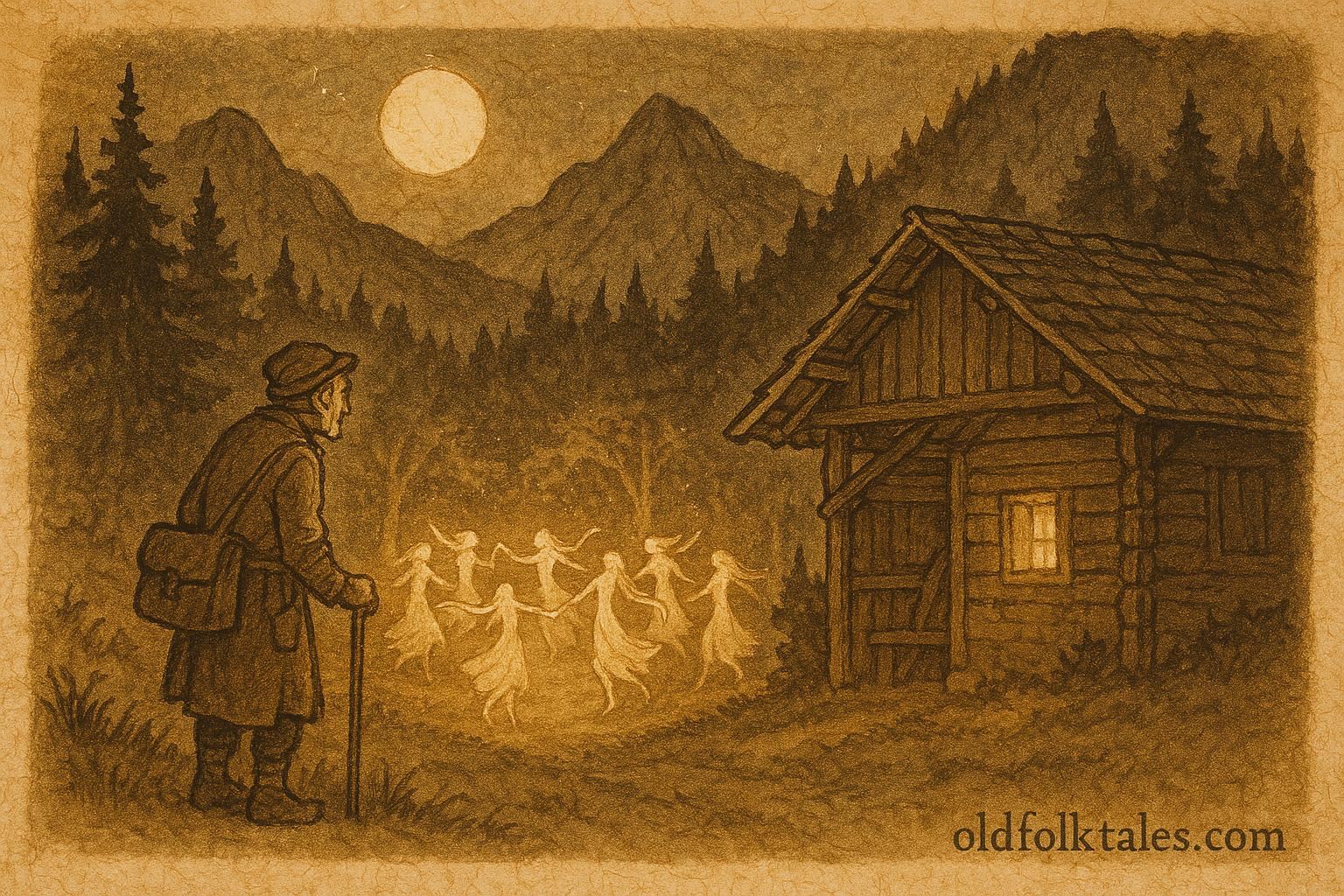
The air shimmered faintly. Then he saw them, tiny figures no taller than a child’s knee, clothed in silvery moss and crowned with mountain flowers. They danced in a ring around the feeding trough, their bare feet stirring the straw as if it were gold dust. One played a tune upon a reed flute; another carried a lantern woven from fireflies. The tailor’s breath caught in wonder.
Though his heart urged him to call out, he remembered the tales whispered in the valleys, that fair folk disliked the gaze of mortals. So he bowed his head and stayed still, watching from the shadows until dawn’s pale glow broke across the mountains.
The next morning, the stable glimmered faintly as if dusted with frost, though it was midsummer. The tailor said nothing.
Night after night, the mysterious music returned. The tailor grew accustomed to it, even soothed. But one evening, as he finished mending the farmer’s coat, a light fell upon his needle, brighter than candle flame. A soft voice spoke behind him:
“You have seen what few mortals see,” it said. “Yet you have held your tongue. Come with us, and you shall be rewarded.”
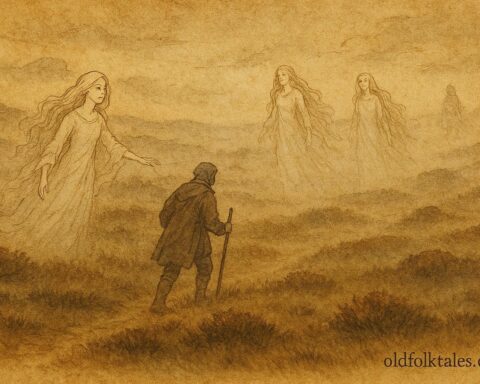
The tailor followed the voice outside. The moon hung full above the Zirockalm, and the meadows glowed pale as milk. Before him opened a hidden path, lined with stones that shimmered like glass. He stepped carefully as the voices guided him deeper into the valley.
At its heart lay a secret clearing, filled with edelweiss blooming in countless clusters. The air smelled of snow and honey.
“Take but one sprig,” said the voice. “And tell no one of the place. So long as you keep your word, good fortune shall follow you.”
With trembling hands, the tailor plucked a single blossom. It glowed faintly in his palm.
When morning came, he awoke in his loft, the flower still beside him, now it had turned to pure silver. He brought it to town and sold it, earning enough to buy cloth, food, and tools of his own.
Seasons passed, and his work prospered. He became known across the valleys as the Tailor of the Zirockalm, the man who sewed with a steady hand and spoke little of himself. But fortune can tempt even the humble.
One winter evening, after wine had loosened tongues at a village feast, a boastful neighbour asked how a poor tailor could afford such fine new boots. The tailor hesitated. The laughter of the hall pressed upon him like a weight.
So, he whispered the truth.
The moment the words left his mouth, a chill wind blew through the tavern. The lamp flames bent sideways and guttered out. The tailor felt something unseen pass by his shoulder, cold as ice.
When spring returned, he climbed again to the Zirockalm, hoping to glimpse the fair folk once more. But the meadow lay empty. The air was still. No music, no shimmer, no path of glass stones remained.
His luck turned thereafter. His scissors dulled, his cloth mildewed, and though he never starved, he lived the rest of his days in quiet repentance, mending garments for others, and never again speaking of what he had seen.
Yet the people of Tyrol still say that, on rare nights when the moon is full, a faint thread of music drifts from the Zirockalm. And those who follow it with a pure heart may glimpse a ring of edelweiss shining in the grass.
Moral Lesson
The tale of The Tailor of the Zirockalm teaches lessons on honour, humility, and the power of silence. True fortune comes from keeping one’s word and respecting the mysteries beyond human understanding. Those who betray trust—however small—lose what they most value.
Knowledge Check
1. Who is the main character in The Tailor of the Zirockalm?
A humble tailor who works for a farmer in the Tyrolean Alps.
2. What do the fair folk represent in this Austrian folktale?
They symbolize nature’s hidden forces and the rewards of respect and restraint.
3. What gift did the fair folk give the tailor?
A single edelweiss sprig that turned to silver, granting him prosperity.
4. What caused the tailor’s misfortune?
He broke his promise by revealing the fair folk’s secret dance ground.
5. What moral lesson does the story teach?
It warns that silence, respect, and integrity are worth more than wealth or praise.
6. Where does this legend originate?
From the Tyrol region of Austria, known for its alpine folklore and fairy traditions.
Cultural Origin: Austrian folktale, Tyrol region.
Source: Adapted from “The Tailor of the Zirockalm,” in Tales and Legends of the Tyrol (Project Gutenberg edition).