In a flourishing kingdom of Northern Italy, where rivers wound through fertile plains and stone palaces reflected their images in still canals, there lived a king whose rule was prosperous yet troubled by quiet sorrow. His court glittered with silks, music, and ceremony, but beneath this splendor lay envy, deception, and whispers that carried more weight than swords.
The king had once taken a queen of gentle nature and noble heart. Though she bore herself with dignity, she was surrounded by attendants whose loyalty was thin and whose jealousy burned fiercely. When the queen gave birth, joy should have filled the palace halls, but envy acted swiftly, and cruelty hid itself behind obedience.
Through deceit and false testimony, the queen’s children were stolen away at birth. Lies were whispered into the king’s ear, convincing him that his heirs had been replaced by monstrous creatures unfit to live. Blinded by manipulation and fear, the king ordered the infants removed from the palace. Thus, before they ever knew their names or lineage, the royal children were cast into exile.
Yet fate, which cannot be fully mastered by human treachery, intervened.
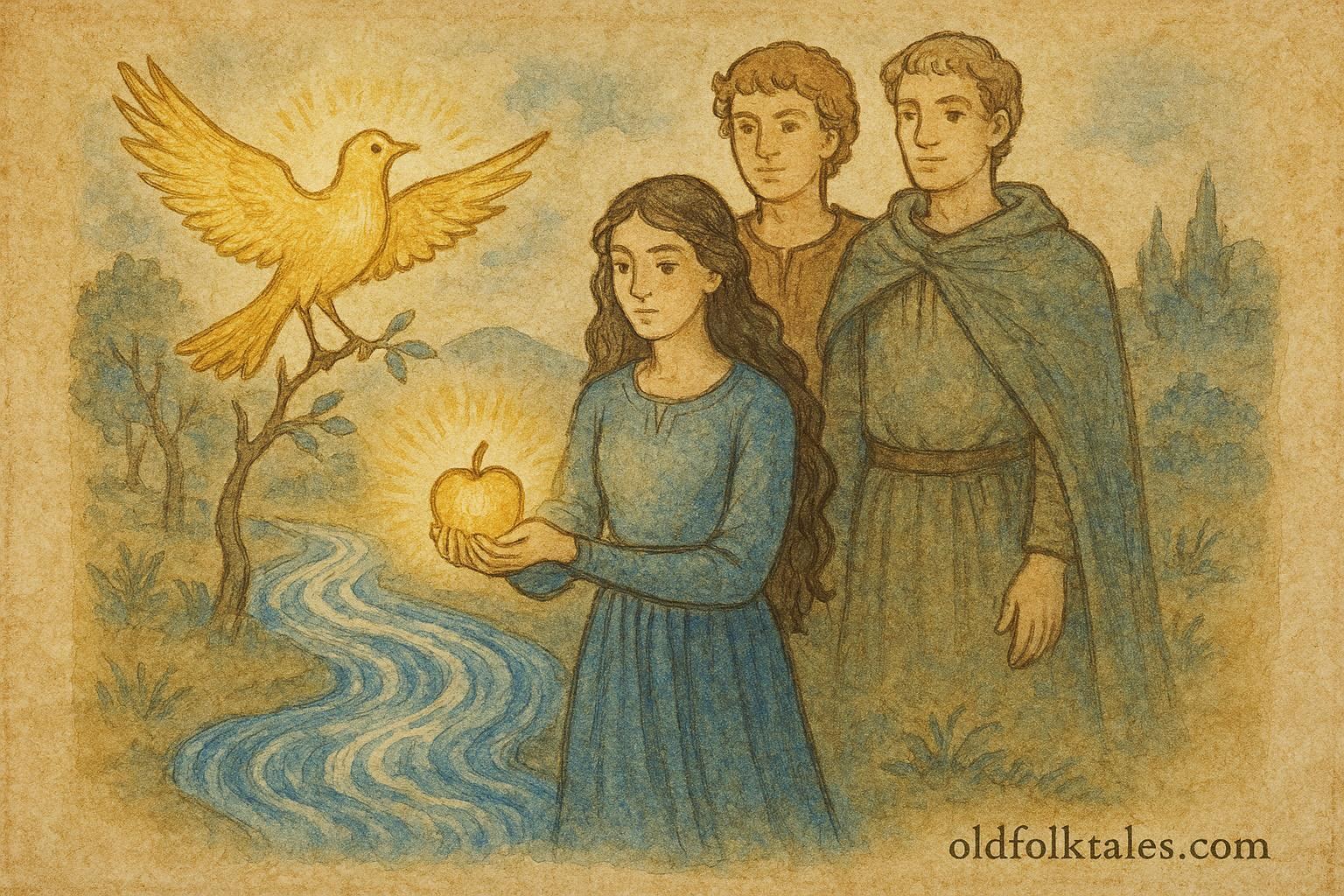
The infants were discovered by humble folk who lived far from courtly life, near the edges of cultivated land where forest shadows grew long at dusk. Raised together as siblings, they grew strong in body and spirit, shaped not by privilege but by labor, kindness, and shared endurance. Two were brothers, bold and earnest, and the third a sister, thoughtful and perceptive beyond her years.
Though they lived modestly, there was something uncommon about them. Travelers passing through would remark upon their bearing, their courtesy, and the quiet confidence with which they spoke. The sister, in particular, possessed a wisdom that seemed older than her age, as if memory itself stirred within her blood.
As time passed, stories reached their ears, stories told by merchants, pilgrims, and wandering musicians. These tales spoke of marvels hidden in distant lands, wonders sought by princes and heroes but rarely obtained. Among them were three objects spoken of in hushed, reverent tones: the Dancing Water, which flowed with living motion and restored all it touched; the Singing Apple, whose voice carried truth and joy; and the Speaking Bird, a creature said to know the deepest secrets of the world.
Whenever these wonders were mentioned, the sister felt a stirring in her heart. Though she could not explain it, she sensed that these marvels were tied to her fate and to truths long concealed. The brothers, stirred by adventure and ambition, resolved to seek them out.
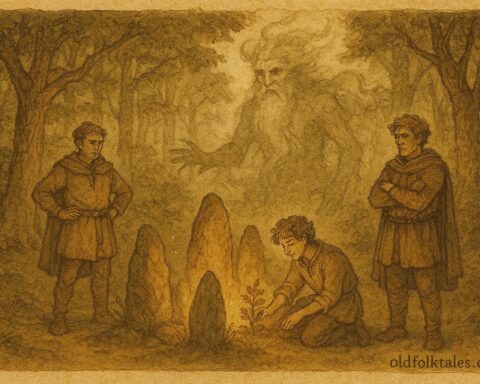
The eldest brother departed first. His journey led him across barren hills and into regions where stone statues lined the roads, silent warnings of those who had failed before him. He pressed on with determination but lacked patience. When faced with enchantments meant to test resolve and obedience, fear overcame him. He hesitated when he should have trusted, and in that moment, he was turned to stone, joining the countless others who had faltered.
The second brother set out next, grieving yet resolute. He traveled farther, enduring hunger, cold, and exhaustion. Though he came close to success, he allowed doubt and distraction to lead him astray. Like his brother, he was transformed into stone, frozen not by cruelty alone, but by failure to heed unseen wisdom.
The sister mourned deeply, yet she did not surrender to despair. Instead, she prepared carefully, knowing that strength alone was not enough. Along her journey, she encountered an old woman by the roadside, poorly dressed, bent with age, yet keen-eyed and perceptive. Unlike many before her, the girl treated the woman with kindness and respect.
In return, the old woman revealed knowledge passed down through generations. She warned the girl of the dangers ahead and taught her how to overcome them: to walk forward without turning back, to ignore deceptive voices, and to follow instructions without question. Above all, she taught her patience and humility.
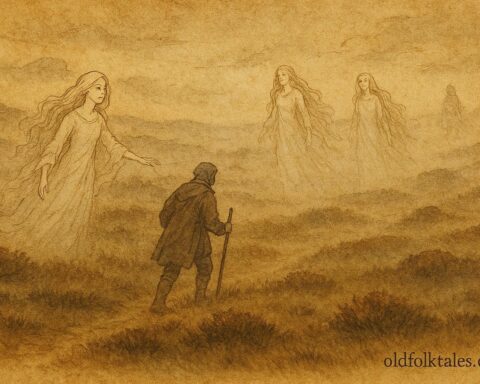
Guided by this wisdom, the sister traveled onward. She passed the stone figures of those who had failed, resisting the urge to look upon them. She ignored voices that called her name and promises meant to lure her into error. Step by step, she advanced where others had fallen.
At last, she reached the source of the Dancing Water. It shimmered as if alive, flowing not by gravity alone but by enchantment. She gathered it carefully, neither greedy nor fearful, honoring its power.
Next, she found the Singing Apple, radiant and resonant, its voice clear and untainted. Its song was not merely beautiful, it carried truth, joy, and remembrance. Finally, she came upon the Speaking Bird, whose eyes shone with intelligence and recognition. It did not challenge her, for it knew her purpose.
With the Dancing Water, she restored her brothers to life, breaking the enchantment that bound them. Together, the three returned home, carrying with them not only the marvels, but the weight of destiny fulfilled.
News of their wonders spread quickly, reaching even the royal court. The king, long haunted by regret and unanswered questions, summoned them. When the Singing Apple sang, it revealed the lies that had corrupted the palace. When the Speaking Bird spoke, it uncovered the betrayal that had stolen the king’s children.
Truth shattered deception.
The siblings were recognized as the rightful heirs, and justice followed swiftly. Those who had conspired against the queen and her children were exposed. The royal family was reunited, and the kingdom restored to harmony.
Yet the greatest lesson endured beyond the throne: that truth, though buried, will always rise, and that wisdom and patience are stronger than force.
Moral Lesson
True power lies not in strength or rank, but in patience, wisdom, and the courage to seek truth. Deception may endure for a time, but truth will always return to claim its place.
Knowledge Check
-
What are the three magical objects in the story?
The Dancing Water, the Singing Apple, and the Speaking Bird. -
Why do the brothers fail while the sister succeeds?
They act without guidance and patience, while the sister listens and follows wisdom. -
What does the Speaking Bird symbolize?
Truth, revelation, and justice. -
What role does the Singing Apple play?
It reveals hidden truths and restores rightful order. -
Where does this folktale originate?
Northern Italy, within the Venetian folktale tradition. -
Who preserved this story in written form?
Giovanni Francesco Straparola in Le Piacevoli Notti (1550–1553).
Source: Giovanni Francesco Straparola, Le Piacevoli Notti (The Facetious Nights), 1550–1553
Cultural Origin: Northern Italy (Venetian tradition)