In the days when the Zuiderzee lapped close against the houses of Friesland, when merchant ships filled the harbor of Stavoren and silver rang like music in its markets, there lived a woman whose wealth surpassed that of any other in the town. She was known simply as the Lady of Stavoren, for her name mattered less than her fortune.
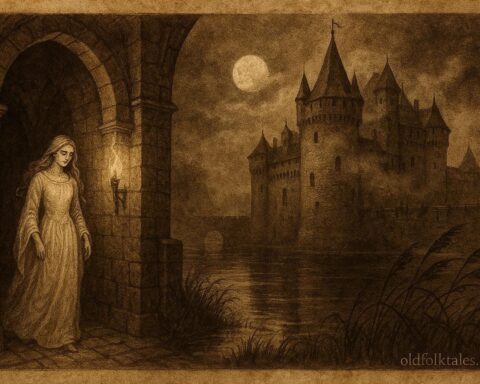
Her warehouses overflowed with grain, silk, and spices. Her ships sailed farther than most, returning laden with treasures from distant shores. Gold adorned her halls, and servants hurried at her command. No door in Stavoren was closed to her, except, it was said, the door of her heart.
Where others gave alms, she mocked. Where others thanked fortune with humility, she boasted. When beggars gathered near her estate, she turned them away with scorn, declaring that poverty was proof of laziness and misfortune a deserved fate.
Often she would stand on the harbor quay, gazing upon her ships, and laugh.
“My wealth is as endless as the sea,” she declared. “Even if the world were to crumble, I would still remain rich.”
Such words did not go unnoticed. The old fishermen exchanged uneasy glances. The monks of the town shook their heads in silence. For in Friesland, it was long believed that pride spoken aloud invited ruin, and that fortune, once mocked, listened closely.
One day, desiring proof of her unmatched riches, the Lady summoned her captains and ordered them to sail the world and bring her the most precious cargo imaginable—something rarer than gold, something no other merchant could claim.
Months passed before one ship returned, its hull heavy and its crew exhausted. The captain knelt before her and presented their cargo: the finest grain, flawless and abundant, harvested from fertile lands far away.
At the sight of it, the Lady’s face hardened.
“Grain?” she scoffed. “Food for peasants and animals? Do you mock me?”
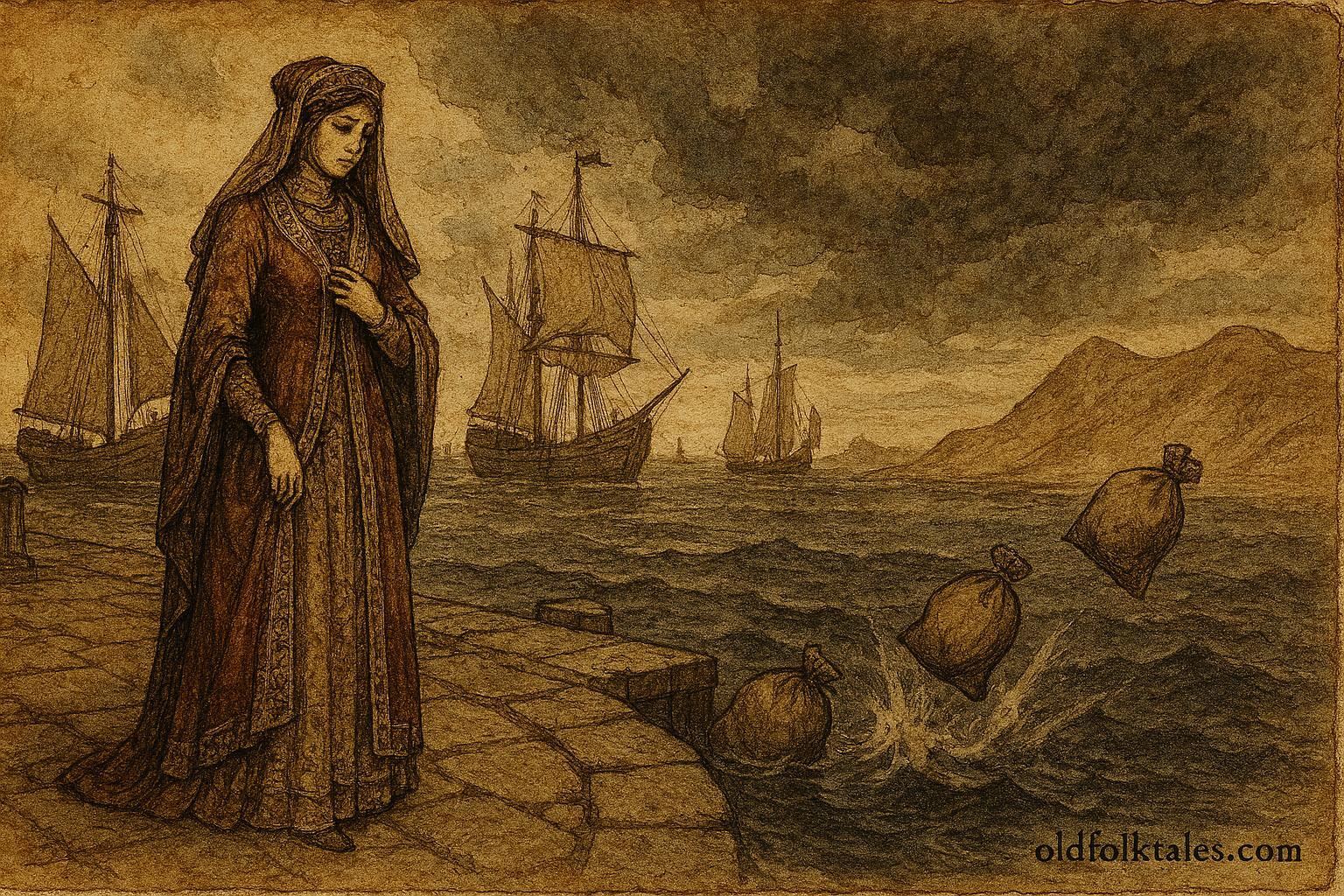
The captain protested that no treasure was more valuable, for grain sustained life itself. But the Lady, blinded by arrogance, ordered the sacks thrown into the sea.
“Let the waves have it,” she said coldly. “I have no need of such common wealth.”
The grain spilled into the harbor, drifting and sinking as gulls cried overhead. Those who watched felt a chill pass through them, as though something sacred had been violated.
Not long after, misfortune began its quiet work.
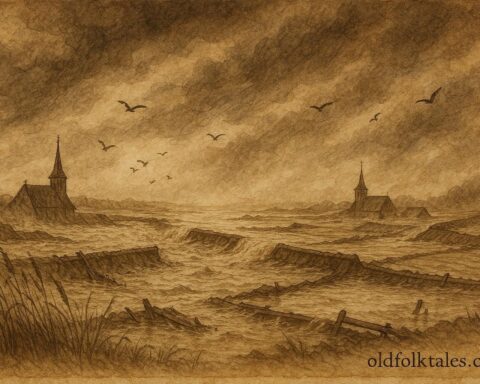
Storms battered the coast more fiercely than before. The sea shifted, silting the harbor. Ships found it harder to reach the docks. Trade slowed. Fishermen returned with empty nets. The Lady’s vessels were delayed, damaged, or lost entirely.
Still, she refused to change.
When warned that the harbor was filling with sand, she laughed. When urged to fund repairs or help the suffering townsfolk, she turned away.
“My wealth will outlast this,” she insisted. “The sea bends to no one, but I am close.”
Then came the prophecy.
An old woman, ragged and bent with age, appeared at the Lady’s gate and spoke words that carried like wind over water:
“Where grain was wasted, stone shall rise. Where pride ruled, ruin will stand.”
The Lady ordered her driven away, but the words lingered.
In time, a great stone was found in the harbor, said to mark the place where the grain had been cast into the sea. Around it, the waters grew shallow. Sandbanks spread. Ships could no longer enter the port. Stavoren, once prosperous, was slowly cut off from the sea that had made it rich.
Trade vanished. Houses emptied. The Lady’s wealth dwindled, piece by piece. Servants departed. Warehouses stood bare. Her grand halls echoed with silence.
At last, she wandered the ruined harbor alone, no longer mocked nor admired, but pitied. The sea she once boasted of no longer answered her. Her riches had dissolved like salt in water.
Some say she died in poverty. Others claim she vanished, wandering the shore in remorse. But all agree that Stavoren never returned to its former glory.
And so the people of Friesland tell this tale to remind each generation that wealth without humility is a fragile thing, and that pride, once spoken, may summon its own undoing.
Moral Lesson
The Lady of Stavoren teaches that wealth is fleeting when unaccompanied by humility and compassion. Pride invites downfall, and prosperity that forgets its duty to others ultimately destroys itself.
Knowledge Check
-
Q: Who was the Lady of Stavoren?
A: A wealthy merchant woman whose pride led to her downfall. -
Q: What act symbolized her arrogance most clearly?
A: Ordering valuable grain to be thrown into the sea. -
Q: How was the city of Stavoren affected?
A: Its harbor silted up, trade collapsed, and prosperity vanished. -
Q: What themes does the story emphasize?
A: Hubris, greed, impermanence of wealth, and moral justice. -
Q: What warning does the prophecy deliver?
A: That pride and waste would lead to ruin. -
Q: Where does this folktale originate?
A: Friesland, in the Netherlands.
Source: Medieval Dutch oral tradition; later recorded in regional chronicles, c. 13th century CE
Cultural Origin: Friesland, Netherlands (Stavoren)