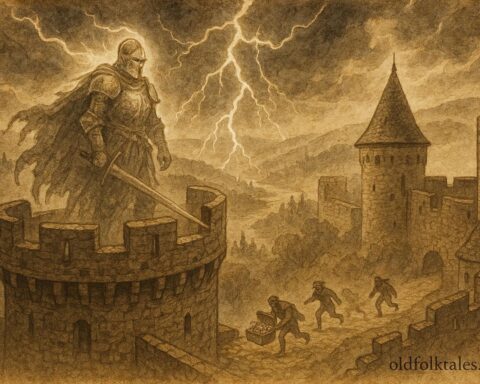
On the edges of old Dutch towns, beyond the safety of canals and clustered houses, there lay open fields that few dared to cross after sunset. These were the galgenvelden, gallows fields, places where the condemned met their end beneath the watchful gaze of both law and crowd.
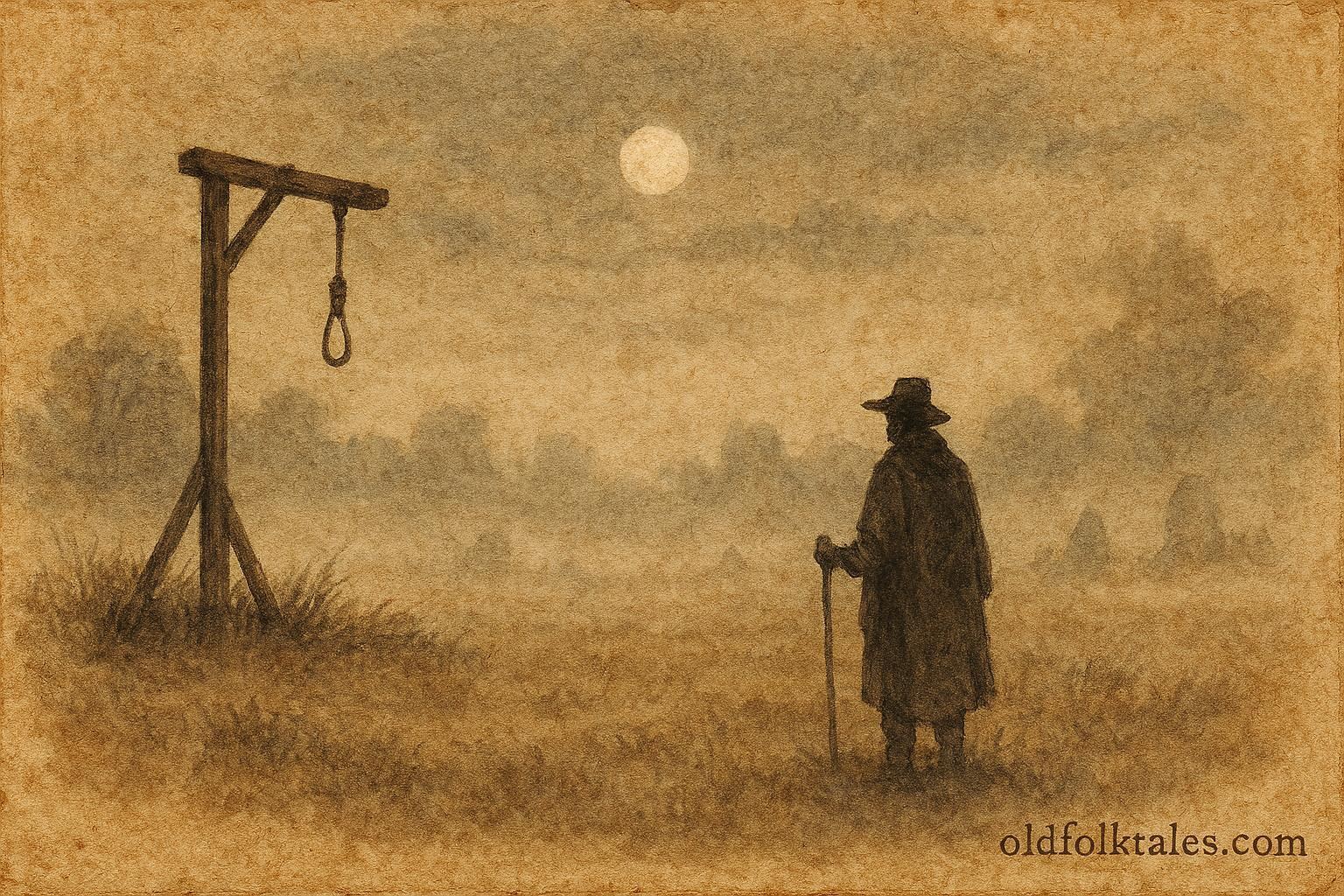
In regions surrounding Utrecht and Amsterdam, such fields stood as stark reminders of justice as it was once carried out, public, unforgiving, and meant to instill fear. Wooden gallows rose against the sky, their beams creaking in the wind, their silhouettes stark against the pale horizon.
Journey into the charm of British wit and Irish wonder through centuries of folk tradition
By day, these places were avoided out of unease. By night, they were feared.
The earth itself seemed different there, harder, colder, as though it held memories that refused to fade. It was said that the spirits of those executed did not always find peace. Some had died guilty, others innocent, but all shared the same restless fate: bound to the ground where their lives had ended.
Travelers spoke of strange occurrences when passing near these fields after dusk. Whispers carried on the wind, though no one was there. Shadows moved where no light should cast them. A sudden chill would seize the body, even on mild evenings, leaving the traveler frozen in place with a sense that unseen eyes were watching.
Among the many tales told, one was repeated more often than the rest, a story from a quiet village near Utrecht.
There lived a merchant named Willem, a man known for his diligence and practicality. He was not one to believe in superstitions. Tales of ghosts and spirits, he believed, were inventions of frightened minds.
One evening, Willem found himself delayed on his journey home. Business in the nearby town had taken longer than expected, and by the time he set out, the sun had already dipped below the horizon.
The quickest path back to his village led straight across the old gallows field.
Though others might have chosen a longer route, Willem saw no reason to fear a place that held nothing but wood and empty air. He adjusted his cloak against the cool evening breeze and continued forward.
As he approached the field, the landscape seemed to shift. The wind dropped suddenly, leaving the air unnaturally still. The faint sounds of distant life, the rustle of leaves, the chirping of insects, fell silent.
Willem slowed his pace, a subtle unease creeping into his thoughts.
The gallows loomed ahead, their dark forms stark against the faint glow of the moon.
He told himself there was nothing to fear.
Yet as he stepped onto the field, he felt it, a sudden, biting cold that seeped through his clothes and into his bones. His breath fogged in the air, though the night was not so cold elsewhere.
Then came the whisper.
It was faint, almost indistinguishable from the wind, yet unmistakably human.
Willem stopped.
“Who’s there?” he called out, his voice steady but edged with tension.
No answer came, only another whisper, this time closer.
He turned sharply, scanning the empty field. The gallows stood silent. The ground stretched unbroken in every direction.
And yet… he was no longer certain he was alone.
He resumed walking, quicker now, his boots pressing firmly into the soil. The whispers grew louder, overlapping, as though many voices spoke at once. Some sounded sorrowful, others angry, still others pleading.
Fragments of words reached him:
“Wrongly judged…”
“No rest…”
“Remember…”
A shadow flickered at the edge of his vision.
Willem spun around, but there was nothing there.
His heart began to race.
He quickened his pace further, nearly breaking into a run. But the field seemed to stretch endlessly before him, the gallows no closer to being left behind.
Then he saw them.
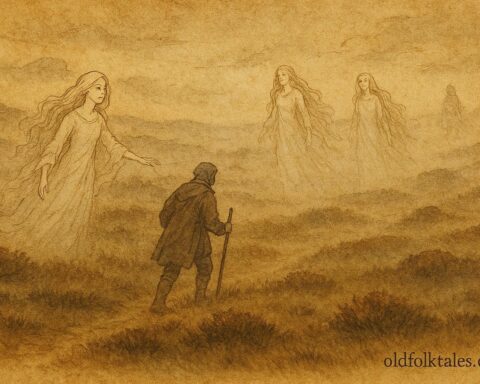
Figures, faint, indistinct, standing near the wooden beams. Their forms wavered like reflections in disturbed water, yet their presence was undeniable. Some appeared to hang suspended, their outlines barely visible against the night. Others stood beneath the gallows, their heads bowed.
Willem’s breath caught in his throat.
This could not be real.
One of the figures lifted its head. Though its features were unclear, Willem felt its gaze lock onto him.
The whispers surged, louder now, filling the air with a chorus of voices.
He turned and ran.
The cold pursued him, the whispers following like a tide. The shadows seemed to stretch and twist, reaching toward him as though trying to pull him back.
Just as panic threatened to overwhelm him, Willem stumbled forward, and found himself beyond the edge of the field.
The air shifted instantly. The cold vanished. The whispers fell silent.
Behind him, the gallows field lay still and empty, as though nothing had ever stirred within it.
Willem returned to his village shaken, his skepticism shattered. When he recounted his experience, the elders listened gravely.
“You have walked where the restless dwell,” one said. “Not all who died there were given justice. Their voices remain.”
From that day on, Willem never again crossed the gallows field at night.
Such stories were not unique. Across the Netherlands, near old execution sites, similar tales emerged. Travelers spoke of unseen presences, of footsteps that followed but never caught up, of shadows that lingered long after the source of light had passed.
In some places, people claimed to hear the creak of ropes swaying in the wind, even when no breeze stirred. Others reported the sensation of a hand brushing against their shoulder, only to find no one there.
The gallows fields became places of warning—reminders of a time when justice could be swift and unforgiving, and not always fair. They stood as silent witnesses to both guilt and innocence, their haunted nature reflecting the unresolved fates of those who had perished there.
Parents warned their children to avoid such places after dark, not merely out of fear, but out of respect. For whether the spirits were real or imagined, the lessons they carried were undeniable.
Justice, once enacted, could not be undone.
And where doubt lingered, so too did the echoes of those who had suffered.
Even in later years, as the gallows were dismantled and the fields returned to quiet use, the stories endured. Farmers plowing the land spoke of unease in certain patches of soil. Travelers avoided particular paths when night fell.
And on rare occasions, when the moon hung low and the air grew unnaturally still, some claimed to hear it again,
A whisper.
A memory.
A voice from the past, refusing to be forgotten.
Explore the wit and wisdom of Western Europe, where humor and virtue often go hand in hand
Moral Lesson
The Haunted Gallows Field teaches that justice must be tempered with fairness and truth. Actions taken in haste or injustice may leave lasting consequences, and the past cannot always be silenced.
Knowledge Check
1. What are galgenvelden?
Execution grounds where condemned individuals were hanged, often believed to be haunted.
2. Where are these legends commonly found?
Near towns such as Utrecht and Amsterdam.
3. What did Willem experience in the field?
Whispers, cold sensations, and ghostly figures of the condemned.
4. Why are the spirits believed to linger?
Because of unresolved injustice or unrest at the time of their deaths.
5. What themes are central to the story?
Justice and injustice, lingering souls, fear of punishment.
6. What lesson does the tale convey?
That justice must be fair and thoughtful, as wrongful actions can leave lasting consequences.
Source: Derived from Dutch urban and rural ghost lore (16th–18th century traditions), c. 16th–18th century CE.
Cultural Origin: The Netherlands (various regions)