On nights when thunder rolled across the darkened forests of Germany, and lightning split the sky like the flash of a sword, villagers would speak in hushed tones of the Wild Huntsman, Der Wilde Jäger, who rode the heavens in spectral fury. No one knew where he came from, but his reputation stretched from the towering pines of the Harz Mountains to the mist-shrouded valleys along the Rhine. To see him was to glimpse the shadow of divine wrath itself, and to hear his horns meant that death, war, or plague was stirring somewhere in the mortal world.
The Wild Huntsman was no ordinary hunter. He had once been a man of pride and ambition, a master of the chase in the forests near his village. Tales said he had loved hunting more than God, more than his family, more than life itself. In his lifetime, he had pursued deer and boar with relentless cunning, boasting that no prey could escape his bow. He ignored the sacred hours of rest, scorned the prayers of the humble, and mocked those who spoke of divine justice.
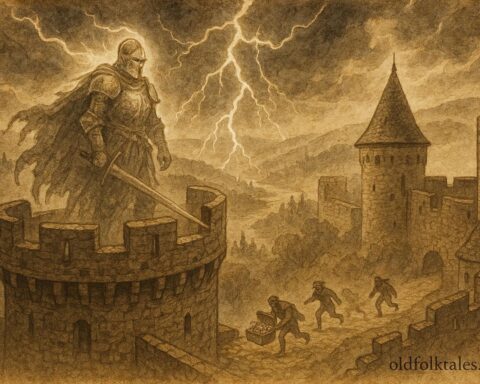
But pride has a price, and in time, the man’s arrogance drew the attention of forces beyond the mortal realm. One stormy night, as he rode through a darkened forest, a voice thundered from the heavens, accusing him of his hubris. Lightning illuminated the spectral form of a huntsman beyond imagining taller than any man, cloaked in shadows, with eyes that burned like coals. In that moment, the man’s heart froze, and he realized his punishment was eternal. For his pride, he was condemned to the skies, doomed to hunt endlessly, never resting, never finding peace. His prey became the damned souls of mortals, condemned to join him in his eternal chase.
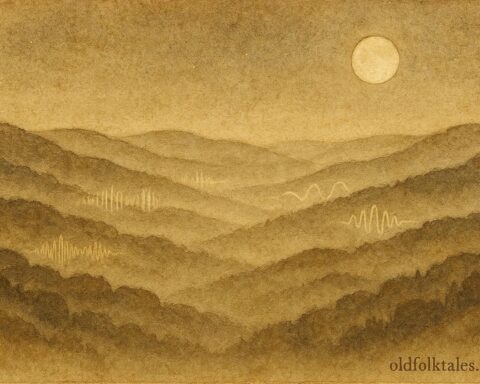
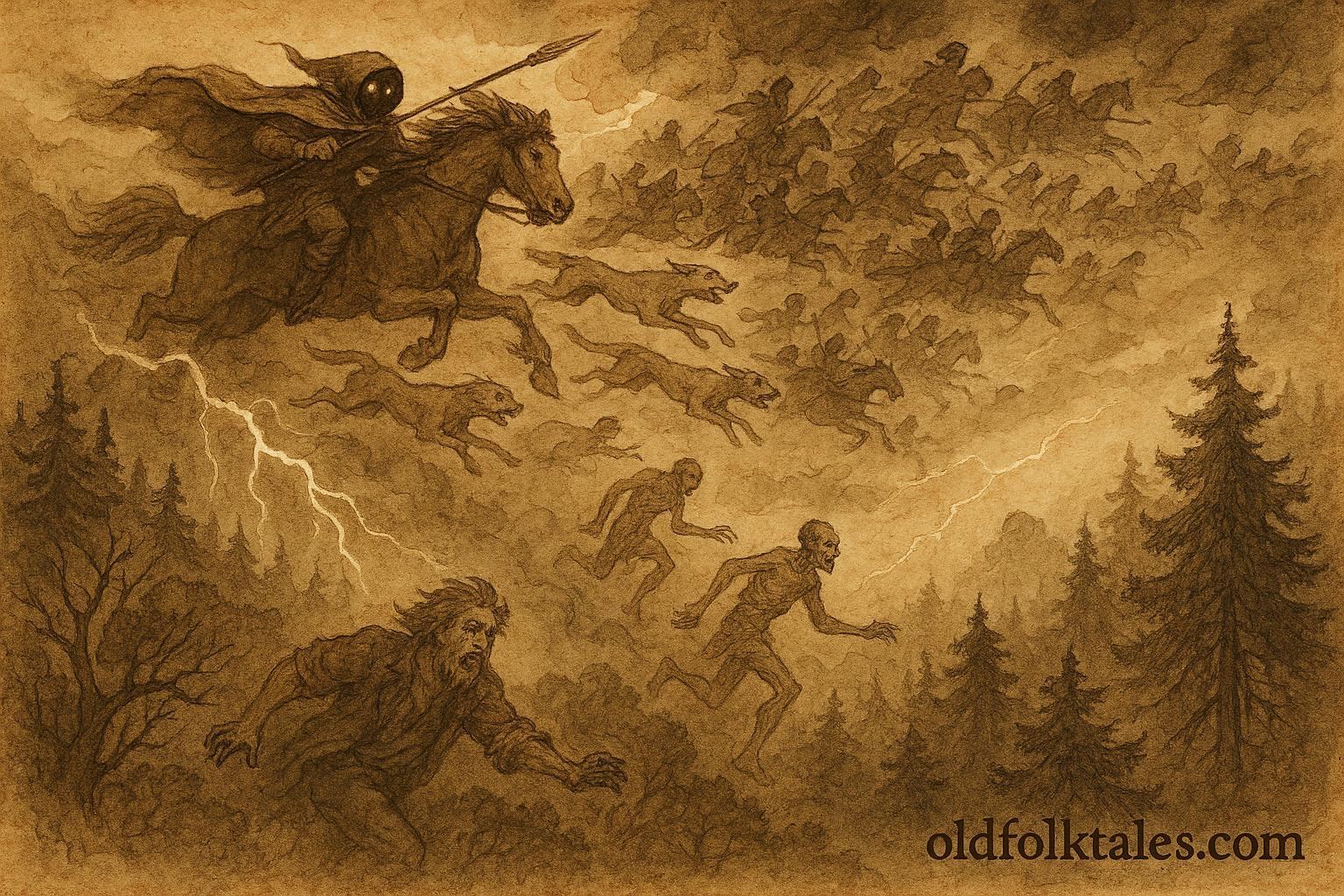
From then on, villagers reported strange, unsettling signs whenever a storm approached. The air would turn bitterly cold, even in the heart of summer. Trees would shiver despite the calmest of winds. Then, faintly at first, the distant sound of horns would echo through the valleys. Soon, the hunters themselves would appear: a ghostly cavalcade of black horses and hooded figures, riding across hilltops and treetops. The Wild Huntsman led them, his eyes glowing like burning coals, his voice carrying commands that chilled the blood.
Those who encountered the hunt in the night spoke of its terrifying beauty. Some saw the shadowed figures galloping across the clouds as though the sky itself had become a forest. Others claimed that the spirits of the damned cried out in anguish, pursued by relentless hounds that never tired. Lightning flashed upon the scene, revealing shapes of men and beasts fused in ghastly forms, as if the hunt itself had become a mirror of chaos and divine punishment.
Witnesses of the Wild Huntsman often experienced fear that clung to their hearts for months. A miller near the Weser once described seeing the hunt barreling across the night sky, his horses neighing in terror and his children hiding under the table. “It was like the heavens were torn apart,” he said. “And in the midst of it all, the huntsman rode, and I knew that war and pestilence would follow.” True to these tales, those who observed the spectral hunt often found their villages stricken with disease, or the lords of their lands called to arms soon after. The hunt, it was said, was an omen, a warning of cosmic balance tipping toward chaos, a reminder that divine justice never slumbers.
Yet the story of the Wild Huntsman was not merely one of fear. Elders taught that humility, piety, and respect for the sacred rhythms of life could shield one from witnessing his cursed procession. Farmers would cease labor at dusk, bell towers tolled prayers for the dead, and families gathered to share bread and song to honor life’s fragile order. The huntsman, though terrifying, became a moral compass: a cautionary emblem that the reckless pursuit of pride and disregard for higher law could ripple far beyond one’s lifetime.
Over centuries, his legend spread through Germanic lands, altering subtly with each telling. In the dense woods of Bavaria, the hunters were said to ride on black stags; in the misty lowlands near the Rhine, they appeared as phantom riders in a relentless, silent storm. The Wild Huntsman became a spectral figure in festivals, in whispered ghost stories by firesides, and in the cautionary teachings of priests and mothers alike. Even in towns where lightning rarely struck, the villagers believed that stormy nights carried his shadow and that their prayers might keep him from turning his gaze upon their homes.
Despite centuries of retelling, one truth remained constant: the Wild Huntsman was eternal. No mortal could stop him; no sword could fell him. He was a force of nature entwined with the moral order of the world, a reminder that arrogance and the defiance of divine law have consequences beyond death. The forests and hills, the lightning and storms, all bore witness to his relentless pursuit, a reminder etched into the landscape itself.
To this day, in the heart of Germany, storytellers recall the Wild Huntsman as a spectral guardian of morality. Though terrifying, his eternal chase teaches a profound lesson: actions rooted in pride and defiance bring consequences that echo beyond life, and the balance of order and chaos is watched by forces far greater than humanity. And on nights when the wind howls and the storm roars, those who listen closely may hear the faint horn of the Wild Huntsman, riding across the heavens, carrying with him the weight of divine justice.
Moral Lesson
Pride and defiance of divine or moral law have consequences that extend beyond one’s lifetime. Humility, respect, and reverence for higher order safeguard against chaos and calamity.
Knowledge Check
-
Who is the main character in “The Wild Huntsman” and what is his curse?
The Wild Huntsman, once a proud mortal hunter, is condemned to chase damned souls eternally as punishment for his arrogance. -
What signs signal the approach of the Wild Huntsman?
Storms, cold winds, distant horns, and spectral lights across the forests and hills. -
What themes are central to the story?
Punishment after death, fear of divine judgment, and the balance between chaos and order. -
What cultural region does the tale originate from?
Germanic regions of Germany, widespread in folklore and mythology. -
How do villagers protect themselves from witnessing the hunt?
By practicing humility, observing sacred hours, praying for the dead, and respecting the moral order. -
What symbolic lesson does the Wild Huntsman convey?
Arrogance and hubris lead to consequences that can affect not just the individual, but the surrounding world.
Source: Jacob Grimm, Deutsche Mythologie, 1835
Cultural Origin: Widespread across Germanic regions, Germany (Germanic folklore)