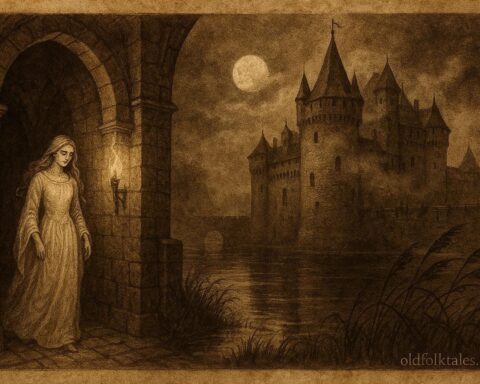
On the windswept island of Öland, where the Baltic Sea crashes against jagged cliffs and the scent of salt mingles with wildflowers, stands a castle of grey stone and proud towers. For centuries, it has watched over the island like a sentinel, sheltering noble families, echoing with laughter and whispered plots, and silently keeping the secrets of lives long past.
Among these secrets, none is more haunting than the tale of the White Lady, a spectral figure whose presence has both terrified and mystified the residents of Öland Castle for generations.
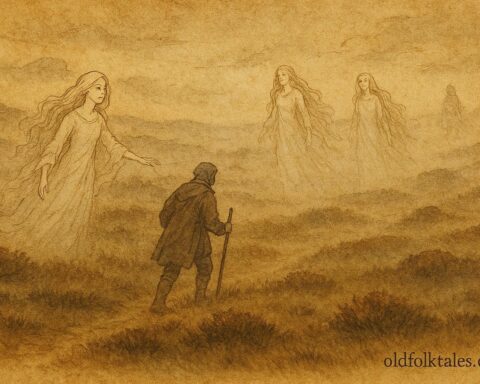
She is not a spirit of mindless malice. Rather, she is the sorrow of a noblewoman betrayed in life, bound to the castle walls by grief, injustice, and the unfulfilled need for reparation. Those who have glimpsed her pale form, drifting through corridors or standing in shadowed towers, speak of a chilling beauty: her gown of shimmering white, her hair as pale as winter moonlight, and eyes that carry the weight of tragedy centuries old.
It is said that the appearance of the White Lady is a warning, an omen of misfortune, death, or familial sorrow, tethered not to the living who see her, but to the consequences of the wrongs committed within the castle itself.
A Noblewoman Betrayed
Long ago, in the early days of Öland Castle, a young noblewoman lived within its halls. She was known for her grace, her generosity to the poor villagers, and her unwavering loyalty to her family. Yet her life, which seemed destined for prosperity and happiness, was marked by betrayal.
A suitor of great ambition sought her hand, promising love and alliance, but in truth, he coveted her fortune and the political influence her family commanded. Behind closed doors, he deceived her, manipulating her father and promising wealth in exchange for her dowry, but no dowry could compensate for the treachery that followed.
When the truth emerged, it was too late. The noblewoman was shunned, falsely accused of disloyalty and impropriety, and confined within the castle, her heart broken by betrayal. On a cold, stormy night, she passed from this world, never having regained her rightful place or the justice she deserved.
It is from this sorrow that the White Lady was born, not a demon, nor a spirit of vengeance, but a guardian of memory, a lingering echo of human cruelty, a symbol of grief tethered to stone.
The First Sighting
Generations later, the castle remained a seat of noble families, though its halls often echoed with the creak of wind through unoccupied corridors. On a winter’s night, a young page named Erik wandered the northern tower. He had been assigned to carry a candle for the lady of the house, but curiosity led him to a corridor rarely trodden.
Suddenly, a light, ethereal and cold, glimmered in the distance. Erik froze. There, gliding silently toward him, was a woman in white. Her gown seemed woven from mist and moonlight; her eyes, sorrowful and profound, met his. She did not speak, yet the air around him grew heavy with warning, as if the castle itself held its breath.
Erik, trembling, dropped to his knees and bowed his head, whispering a prayer. The figure paused, then vanished, leaving only the echo of soft footsteps and a faint chill. By dawn, Erik’s master fell ill, and villagers nearby whispered of the White Lady’s warning: that misfortune would follow if the deeds of betrayal and injustice within the castle were not heeded.
A Pattern of Warnings
Over the years, tales of the White Lady multiplied.
A steward who attempted to embezzle from the estate reported glimpsing a pale figure watching from the tower windows. Within days, his misdeeds were exposed, and he was forced to leave Öland in disgrace.
A visiting noblewoman, known for her cruelty to the villagers, saw a woman in white standing at the end of a candlelit corridor. That night, a fire broke out in her quarters, sparing no one, but leaving her shaken and humbled.
In each case, the White Lady’s appearance was not random. She was a mirror of conscience, a reminder that the wrongs of the past linger, and that justice, though slow, has a way of manifesting itself through signs, omens, and spectral warning.
The Scholars’ Accounts
By the mid-19th century, folklorists like Gustaf Wilhelmsson Widmark recorded these tales in Svenska folksagor och sägner. They noted the consistency of the descriptions: a woman in white, wandering castle halls, tied to specific events of injustice or forewarning.
Widmark wrote that witnesses often described the air growing unnaturally cold, and candles flickering without wind, as though the White Lady carried with her both sorrow and authority over the physical and spiritual realm.
The castle’s architecture seemed to preserve her presence: the northern tower, with its arrow slits and cold stone staircases, was particularly associated with sightings. Scholars suggested that the figure’s endurance in folklore reflected not only supernatural belief but also a societal consciousness of morality, justice, and the consequences of betrayal.
Lessons for the Living
The White Lady’s story is more than a ghost tale; it is a moral compass. Her appearances remind those who dwell in or visit the castle that actions have consequences, that the injustices of the powerful echo beyond the grave, and that memory and sorrow must be acknowledged rather than ignored.
In the small villages surrounding Öland Castle, parents warned children of the White Lady. They taught them to act with honesty, kindness, and respect, lest the unseen forces of the world bear witness to their deeds.
Even today, travelers along the castle’s winding roads feel the weight of history and the hint of something unseen, a lingering presence that whispers the lessons of centuries: respect the past, honor justice, and heed the warnings of sorrowful spirits.
Moral Lesson
Betrayal and cruelty leave lasting echoes beyond life. Respect for justice, honesty, and compassion is necessary, for even the silent dead may watch and remind the living of their misdeeds.
Knowledge Check
1. Who is the White Lady of Öland Castle?
A ghostly noblewoman tied to the castle by sorrow and injustice, appearing as a warning of misfortune.
2. Why did the White Lady become bound to the castle?
She was wronged and betrayed in life, dying without justice, tethering her spirit to the castle walls.
3. What is the significance of seeing the White Lady?
It serves as a warning of impending misfortune, death, or consequences for immoral actions.
4. Is the White Lady considered evil?
No; she is a spectral guardian of memory and morality, not a malevolent spirit.
5. Which Scandinavian island is associated with this legend?
Öland, Sweden.
6. Who documented the tales of the White Lady in the 19th century?
Gustaf Wilhelmsson Widmark, in Svenska folksagor och sägner, 1856.
Source: Adapted from Svenska folksagor och sägner by Gustaf Wilhelmsson Widmark (1856), Swedish oral tradition.
Cultural Origin: Öland Island, Sweden, Scandinavian folklore