Along the shadowed banks of the Scheldt River, where mist rises at dusk and reeds whisper in the dark, the people of Flanders long spoke of a presence that followed lone travelers home. It was not a beast of fang and claw alone, nor a ghost bound to one form. It was the Kludde, a river spirit of shifting shape and growing weight, known to haunt the night paths beside the water.
Its legend was preserved in Vlaamsche Sagen by Pol de Mont and Alfons de Cock, who gathered the tales spoken in farmhouses and riverside villages. But long before it was written, the Kludde lived in the fearful imagination of those who dared walk alone after sunset.
The River After Dark
The Scheldt is a river of commerce and life by day. Barges drift along its current, fishermen cast their nets, and villages bustle near its shores. Yet when night falls, the river becomes something else.
Fog clings low over the water. The path between riverbank and field narrows in the dark. Sounds travel strangely, footsteps echo louder, branches snap without visible cause, and distant splashes stir uneasy thoughts.
It was in these hours that the Kludde appeared.
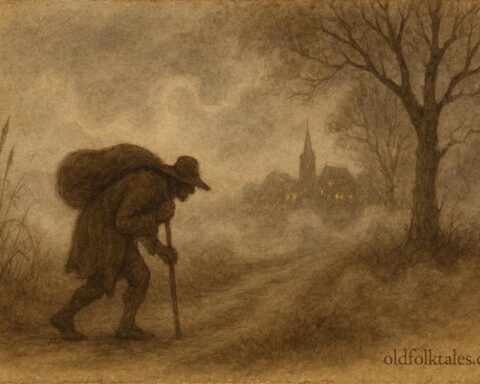
Some saw it first as a black dog, small and silent, watching from the edge of the path. Others described a sleek black cat slipping between shadows. A few claimed it took the form of a hunched man, distorted and misshapen, face obscured by darkness.
Whatever its shape, the Kludde never attacked outright.
It waited.
The Leap
A traveler walking home late might hear the soft padding of paws behind him. When he turned, nothing stood there. The path stretched empty beneath the moon.
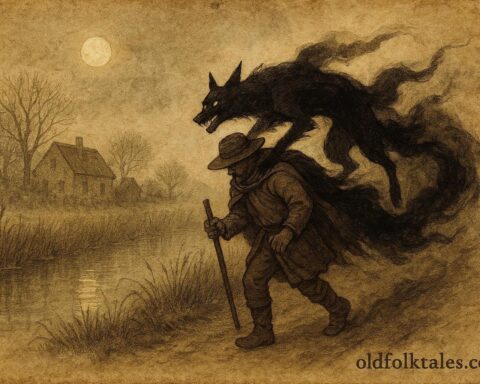
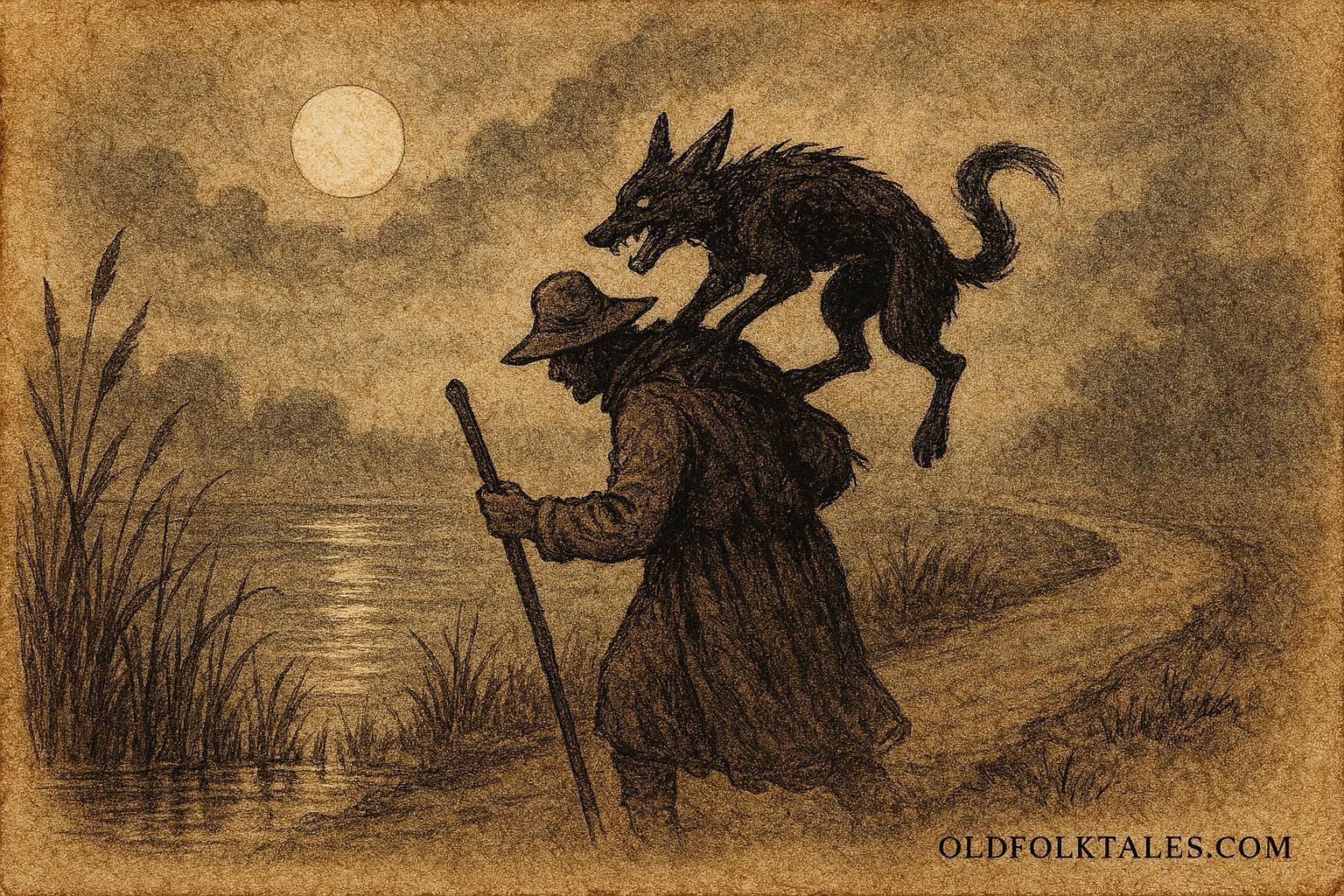
Then, without warning, the Kludde leapt.
It sprang onto the traveler’s back, clinging with invisible force. Though small at first, it grew heavier with each step. The burden pressed down upon shoulders and spine, weighing like a sack of stones that multiplied with every pace forward.
The more the traveler struggled in fear, the heavier it became.
Men spoke of knees buckling, breath shortening, and sweat chilling against their necks. The road home seemed to lengthen impossibly, each step a trial of endurance. Some fell to the ground beneath the crushing weight.
Yet the Kludde did not strike to kill. It tested.
The Weight of Fear
The spirit thrived on panic. Those who cried out wildly or fled blindly found themselves nearly pinned to the earth. The darkness around them seemed thicker, the reeds rustling louder, the river’s current murmuring with mockery.
But those who steadied their breath and summoned courage discovered something remarkable.
If they spoke a prayer, calling upon God with conviction, the weight would lessen. If they walked calmly, refusing to surrender to terror, the Kludde’s grip weakened. In some accounts, a traveler who boldly addressed the spirit, commanding it to depart in the name of heaven, felt it slip away entirely.
Courage and faith proved stronger than fear.
The Shapeshifter’s Nature
Why did the Kludde haunt the Scheldt? Elders offered many explanations. Some said it was the restless spirit of one who had drowned and could not leave the river’s edge. Others claimed it was a guardian of the water, punishing those who wandered recklessly at night.
Its shapeshifting nature symbolized uncertainty. A black dog, often associated in European folklore with omens and spirits, suggested warning. A black cat evoked stealth and superstition. The distorted human form hinted that the greatest fear might not be the unknown creature, but the darker impulses within ourselves.
For the Kludde seemed less interested in harming the body than in testing the spirit.
Tales from the Riverbank
In one village, a miller returning from late work felt the familiar leap upon his back. He nearly collapsed but remembered his grandmother’s words: “Walk steady. Speak the prayer. Fear feeds it.”
He straightened, though sweat ran down his temples. Step by step, he recited the Lord’s Prayer. With each word, the burden grew lighter until, at the final “Amen,” the weight vanished.
He reached home exhausted yet unhurt.
In another account, a reckless youth mocked the old stories and deliberately walked the river path at midnight. When the Kludde leapt, he laughed and tried to run. The weight doubled, then tripled, pressing him face-first into the mud. Only when he ceased his jeering and pleaded sincerely for protection did the spirit relent.
After that night, he no longer scoffed at riverside warnings.
Nighttime Boundaries
The legend of the Kludde served more than entertainment. Along the Scheldt, nighttime travel carried real danger, unlit paths, unstable banks, hidden currents. The story reminded villagers to respect the limits of darkness.
It also reinforced spiritual vigilance. In a world where superstition and faith intertwined, prayer was not merely ritual but shield. The Kludde’s defeat did not come through violence or cleverness, but through inner steadiness.
Thus, parents warned children not to linger by the river after sunset. Fishermen crossed themselves before late journeys. Travelers kept their courage close, knowing that fear could magnify any burden.
The River Endures
Centuries have passed since the Kludde was first whispered into Flemish nights. The Scheldt still flows broad and patient through Flanders, reflecting both sun and storm.
Though modern lights line many of its banks, the old paths remain in memory. And on evenings when fog settles thick and footsteps echo alone, some say they still feel a sudden heaviness pressing upon their shoulders.
Whether spirit or symbol, the Kludde survives as a reminder: not all burdens are visible, and fear can weigh more than flesh.
But courage, steady and quiet, can set one free.
Discover the timeless charm of French, Dutch, and Belgian stories filled with cleverness and heart
Moral Lesson
The Kludde of the Scheldt teaches that fear magnifies danger, while courage and faith diminish it. Night holds uncertainty, but calm resolve and spiritual protection are stronger than the shadows that test us.
Knowledge Check
1. What is the Kludde in Flemish folklore?
A mischievous shapeshifting river spirit said to haunt the Scheldt River region.
2. What forms does the Kludde take?
It appears as a black dog, black cat, or distorted human figure.
3. What does the Kludde do to travelers?
It leaps onto their backs at night, growing heavier with every step.
4. How can a victim free themselves from the Kludde?
Through courage, calmness, or sincere prayer.
5. What region does this legend come from?
The Flemish Scheldt River region of Belgium.
6. What themes define the Kludde legend?
Fear of the unknown, nighttime danger, superstition, and spiritual protection.
Source: Pol de Mont & Alfons de Cock, Vlaamsche Sagen (1896).
Cultural Origin: Flemish (Scheldt River region, Belgium).