In the splendid courts and quiet villages of France, tales were told to children and adults alike of the power of generosity. Among these, one story stood out: the tale of those who, by showing kindness to strangers, humans, animals, or magical beings, received rewards far beyond what they had imagined. It was a story of virtue tested, of humility honored, and of unexpected assistance that changed the course of life itself.
A Humble Beginning
In a modest village near rolling fields and dense forests, there lived a young man named Étienne. Though poor, he possessed a heart that was generous and open. Every day he labored in the fields or helped his neighbors with tasks, but it was his quiet readiness to assist strangers that distinguished him. He would share bread with a weary traveler, give water to a wandering child, or shelter a lost animal without hesitation.
Journey into the charm of British wit and Irish wonder through centuries of folk tradition
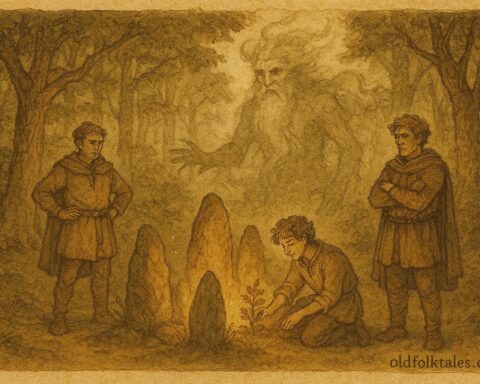
Nearby, in a grand chateau, there were whispers of magic and enchantment, of mysterious beings roaming the forests, sometimes seeking kindness, sometimes testing the hearts of mortals. The villagers spoke of these creatures in hushed tones, warning that selfishness brought misfortune, while generosity could attract miraculous fortune. Yet Étienne did not seek reward; his kindness flowed naturally from his character.
The Test in the Forest
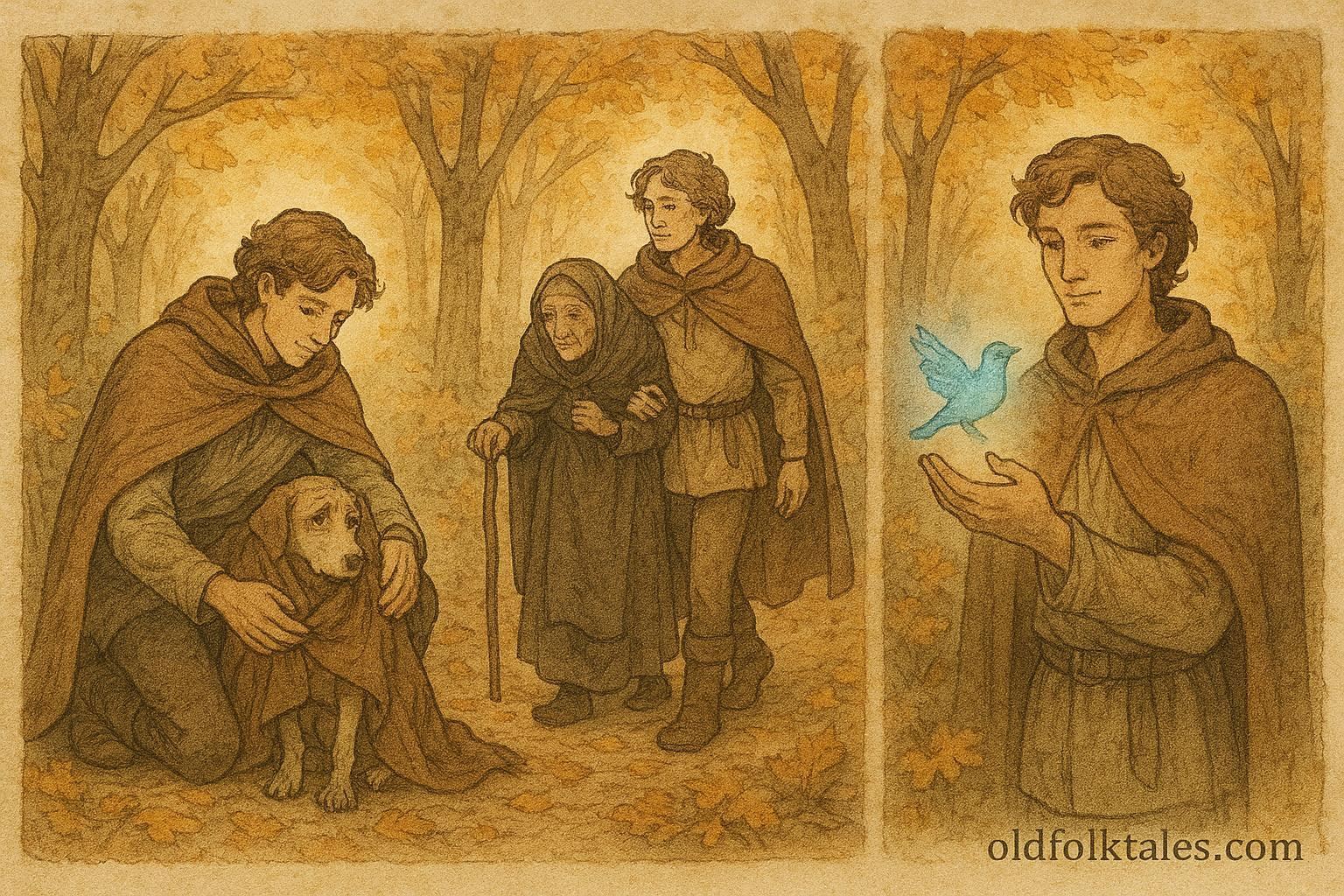
One misty morning, Étienne ventured into the forest to gather firewood for his family. Along the path, he found a small, bedraggled dog, shivering in the cold dew. Its fur was matted and its eyes filled with fear. Many would have passed by, wary of disease or mischief, but Étienne knelt beside the creature. He wrapped it in his cloak, offered it scraps from his modest lunch, and spoke gently, coaxing the trembling animal to eat.
As he continued deeper into the forest, he encountered an elderly woman leaning heavily on a crooked staff. Her robes were tattered, her eyes clouded with age, and she seemed weary beyond measure. Without hesitation, Étienne offered his own shoulder, guiding her along the path. She accepted his aid, murmuring words that Étienne did not understand, but which carried an air of strange power.
Finally, near a glade bathed in sunlight, a small bird with feathers of iridescent blue fluttered to his hand. It chirped a song that Étienne could almost understand, as if thanking him for his care of the creatures he had met. By the time he returned home, he felt an unusual warmth in his chest, a certainty that the day’s kindnesses had not gone unnoticed.
The Unexpected Rewards
Several days later, strange events began to unfold. The dog he had rescued proved to be no ordinary creature. It led Étienne to a hidden grove where herbs with remarkable healing properties grew. These herbs cured ailments that had troubled his family and neighbors. The old woman he helped was, in truth, a wise enchantress in disguise. She appeared in a dream, blessing Étienne with insight and courage that would guide him in later trials. The iridescent bird became a faithful companion, warning him of danger and revealing hidden paths in the forest.
Word spread that Étienne possessed a peculiar luck and wisdom. He found opportunities that others envied: crops flourished, debts were resolved, and those who had once ignored him now sought his counsel. Yet he remained humble, always crediting his fortune to the simple choice to aid those in need, rather than to cleverness or cunning.
Trials and Demonstrations of Character
The tale’s French tradition emphasizes that virtue is tested. One day, Étienne was approached by a mysterious merchant offering immense wealth in exchange for the loyal bird. Some neighbors whispered that he should seize the offer; after all, gold could solve every difficulty. But Étienne refused, understanding that the bird’s value lay not in its market price but in the companionship and guidance it provided, a reflection of the trust and care he had shown.
On another occasion, a stranger arrived at his home, a man with a cloak of strange fabric and eyes like a stormy sky. He requested lodging for a night, bringing with him a heavy burden of unspoken questions and silent grief. Étienne welcomed him warmly, offering food, fire, and comfort. By morning, the stranger revealed himself as a prince traveling in disguise. In gratitude, he offered Étienne a position at court, elevating his station and ensuring the young man’s life of service and generosity could extend to others on a grander scale.
Virtue Recognized
By the story’s end, the rewards of kindness were unmistakable. Étienne married a compassionate and noble woman, whose heart matched his own. His home prospered, but his greatest wealth remained the respect and affection of those around him. Animals, magical beings, and humans alike held him in honor. The narrative demonstrates that generosity is self-reinforcing: the simple acts of kindness that cost so little often return far greater treasures than gold, status, or fame.
French courtly fairy-tale tradition, particularly in Madame d’Aulnoy’s Les Contes de fées (1697), celebrated these themes repeatedly. Characters’ virtue was tested by magical interventions, moral choices, and social pressures, reinforcing lessons on altruism, reciprocity, and moral justice.
Explore the wit and wisdom of Western Europe, where humor and virtue often go hand in hand
Moral Lesson
This folktale teaches that acts of kindness toward strangers, whether human, animal, or magical, are never wasted. Humility, generosity, and compassion attract aid and blessings in unexpected forms. True virtue is demonstrated not by the hope of reward, but by the courage to act rightly, even in anonymity and uncertainty.
Knowledge Check
1. Who is the protagonist, and what defines him?
Étienne, a young man whose consistent generosity and kindness define his character.
2. What types of strangers benefit from Étienne’s kindness?
Humans, animals, and magical beings who appear in disguise or need aid.
3. How are the rewards of kindness manifested in the story?
Magical assistance, healing herbs, loyal animal companions, social advancement, and recognition of virtue.
4. What moral does the story emphasize regarding virtue?
That true kindness is selfless and will ultimately be rewarded, often in unforeseen ways.
5. Which literary collection preserves this tale?
Les Contes de fées, published in 1697.
6. What social and cultural values does the story reinforce?
Compassion, humility, reciprocity, moral justice, and the benefits of altruistic behavior in society.
Source: Les Contes de fées by Madame d’Aulnoy
Cultural Origin: France, 1697