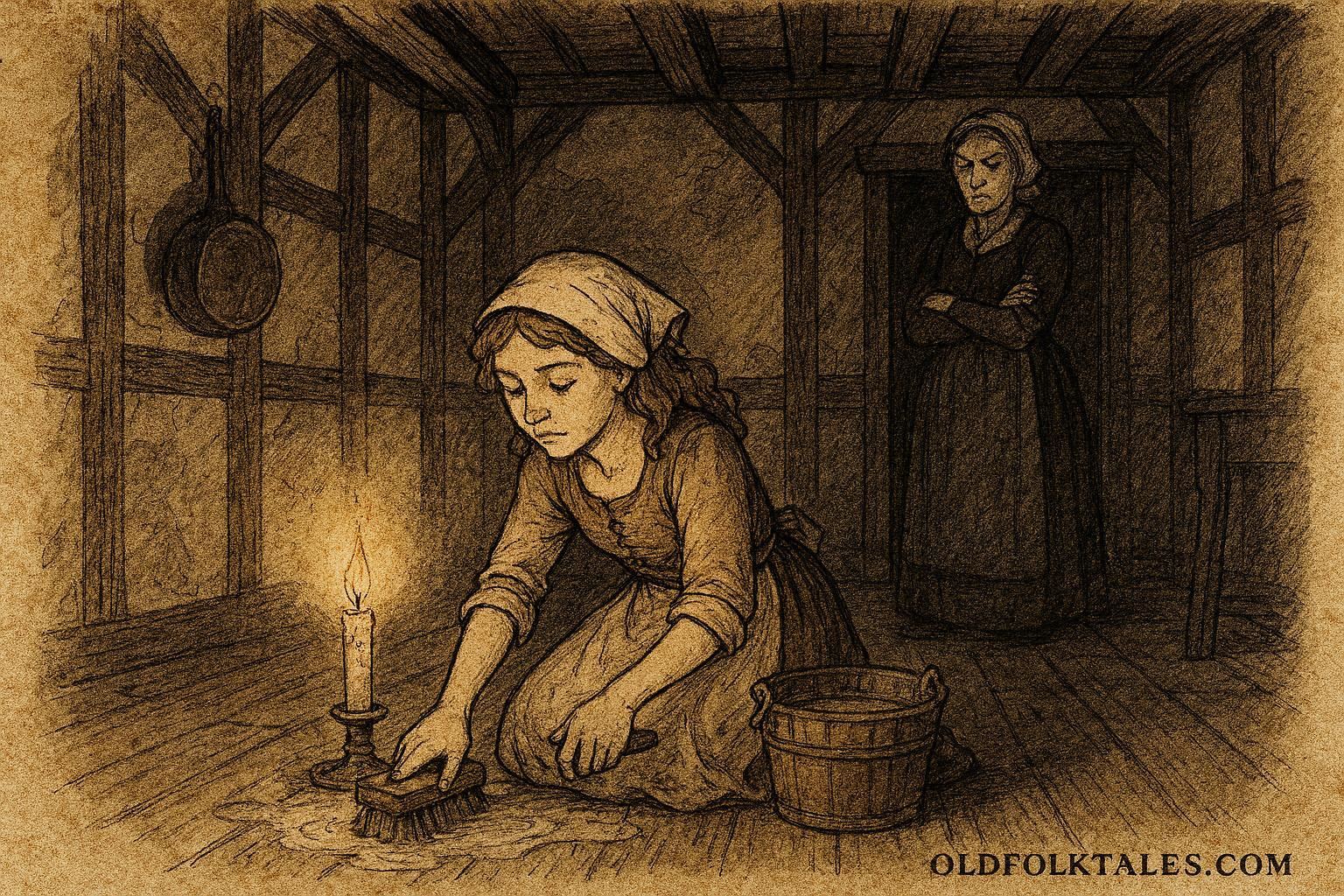
In a quiet provincial village of France, where the roofs of timber-framed houses caught the soft glow of morning sun and the streets were cobbled and uneven, tales of virtue and misfortune were woven into daily life. Among these, none was so widely told as the story of the cruel stepmother, a story that warned of envy and malice, yet celebrated patience, cleverness, and ultimate triumph of goodness.
The Girl and Her Early Life
Once there lived a young girl whose days were gentle and bright, for her mother had been a loving presence. Her hair fell like golden threads in the sun, and her eyes shone with kindness. Though her family was humble, they were happy. But the threads of joy were broken when her mother passed, leaving the girl’s father widowed and burdened by grief. Seeking a companion, he remarried. His new wife, while beautiful in appearance, harbored a heart of envy and sharpness.
Experience legends where mountains breathe magic and heroes face moral choices that shape destiny
From the moment she entered the household, the stepmother’s eyes assessed the girl with suspicion. She saw in the girl a quiet grace, a goodness that might one day surpass her own influence. And so, in subtle ways, she began to impose control. Simple chores multiplied, orders came with strict tones, and praise was withheld. The young girl, however, endured with quiet patience. She performed her duties diligently, never retaliating, never allowing her spirit to waver.
The Stepdaughter’s Daily Trials
The stepmother’s cruelty was not in one single act but in a constant erosion of comfort and joy. The girl woke before dawn to sweep the hearth, fetch water from the distant well, and prepare the family’s modest meals. The stepmother’s own daughters were spared such toil, their laughter ringing through the hall as the girl labored. Even the smallest slip, a dropped pan or spilled flour, was met with sharp words or a scolding glance.
On market days, the girl was forbidden to attend the village gatherings where her peers danced and sang. At festivals, she could only watch from the shadows as ribbons, music, and games celebrated the lives of others. Yet in her heart, she carried no bitterness toward the villagers, only a quiet resolve. Her kindness extended to neighbors, animals, and anyone in need. She was the light that persisted in a household dimmed by jealousy.
Cruelty and Schemes
The stepmother did not rely on physical labor alone to assert her dominance. She sowed discord among her daughters and against the girl. She whispered that the young girl sought to take what belonged to them, that she would one day inherit the household or the father’s favor. In these words, the daughters’ loyalty faltered, and petty jealousies emerged, leaving the girl isolated and wary.
On holidays, the stepmother devised cruel tests. She might demand that the girl sort countless grains of wheat from barley by nightfall, wash an entire laundry pile in the icy river, or fetch water from distant wells without spilling a drop. In some versions of the story, she even forced the girl to spin entire skeins of thread or mend garments far beyond ordinary ability. These trials were intended to break the girl’s spirit and prove her unworthiness. Yet, despite the enormity of these tasks, the girl persisted.
Hidden Assistance and Cleverness
In French folklore, it was often said that virtue draws aid from unexpected sources. Birds perched on windowsills would offer guidance; mysterious voices whispered solutions; enchanted animals might complete impossible chores unseen. The young heroine, clever and attentive, noticed signs of aid in nature. A robin might scatter seeds to speed her sorting task, or the wind would help carry her laundry back from the river. While some stories attribute magical intervention, others emphasize her ingenuity, her ability to think quickly and act wisely allowed her to endure trials that seemed insurmountable.
Through these experiences, the girl developed a quiet wisdom. She learned that kindness, patience, and attention to small details could overcome obstacles far greater than her physical strength. Her inner strength grew even as her outer circumstances grew harsher.
The Turning Point
The moment of triumph often arrives when justice can no longer be delayed. In many tales, a significant event, a festival, a royal visit, or a test of virtue, reveals the girl’s inherent goodness. Those in authority, or a magical benefactor, observe her grace under pressure. Perhaps a lost item of value appears because she had acted honestly; perhaps a task completed against impossible odds demonstrates her integrity; perhaps her gentle demeanor endears her to a wise observer.
The stepmother’s schemes begin to unravel. Her cruelty is exposed through her own hubris: the daughters she manipulated recognize her unfairness, neighbors notice her injustice, and the girl’s perseverance shines more brightly against the shadow of malice. Eventually, the stepmother is confronted with the consequences of her actions, and her power wanes as virtue triumphs.
Reward and Recognition
At last, the young heroine receives her reward. In some tales, it may be marriage to a noble or influential figure, acknowledgment from her father, or even recognition from a community she had served with quiet devotion. Her reward is not merely material but moral: her patience, wisdom, and kindness are honored, and her stepmother’s envy is revealed as baseless and destructive.
The story concludes with harmony restored. The household no longer suffers under cruelty. The girl’s perseverance is celebrated, and she becomes a living example of the principle that goodness, cleverness, and patience are more powerful than jealousy, cunning, or brute authority.
Cultural Context and Significance
The archetype of the evil stepmother is central to French folktales, appearing in stories such as Cendrillon. These tales reflect social realities in early modern France, including concerns about blended families, inheritance, and domestic power structures. They also explore societal expectations for women, the importance of virtue and cleverness, and the moral imperative of justice.
Through repeated storytelling, the archetype served as both warning and inspiration: warning children and young adults of the dangers of envy and malice, and inspiring audiences to hold fast to moral integrity despite hardship.
Discover the timeless charm of French, Dutch, and Belgian stories filled with cleverness and heart
Moral Lesson
The tale of the evil stepmother teaches that moral integrity, cleverness, and patience are more powerful than jealousy and cruelty. Even in the face of relentless adversity, virtue will ultimately be recognized, and injustice corrected. Goodness is not measured by external circumstances but by the perseverance of the spirit.
Knowledge Check
1. Who represents cruelty and envy in the story?
The stepmother, embodying jealousy, manipulation, and opposition to virtue.
2. How does the heroine endure her hardships?
Through patience, moral integrity, cleverness, and kindness to others.
3. What kinds of trials does the stepmother impose?
Impossible household tasks, social exclusion, and humiliations designed to suppress the girl’s virtue.
4. How is justice achieved in the story?
The heroine’s perseverance and moral goodness are recognized by authority or through magical aid, exposing the stepmother’s cruelty.
5. What social anxieties do these tales reflect?
Blended family dynamics, inheritance disputes, and concerns over loyalty and hierarchy in households.
6. Which literary work popularized this archetype in France?
Cendrillon, published in 1697.
Source: Cendrillon (Cinderella) by Charles Perrault
Cultural Origin: France, 1697