In the rugged lands of the Balkans, where mountains rise in stern silence and rivers carve their way through ancient valleys, there are fortresses that seem older than memory itself. Their walls stand tall against wind and time, unyielding and strong, as though bound by something more than stone and skill.
But among the people, it has long been said that not all walls stand by craftsmanship alone.
Some are held together by sacrifice.
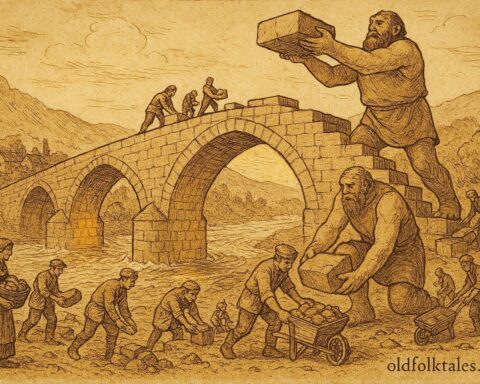
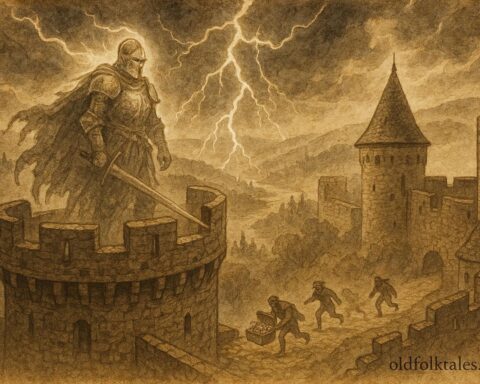
There was once a great fortress being built on a high and commanding hill, its purpose to guard the land and protect those who lived below. The work was difficult, the labor relentless, but the builders were determined. Day after day, they laid stone upon stone, raising walls meant to endure for generations.
Yet each morning, they were met with the same sight.
What had been built the day before lay in ruins.
At first, they blamed poor workmanship. They strengthened the foundations, adjusted their methods, worked with greater care. But no matter how precisely they built, no matter how firmly they placed each stone, the result did not change.
By nightfall, the walls stood tall.
By morning, they had fallen.
The builders grew weary, their efforts undone again and again. Fear crept into their thoughts, for this was no ordinary failure. Something unseen was at work, something that resisted their labor and rejected their creation.
Whispers began to spread among them.
Old beliefs.
Ancient warnings.
At last, one among them spoke what the others had only dared to think.
“The wall demands a sacrifice.”
The words fell heavily upon them all.
It was said, in the oldest tales, that certain structures, those meant to last beyond time, required more than stone and mortar. They required life itself, bound within their foundations, to give them strength that no storm or age could break.
No one wished to believe it.
And yet, nothing else had worked.
After much silence, a decision was made.
If the wall demanded a life, then a life must be given.
But whose?
The builders, bound together by their task, agreed upon a cruel and final pact. No man would choose openly, for none could bear the burden of such a decision alone.
Instead, they swore an oath.
The first among their wives to arrive at the construction site the next morning, she would be the one.
It was a decision made not with cruelty, but with despair.
They returned home that night, each carrying the weight of what had been agreed.
And each, in his own heart, hoped that fate would pass him by.
At dawn, the builders gathered once more at the site. Their hands were ready for work, but their eyes were fixed upon the path that led from the village below.
The air was still.
No one spoke.
Then, in the distance, a figure appeared.
A woman walking toward them.
As she drew closer, one of the men felt his breath leave him.
For it was his bride.
She approached with a gentle smile, unaware of what awaited her. Perhaps she had come to bring food, or to see her husband at his work, as she had done many times before. There was no fear in her step, no shadow in her expression.
Only trust.
The man stood frozen.
He could not move.
He could not speak.
The others lowered their eyes.
The oath had been made.
And it could not be broken.
When she reached the site, the truth was revealed to her.
Not in harsh words, but in the silence that surrounded her.
In the faces that could not meet her gaze.
In the understanding that came, slowly but surely, as she looked upon the rising walls.
What passed between her and her husband was not spoken for others to hear. It was a moment held between them alone, a moment of grief, of love, of acceptance.
For in the world they lived in, fate was not something easily defied.
The work began.
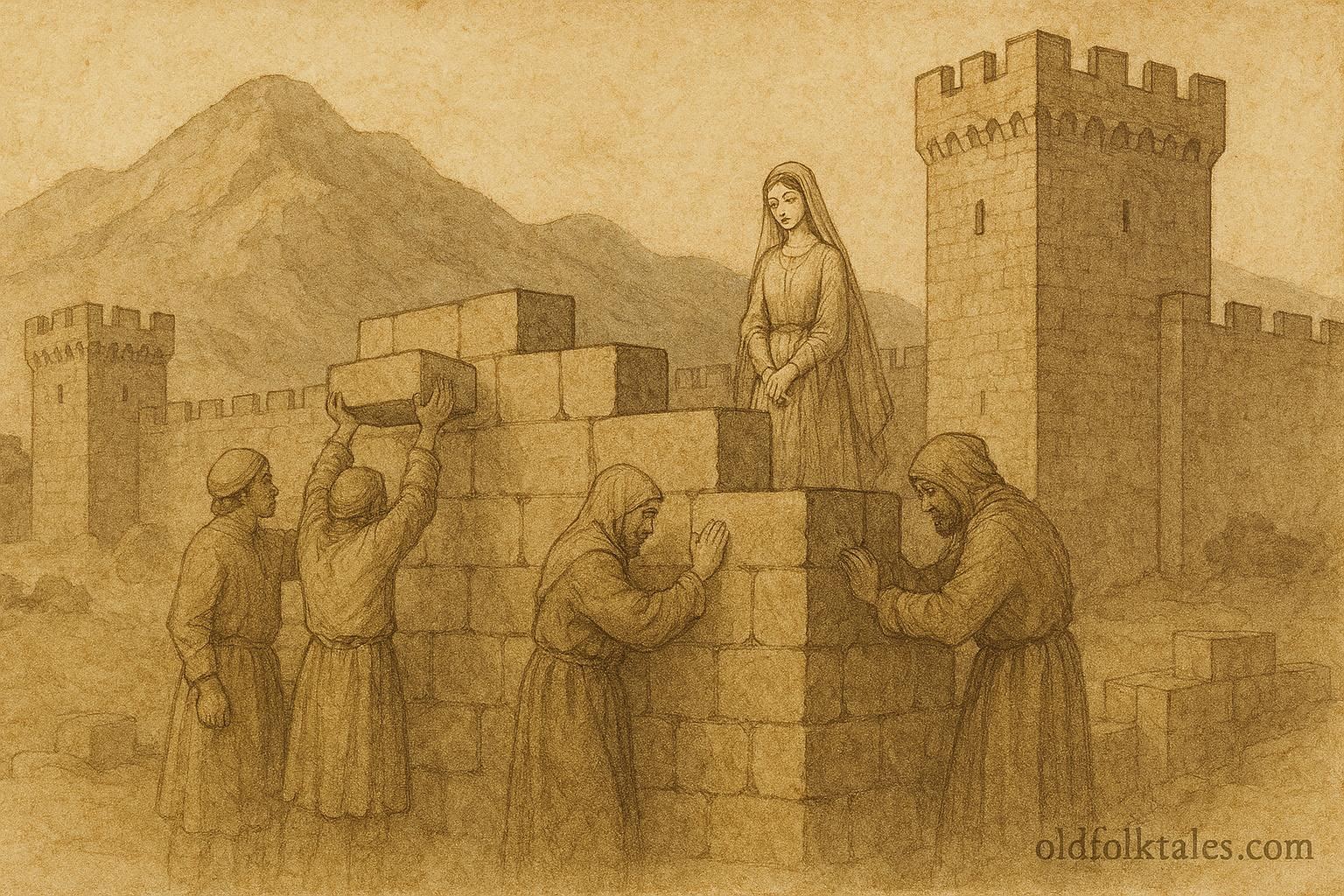
Stone by stone, the wall was raised once more. But this time, it did not stand empty.
The bride was placed within it, her presence becoming part of the very structure the builders had struggled to complete.
The wall rose higher.
Stronger.
Unyielding.
And when the work of the day was done, the builders stepped back.
The wall remained standing.
Morning came.
And for the first time, it had not fallen.
The fortress was completed.
Its walls stood firm against wind and weather, against time itself. It became a symbol of strength and protection, admired by those who lived within its shadow.
But among the people, the story was never forgotten.
They spoke of the bride who had been sealed within the stone, whose sacrifice had given the fortress its strength. They remembered not only the structure, but the life that had been bound to it.
And they carried with them the knowledge that such strength had come at a cost that could never be repaid.
Even now, it is said that in certain quiet moments, when the wind moves gently along the fortress walls, there is something more than the sound of air against stone.
Something softer.
Something human.
A reminder.
That the greatest structures are not always built by hands alone.
And that some walls stand because a life was given so that others might endure.
Moral Lesson
The Doomed Wall Bride reminds us of the painful tension between duty and love, and the sacrifices communities sometimes make for survival. It teaches that strength built on loss carries a lasting human cost.
Knowledge Check
1. What is The Doomed Wall Bride folktale about?
It tells of builders who sacrifice a bride within a wall to ensure a fortress stands.
2. Why did the walls keep collapsing?
According to the legend, the structure required a human sacrifice to remain standing.
3. How was the sacrifice chosen?
The builders agreed that the first wife to arrive at the site would be sealed within the wall.
4. What does the bride symbolize in the story?
She represents love, sacrifice, and the human cost of communal survival.
5. What themes are explored in this Balkan folktale?
Themes include fate, duty versus love, and the inevitability of sacrifice.
6. Where does this legend originate?
It comes from Balkan folklore, particularly documented in Bulgarian traditions.
Source: Documented in Bulgarian folk ballads and legends by Kuzman Shapkarev (1891–1894)
Cultural Origin: Widespread Balkan (including Bulgarian) folklore