In the ancient days of the North, when the land we now call Finland was still young and the forests whispered secrets to those who listened, the world once fell into a darkness so deep that even the bravest hearts trembled.
Fire, life’s warmth, light, and protection, was gone.
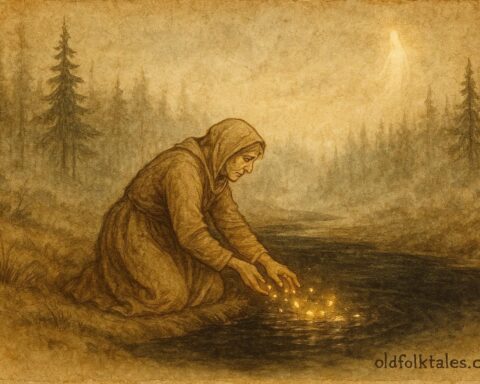
No hearth burned. No flame flickered. The cold spread across the land like a silent conqueror, creeping into homes, forests, and the bones of every living creature. The sun still moved across the sky, but its light seemed distant and weak, unable to replace the warmth that fire once gave freely. Nights became long and merciless, filled with shadows that pressed heavily upon the earth.
People suffered. Without fire, they could not cook their food, forge their tools, or keep the biting cold at bay. The animals grew restless, and even the spirits of the forests seemed uneasy. It was as if the very balance of the world had been broken.
The wise elders spoke in hushed voices, recalling that fire was no ordinary force. It had been a gift, one that connected the heavens, the earth, and humanity itself. Its disappearance could not be ignored.
Somewhere, they believed, fire still existed.
And so, a great quest began.
At the center of this effort stood two legendary figures of the North: Väinämöinen, the ancient and wise singer whose words could shape the world, and Ilmarinen, the master smith whose hands could forge wonders from the raw elements of the earth.
Väinämöinen, with his deep knowledge of the old songs and the hidden truths of the world, understood that fire could not simply vanish. It must have been taken, hidden away by forces beyond the reach of ordinary people.
Ilmarinen, whose skill with metal and flame was unmatched, felt the absence of fire more keenly than most. Without it, his forge was silent, his craft powerless. The loss was not just practical, it was personal.
Together, they resolved to restore what had been lost.
Their journey was not one of simple travel across land and water. It was a journey into the unseen forces of the world, the places where myths were born and where the boundaries between the natural and the supernatural blurred.
Through their search, they discovered that the fire had not been extinguished but stolen and hidden away by mystical forces. It had passed beyond the reach of ordinary hands, guarded in a place where light struggled to exist.
The heroes followed its trail with determination. Väinämöinen used his wisdom and ancient songs to uncover clues, calling upon the knowledge of the winds, the waters, and the spirits of the land. Ilmarinen prepared himself for the task ahead, knowing that when they found the fire, reclaiming it would require strength, precision, and courage.
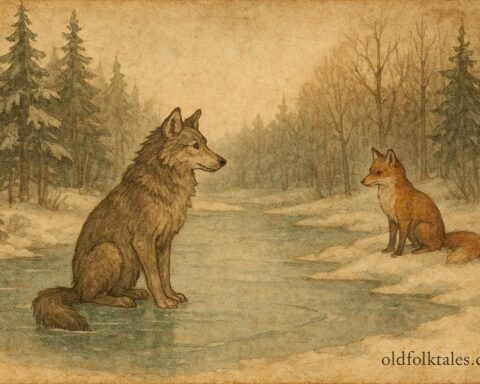
Their search led them across vast landscapes, through forests heavy with frost, over waters that reflected the dim sky, and into realms where danger lingered unseen.
At last, they discovered the truth.
The fire had been hidden deep within the natural world itself, contained in a place no ordinary person would think to look. It had been swallowed and concealed, its power trapped and unable to shine.
To retrieve it, the heroes would need more than strength. They would need patience, cooperation, and a deep understanding of the world’s balance.
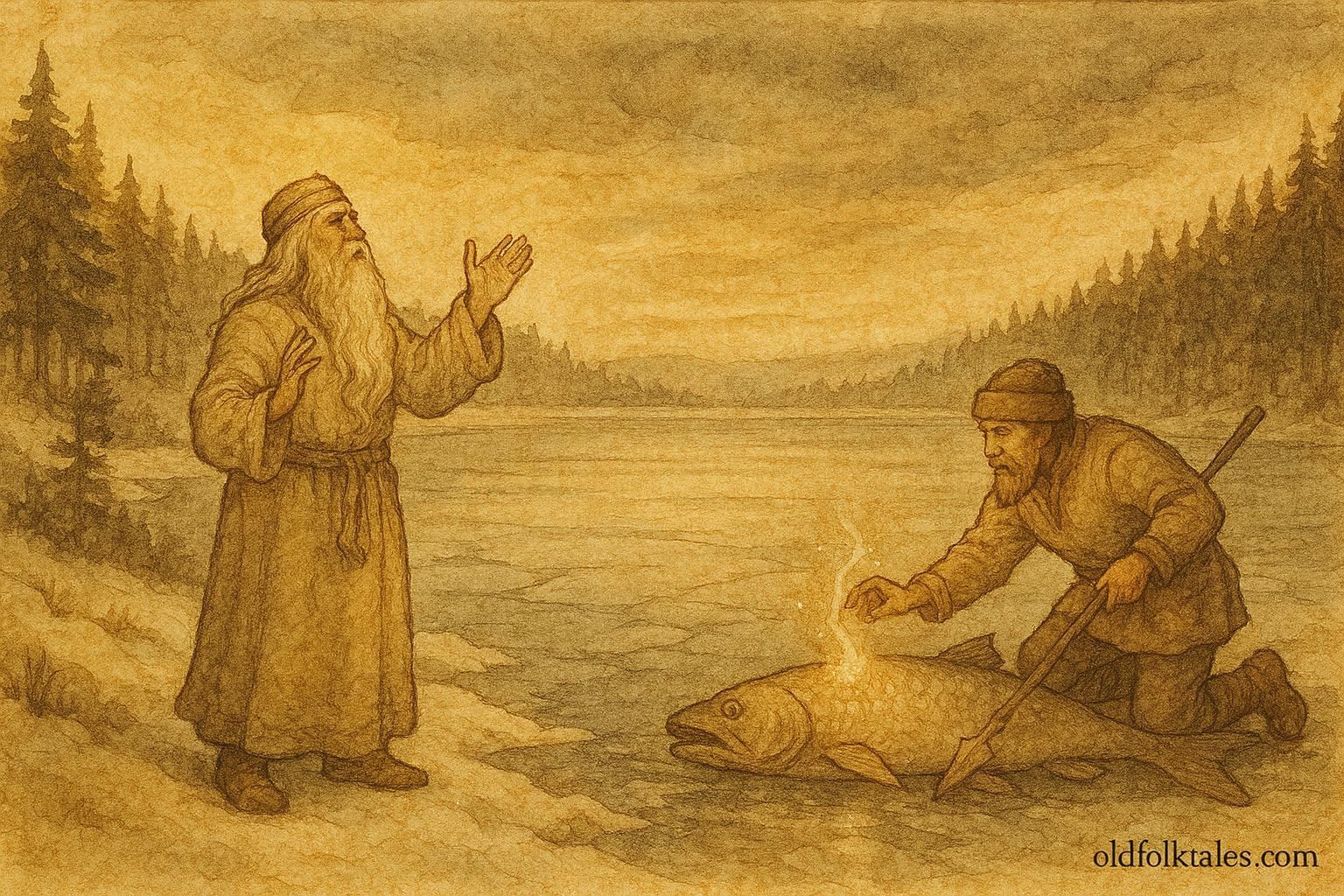
Väinämöinen devised a plan, using his knowledge of the old ways. He sang powerful songs, songs that stirred the waters and called forth the hidden. His voice echoed across the land, weaving through the currents of rivers and lakes, reaching into the depths where the fire lay concealed.
Ilmarinen stood ready, prepared to act when the moment came.
The task was difficult and dangerous. The forces guarding the fire did not release it easily. Nature itself seemed to resist, as though testing the worth of those who sought to reclaim such a powerful element.
But the heroes did not falter.
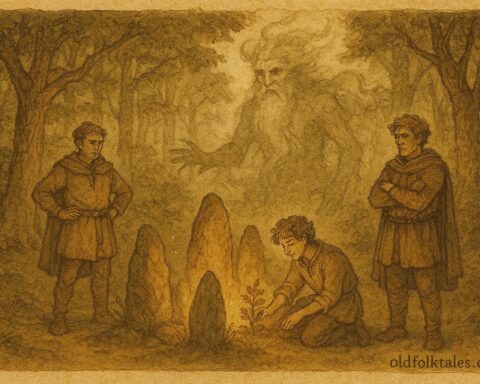
Working together, they faced each challenge with determination. Väinämöinen’s wisdom guided them, while Ilmarinen’s skill ensured that no opportunity was wasted.
At last, through persistence and unity, they succeeded.
The fire was freed.
When the first spark returned to the world, it was small, fragile, almost uncertain. But it was enough.
Ilmarinen carefully nurtured it, shielding it from the cold winds and feeding it until it grew. Väinämöinen ensured that its return was balanced and harmonious, so that it would once again serve humanity without causing destruction.
The flame grew brighter.
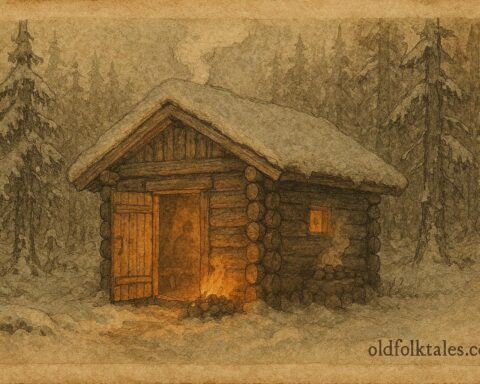
Soon, it spread from one hearth to another, carried carefully by those who understood its value. Warmth returned to homes. Light pushed back the darkness. Life began to flourish once more.
The people rejoiced.
Animals settled, the forests grew calm again, and the spirits of the land seemed to breathe a sigh of relief. The balance had been restored.
Fire, once lost, had been returned, not by chance, but by courage, wisdom, and cooperation.
From that day on, the people remembered.
They treated fire with respect, knowing that it was not merely a tool but a gift, one that could be lost if taken for granted. They told stories of Väinämöinen and Ilmarinen, of their journey and their success, so that future generations would understand the importance of unity and the delicate balance of the natural world.
And so, the tale of the origin of fire lived on, carried through time like the flame itself, passed carefully from one voice to another, never allowed to fade.
Moral Lesson
This Finnish folktale teaches that essential forces of life, like fire, depend on respect, cooperation, and wisdom. When balance is lost, it takes unity and perseverance to restore it, reminding us never to take nature’s gifts for granted.
Knowledge Check
- Who are the main characters in “The Origin of Fire” Finnish folktale?
The story centers on Väinämöinen, a wise sage, and Ilmarinen, a skilled blacksmith. - What happens when fire disappears in the story?
The world falls into darkness and cold, disrupting life and causing suffering. - Where was the fire hidden according to the Kalevala myth?
The fire was concealed within the natural world, hidden by mystical forces. - How do the heroes recover the fire?
Through cooperation, Väinämöinen uses wisdom and song, while Ilmarinen uses skill and action. - What is the main theme of this Finnish folktale?
The story emphasizes survival, cooperation, and respect for natural forces. - What does fire symbolize in Finnish mythology?
Fire represents life, balance, energy, and the connection between humans and nature.
Source: Kalevala (1835 / 1849)
Cultural Origin: Finnish mythology