In the rolling hills of southern Albania, where olive trees clung to rocky slopes and streams gurgled with crystal clarity, a small village thrived on sheep, grain, and the labor of its people. Yet, though the fields yielded fruit and the sheep grazed peacefully, the villagers lived under a shadow: the Devil himself had grown fond of troubling their lives. He appeared in many forms, sometimes a black goat, other times a stranger with fiery eyes, and whispered lies, stole livestock, or cursed crops with a sly, invisible hand. No charm, prayer, or talisman could banish him for long.
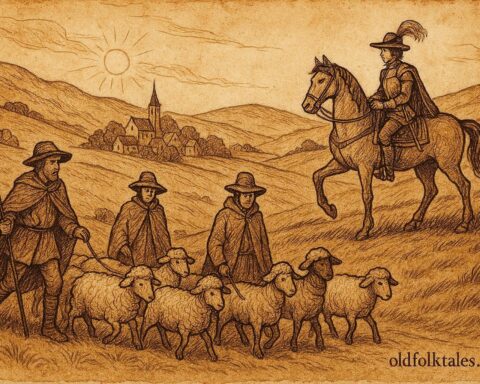
Among these villagers lived a shepherd named Bardhyl. He was poor, clothed in patched wool and worn boots, yet he possessed a sharp mind and a quick tongue that no mischief could confuse. Bardhyl tended his small flock in the hills near the forest, singing softly to the animals and devising puzzles and riddles to pass the long hours. While others feared the Devil’s pranks, Bardhyl observed, thought, and learned. He noticed patterns in the Devil’s movements, the way he approached temptation, and the tricks he played on those who lacked caution.
One late afternoon, as the sun dipped behind the mountains, Bardhyl’s flock grazed near the edge of a shadowy grove when the Devil appeared. This time, he took the form of a great wolf, black as midnight, with eyes glowing like embers. The creature leaped into the clearing, snapping its jaws. Bardhyl calmly raised his shepherd’s staff and said, “If you wish to harm my flock, you must first answer a riddle, or you will not pass.”
The Devil, amused and confident, grinned. “A mere shepherd thinks to outwit me? Speak your riddle, fool.”
Bardhyl nodded. “I am taken from the earth, yet I can fly without wings. I can wound without teeth, and I vanish without a sound. What am I?”
The wolf circled, sniffed the air, and paused, its fiery eyes narrowing. “I cannot solve this, and yet I will not fail to devour. What is your answer?” Bardhyl smiled and said, “A shadow, devil. A shadow is what I speak of. You see, you cannot harm it, and it flees at dawn.”
The wolf snarled, furious at being bested, yet he could not deny the truth of the riddle. With a hiss, he vanished into the forest, leaving Bardhyl’s flock untouched. The shepherd whistled softly, calling his sheep to follow him back down the hill. The villagers, hearing the tale, praised his cleverness, but the Devil’s shadow lingered, for he was persistent and cunning, returning night after night to test Bardhyl.
Several weeks later, the Devil returned, this time disguised as a wealthy merchant. He offered Bardhyl a bag of gold if he would leave the village for distant lands, saying, “The gold is yours, shepherd, and in exchange, I will trouble these people no longer.”
Bardhyl studied the merchant carefully. “A generous offer, but I must ask one thing: can you answer a question before I accept?” The Devil, confident in his deceit, nodded. Bardhyl asked, “If a man sows nothing and reaps nothing, yet gains everything, what is he doing?”
The Devil’s lips curled into a sneer. “This is a riddle without merit. I cannot solve it.”
Bardhyl’s eyes gleamed. “He is learning, devil. He is gaining knowledge while sowing nothing in the field. Wisdom may cost nothing, yet yield everything.” The Devil, frustrated, vanished in a swirl of smoke, leaving the shepherd standing firm. Once again, the village was spared.
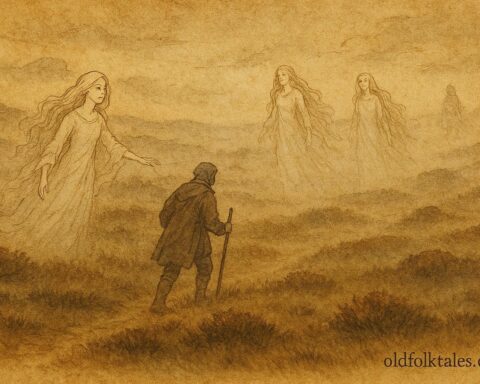
The people began to notice something remarkable: Bardhyl did not merely avoid harm; he seemed to bind the Devil’s power with his cleverness. Soon, the Devil’s tricks became more daring. He sent storms that threatened to wash away the crops and created illusions of wandering spirits to frighten the villagers. But Bardhyl anticipated each move. One night, the Devil caused the river to rise suddenly, intending to drown the village’s cattle. Bardhyl tied a bell to his smallest sheep and led the flock to higher ground, each step carefully planned. The Devil’s illusion of chaos passed, and the cattle were safe.
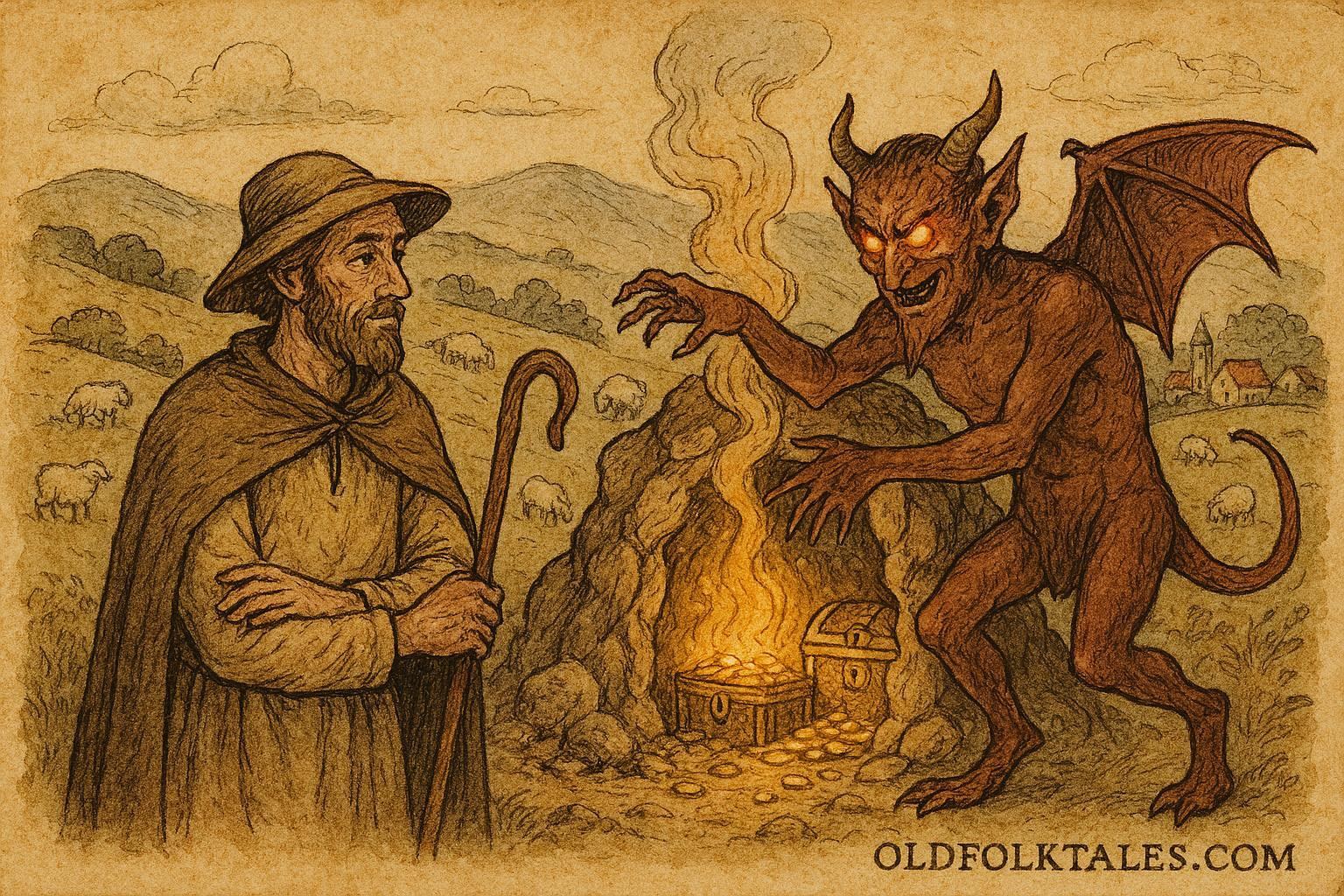
Finally, the Devil devised a trap that he believed would outwit even the clever shepherd. He conjured a magical cave in the forest, with treasures beyond imagination glittering inside. “Come and claim your fortune, shepherd,” he called. “All that glitters is yours if you enter.” Bardhyl paused, for he knew this was a test. With careful thought, he devised a plan.
He sent his dog ahead, a small but intelligent creature, to enter the cave first. The dog returned, shaking, and barked warnings. The Devil appeared, furious that his lure had failed. “Come yourself, shepherd! Do you fear the prize?”
Bardhyl shook his head. “I fear nothing but foolishness, devil. You offer gold to blind men and treasures to fools. I seek neither. But if you wish to bargain, answer me this: How can a man hold the wind and the rain in his hand?”
The Devil twisted, turned, and sneered. “Impossible! The wind and rain obey none but the skies!”
Bardhyl smiled. “Exactly. And yet, you attempt to hold the village’s fortune and peace in your grasp. As the wind cannot be held, so too can you not master the hearts of people who act with wisdom and caution.”
At that moment, the Devil erupted into a cloud of smoke, shrieking and twisting. The cave crumbled, the treasures vanished, and the forest fell silent. From that day on, the Devil no longer troubled the village. Bardhyl’s cunning had not only saved his flock and neighbors but taught the people to value intelligence, patience, and courage.
The villagers celebrated Bardhyl with songs, dances, and the sharing of bread from their harvest. The shepherd, however, returned to the hills, tending his flock with quiet satisfaction, knowing that true cleverness was humble, protective, and guided by wisdom rather than greed.
And so, the tale of the Clever Shepherd endured. Children repeated the riddles, travelers told of his cunning, and the hills of southern Albania echoed with the lesson that intelligence could outmatch even the darkest of powers.
Moral Lesson
This folktale teaches that intelligence, patience, and resourcefulness are often more powerful than brute strength or wealth. Courage and wisdom, when used to protect one’s community, can triumph over even the most cunning and supernatural adversaries.
Knowledge Check
-
Who is the Clever Shepherd in the tale?
A humble, intelligent shepherd from southern Albania who uses wit and riddles to protect his village. -
What role does the Devil play in the story?
The Devil represents mischief, temptation, and supernatural challenges that the shepherd must overcome through cleverness. -
What central themes are present in the tale?
Themes include the triumph of intelligence over force, resourcefulness, human cleverness, and protection of the community. -
How does Bardhyl outwit the Devil?
Through riddles, careful observation, foresight, and moral reasoning, anticipating the Devil’s tricks and avoiding direct confrontation. -
What lesson does the story impart about intelligence?
True intelligence combines quick thinking with patience, humility, and the desire to protect others rather than selfish gain. -
What is the cultural origin of the story?
The tale comes from southern Albania, documented by Mitrush Kuteli in Tregime të Moçme Shqiptare (1944).
Source: Mitrush Kuteli, Tregime të Moçme Shqiptare (1944)
Cultural Origin: Southern Albania