Long ago, in the quiet countryside of Ireland, people believed that the world was shared with mysterious beings known as the Irish Fairies.
These creatures were not the tiny winged figures of modern fairy tales. Instead, they were powerful and unpredictable spirits tied to ancient hills, forests, and hidden realms beneath the earth.
Discover the timeless charm of French, Dutch, and Belgian stories filled with cleverness and heart
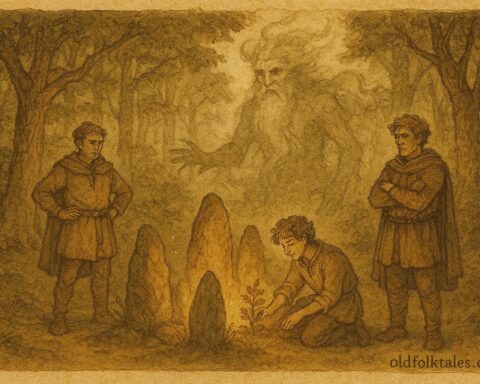
Many believed the fairies lived in enchanted places such as Fairy Forts, grassy circular mounds scattered across the Irish countryside.
Villagers respected these places deeply.
No farmer would dare cut down a lone tree growing in the middle of a field if it was believed to belong to the fairies. Paths that crossed fairy ground were often avoided after sunset.
But of all the stories about the fairy world, none frightened families more than the tale of the changeling.
According to the old legends, fairies sometimes stole healthy human children.
In their place, they left behind a strange creature called a changeling, a weak, sickly being that looked like the child but behaved very differently.
One such story tells of a young family living in a small cottage near the edge of a quiet village.
Their baby boy had been strong and cheerful from the day he was born. His laughter filled the cottage, and his parents believed they had been blessed with a happy child.
Then, one morning, everything seemed to change.
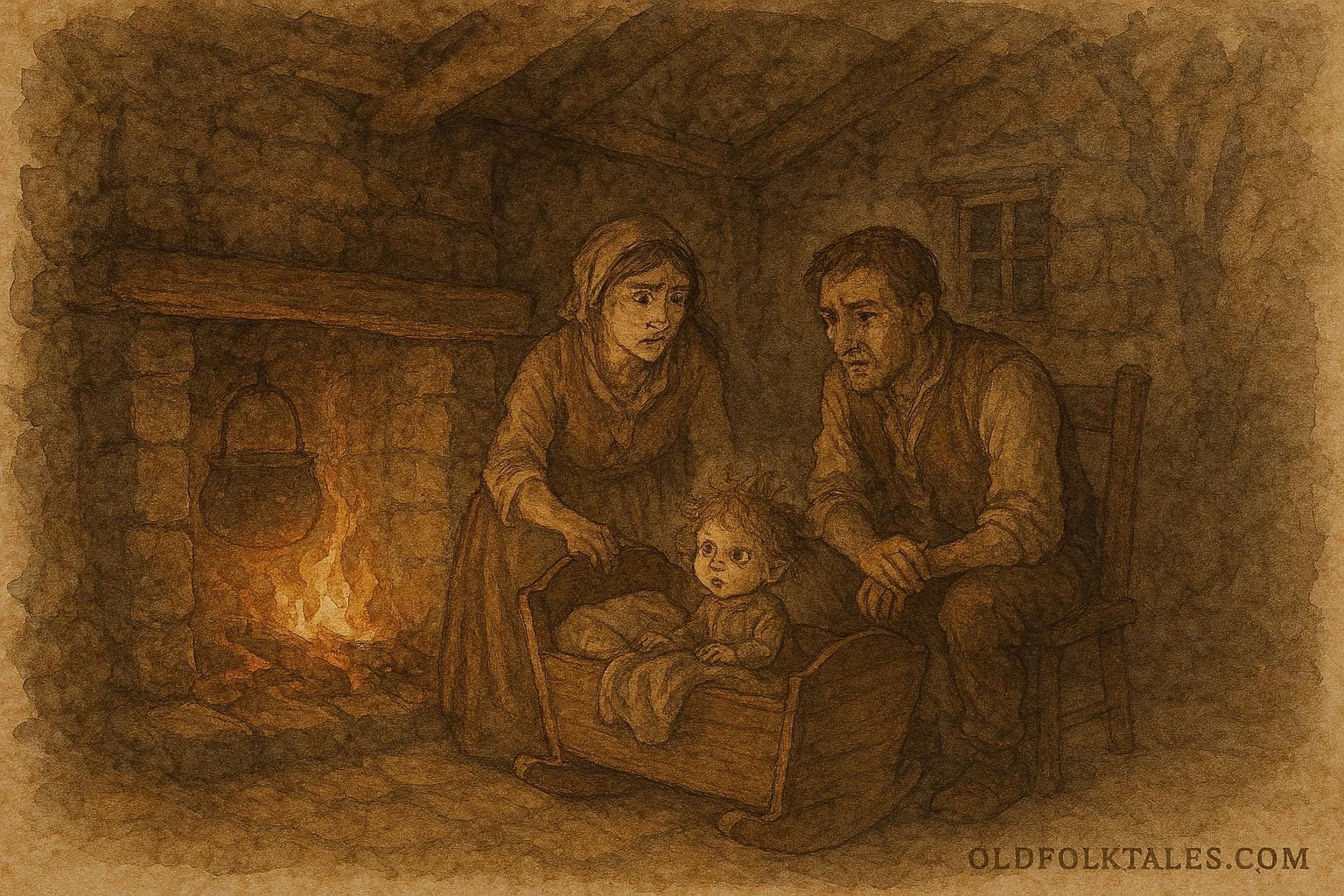
The baby who lay in the cradle no longer laughed or smiled.
He cried constantly and appeared thin and pale, as though some unseen illness had drained his strength.
The mother grew worried.
She tried feeding the child and comforting him, but nothing seemed to help.
Day after day, the child grew weaker.
Neighbors soon began whispering among themselves.
Some said the child had been taken by the fairies.
The creature lying in the cradle, they believed, was not the real baby but a changeling.
In those days, such beliefs were taken seriously.
Many villagers thought the fairies might steal children for different reasons. Some believed they wanted strong human babies to raise in the fairy realm. Others said the fairies replaced them with their own weak offspring.
When the worried parents heard these whispers, fear settled deeply in their hearts.
Desperate for answers, they sought advice from the elders of the village.
The elders listened carefully before offering their grim conclusion.
“If the child is truly a changeling,” one of them said, “then the fairies must be forced to return the real baby.”
According to old tradition, certain rituals could reveal whether a child was truly human or one of the fairy folk in disguise.
Some villagers suggested placing iron objects near the cradle, as fairies were believed to dislike iron.
Others recommended lighting a strong fire in the hearth or performing strange tests meant to provoke the changeling into revealing its true nature.
One evening, the parents decided to try one such ritual.
They placed the baby near the warm glow of the fire and carefully carried out the strange custom described by the elders.
As the fire crackled and shadows danced along the cottage walls, the mother watched the child closely.
For a moment, nothing happened.
Then the baby suddenly stopped crying.
According to the legend, the creature in the cradle began to laugh in a strange and unnatural way.
Some versions of the tale say the changeling spoke words that no infant should know.
Others say it simply stared with ancient-looking eyes.
Whatever happened, the villagers believed this moment revealed the truth.
The child in the cradle was not the family’s baby.
Soon after, the story says, the fairies returned the real child and took their changeling away.
By morning, the healthy baby had returned to the cradle, smiling once again as he had before.
Whether the story ended exactly this way depends on the version told.
Some tellings end happily with the child restored.
Others leave the mystery unresolved, suggesting that the fairy world remained unpredictable and dangerous.
Throughout rural Ireland, stories like this served as warnings.
They reminded families to guard their children carefully and to respect the unseen powers believed to exist beyond the human world.
Today, the legend of the changeling remains one of the most fascinating parts of Irish folklore.
It reflects ancient beliefs about illness, misfortune, and the mysterious forces that people once believed shaped their lives.
And though most people no longer fear fairy kidnappings, the old stories still echo through Irish tradition, whispering of a time when the line between the human world and the fairy realm seemed very thin indeed.
Journey into the charm of British wit and Irish wonder through centuries of folk tradition
Moral Lesson
The changeling legend reflects the deep fears and mysteries faced by earlier communities. It reminds us how people used stories and traditions to make sense of illness, uncertainty, and the unknown forces of life.
Knowledge Check
1. What creature was believed to replace stolen children in Irish folklore?
A changeling left by the Irish Fairies.
2. Where were fairies often believed to live?
In magical places such as Fairy Forts.
3. Why were villagers afraid of changelings?
Because they believed fairies could steal healthy children and replace them with weak or strange substitutes.
4. What objects were sometimes used to ward off fairies?
Iron objects were commonly believed to repel them.
5. Why did families perform rituals on suspected changelings?
They hoped to force the fairies to return the real child.
6. What deeper cultural belief does the changeling story reflect?
It reflects ancient fears about illness, the supernatural, and the protection of children.
Source: Adapted from Ancient Legends, Mystic Charms and Superstitions of Ireland by Jane Wilde, 1887.
Cultural Origin: Ireland