In the northern lands of the historic Low Countries, where rivers wind through fertile plains and medieval towns rise from fields of wheat and flax, the city of Douai stands as a place shaped by centuries of trade, craftsmanship, and community pride.
Among the many traditions that have endured within its streets, none is more beloved than the towering figures that parade during the city’s great festivals, giants that stride above the crowds, their enormous forms carried through the squares while music echoes between ancient buildings.
These giants are not merely decorations.
They are the descendants of a legend.
A legend about a mighty protector known as Gayant, the giant of Douai.
The City and Its Walls
Long ago, when the lands of the Low Countries were divided among powerful lords and threatened by rival armies, towns such as Douai depended on strong walls and determined citizens for protection.
The city was surrounded by fortified gates and defensive towers, yet its safety was never guaranteed. Armies sometimes marched across the plains, and travelers brought news of distant battles and shifting alliances.
In those uncertain times, the people of Douai shared a story passed quietly from generation to generation.
They believed their city had once been defended by a giant.
His name was Gayant.
The Giant Protector
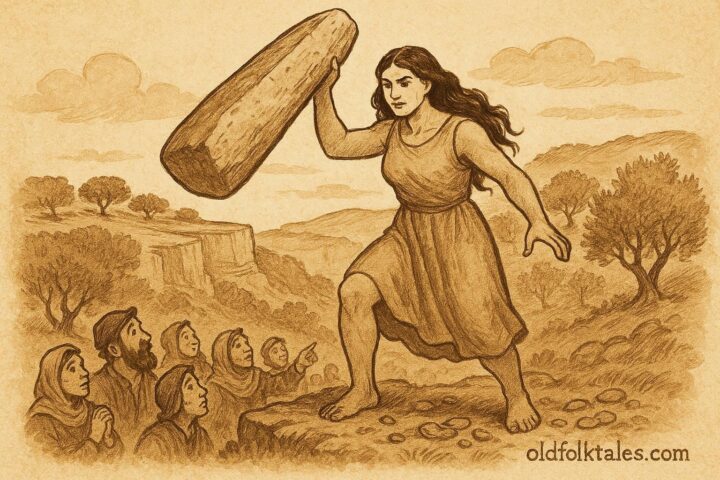
According to the legend, Gayant was no ordinary giant. Towering above the rooftops and church spires of Douai, he possessed immense strength and an unwavering loyalty to the people of the city.
Whenever danger approached, Gayant was said to appear at the gates.
From the hills surrounding Douai, he could see the movements of distant armies. His enormous presence alone discouraged many enemies who might otherwise have attempted to capture the city.
Stories told by the townspeople described how Gayant could stride across the fields in a single step and lift great stones with ease. When invaders threatened the region, he stood beside the city walls like a living tower.
With such a guardian, the people believed their city would endure.
The Threat of Invasion
One year, however, danger approached more seriously than before.
Rumors spread through the markets and workshops of Douai that a large force was moving across the region. Farmers returning from distant fields spoke of soldiers traveling along the roads and banners rising above the horizon.
Fear spread among the townspeople.
The city’s defenses were strong, but the approaching force appeared larger than any the citizens had faced in recent memory.
It was then, the legend says, that Gayant once again came to the aid of the people.
The Giant’s Stand
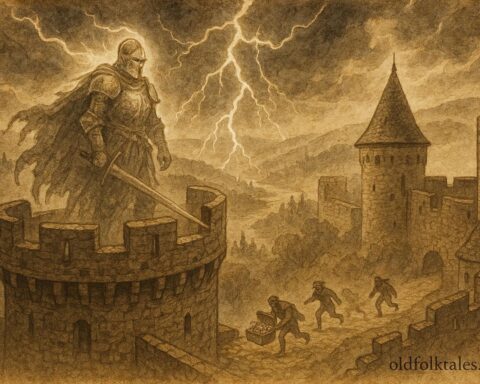
As the invading army approached the plains outside Douai, Gayant appeared beside the city’s great gate.
His enormous figure cast a shadow across the fields.
The soldiers who marched toward the walls looked up in astonishment. Before them stood a being far larger than any human warrior, his strength visible in every movement.
The giant did not need to attack.
His presence alone was enough to disrupt the advancing force.
Confusion spread among the ranks. Some soldiers believed they faced a supernatural guardian, while others feared the city possessed defenses beyond their understanding.
The army hesitated.
And then, gradually, it turned away.
Douai remained safe.
Remembering the Protector
After the danger had passed, the citizens of Douai gathered in celebration.
They told the story of how Gayant had protected them once more. Parents repeated the tale to their children, merchants shared it with travelers, and the legend became woven into the identity of the city itself.
Yet as the years passed, the giant was seen less often.
Some said he had returned to the distant hills. Others believed his work was complete and that the city now stood strong enough to defend itself.
Still, the people did not forget him.
They began searching for ways to keep his memory alive.
The Birth of the Festival Giants
In time, the citizens of Douai created something remarkable.
Instead of waiting for the giant to appear again, they built a figure to represent him.
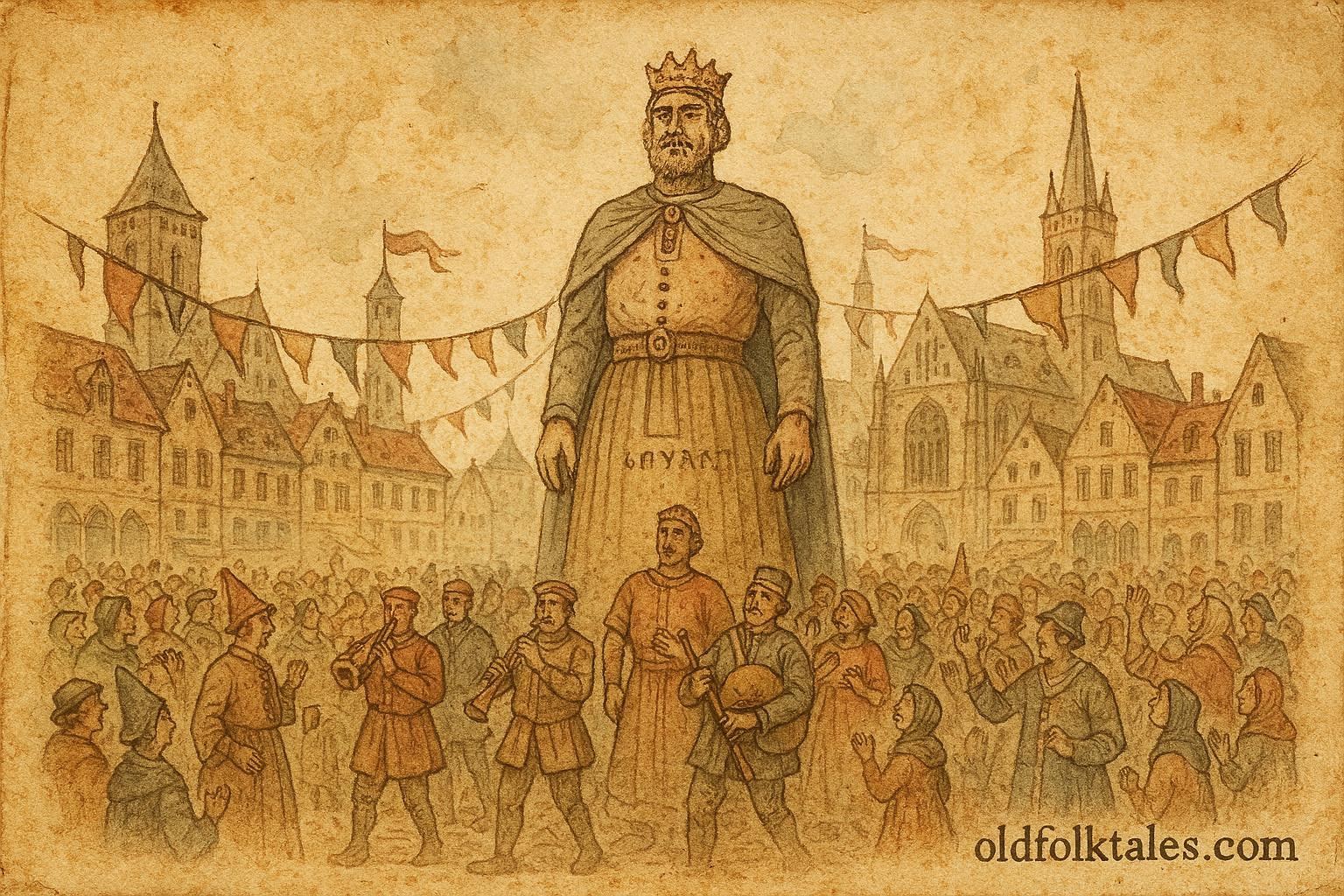
Craftsmen constructed a massive effigy, tall enough to tower above the crowds, decorated with clothing that reflected the pride and traditions of the city. This figure was named Gayant, honoring the legendary protector who had once defended Douai.
During festivals, the giant was carried through the streets.
Musicians played lively tunes. Citizens gathered in celebration. Children looked upward in awe as the towering figure passed through the squares and marketplaces.
The giant had become part of the city’s living tradition.
A Family of Giants
Over time, the tradition grew even larger.
Other giant figures joined Gayant in the celebrations. These figures were imagined as members of his family, each with their own name and role within the festival.
Together they formed a procession that reflected the spirit of the community.
The parade of giants became one of the most important events in Douai, bringing together generations of residents who celebrated not only the legend of Gayant but the shared identity of their city.
The towering figures reminded everyone of the strength and unity that had once protected their home.
The Festival Through the Centuries
Records from the early 16th century describe these giant figures appearing in public celebrations as early as 1530, showing that the tradition had already become deeply rooted in the culture of the region.
Through wars, political changes, and centuries of history, the festival of Gayant continued.
Even when the world around Douai changed, the giant returned each year to walk the streets once more.
For the people of the city, Gayant was no longer simply a legendary creature.
He was a symbol.
A symbol of resilience, heritage, and community pride.
The Living Legend
Today, when the festival takes place in Douai, enormous giants still parade through the city.
Their towering forms move slowly through the streets, accompanied by music, laughter, and crowds who gather to watch the spectacle.
Children point upward in wonder.
Adults smile, remembering the stories they heard when they were young.
The giant Gayant, once a legendary protector of the city, has become something even more enduring: a living tradition carried forward by the people themselves.
Through the festival, the legend continues to walk the streets of Douai.
Not as a solitary guardian of the past, but as a joyful symbol of a community that remembers its history and celebrates it together.
Moral Lesson
Legends help communities remember their strength. By honoring the stories of the past, people preserve their identity and celebrate the unity that protects and defines them.
Knowledge Check
1. Who is Gayant in the legend of Douai?
Gayant is a legendary giant said to have protected the city from invaders.
2. Where does this folktale originate?
In the city of Douai within the historic Low Countries cultural region.
3. What did Gayant do when enemies approached the city?
He stood near the gates, discouraging invading armies with his enormous presence.
4. How did the people of Douai preserve the legend?
They created giant festival figures that parade through the city streets.
5. When was the giant festival tradition documented?
Records show the tradition existed by around 1530.
6. What does Gayant symbolize today?
Community pride, heritage, and the strength of local identity.
Source: Traditional Low Countries folklore recorded in regional chronicles documenting the Douai giant festival tradition (c. 1530).
Cultural Origin: Flemish cultural sphere of the historic Low Countries, centered in Douai.