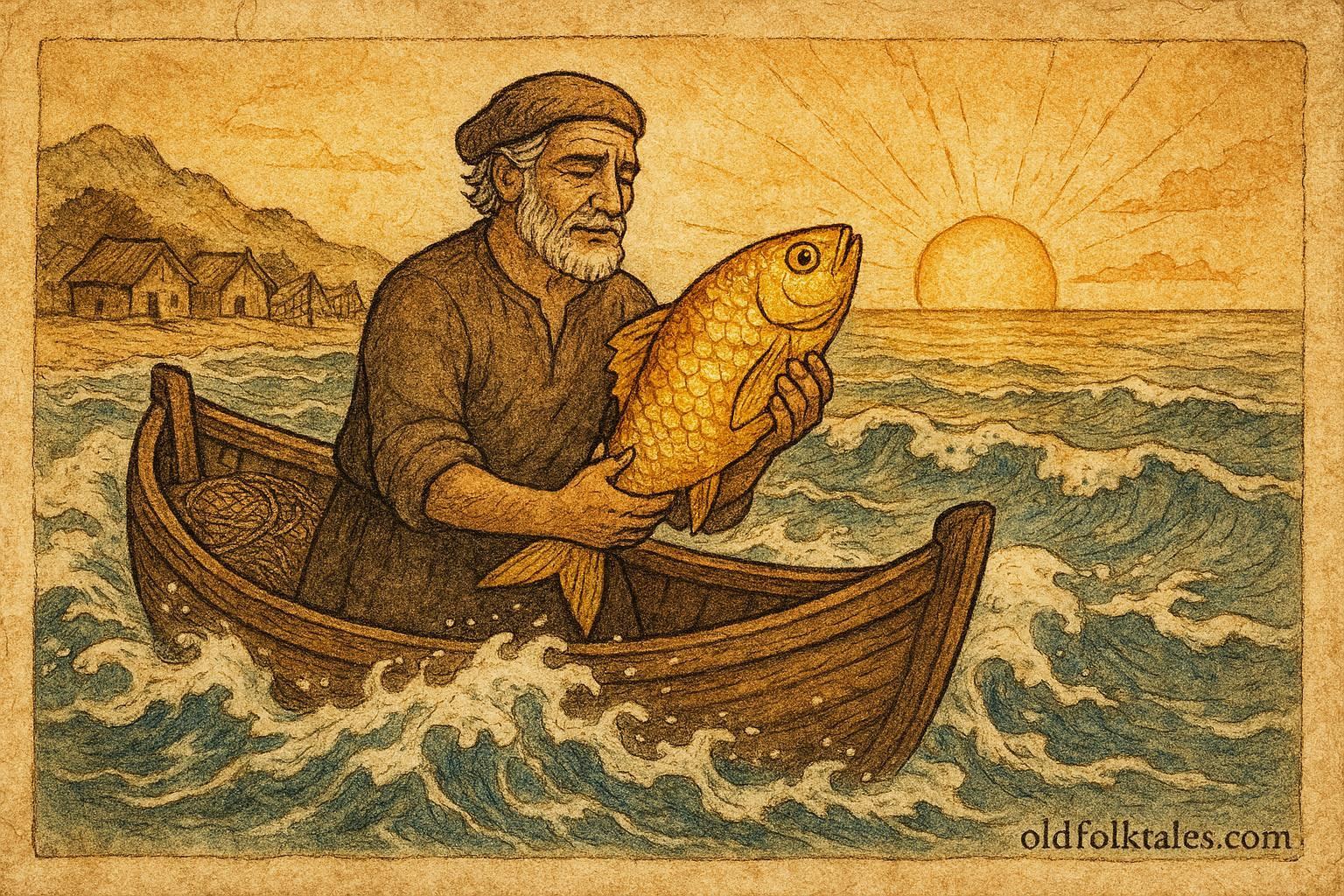
Along the rugged coastlines of northern Portugal, where cliffs plunged into the restless Atlantic and waves foamed against jagged rocks, lived a poor fisherman named Manuel. Each day, he set out in a weathered wooden boat, mending nets and casting his line with hopes of a humble catch. Though he owned little, Manuel was content, for he cherished the simple pleasures: the warmth of the sun on his face, the rhythmic lull of the waves, and the quiet companionship of the seagulls that circled above his boat.
Yet, in the same village, whispers of enchanted creatures and magical treasures were passed down through generations. Fishermen told tales of a golden fish that could grant wishes, though they warned that greed and selfishness could turn even the most wondrous gift into ruin. Manuel had always listened with awe but never imagined that he would encounter such a creature himself.
Step into the enchanted forests and mystical realms of the Slavic imagination
One misty morning, as the sea shimmered like molten silver under the rising sun, Manuel cast his net into the water. Hours passed with little luck; the net returned nearly empty, save for a few common fish. But as he drew it in one last time, something extraordinary leapt from the net: a small golden fish, its scales gleaming like sunlight on water, eyes intelligent and almost human.
“Release me, kind fisherman,” the fish said, in a voice as clear as the sea itself. “I am a magical fish, and for your mercy in catching me, I will grant you three wishes.”
Manuel staggered back, heart pounding. “A talking fish? And you… you grant wishes?”
The golden fish nodded. “Choose wisely. My gifts will reflect your heart. Seek not greed, but humility, and all may be well.”
At first, Manuel was cautious. He had lived a humble life and feared that greed might blind him. Yet, as days passed and his small hut proved insufficient to house his growing family, temptation gnawed at him. One evening, after a meager catch, he called to the fish, “Grant me a larger house, filled with comforts, so that my family may live without hardship.”
The golden fish shimmered and nodded. That night, Manuel awoke to find a grand new home, its walls warm and strong, overlooking the sea. For a moment, his heart swelled with gratitude, but soon discontent crept in.
“Why should we stop here?” he thought. “If one wish can grant comfort, two could bring wealth beyond imagination.”
Manuel hastened to the shore the next morning, seeking the golden fish. “I wish for gold, treasures enough to fill a ship!” he demanded. The fish’s scales flashed like lightning. “So be it,” it said. By evening, Manuel’s boat was laden with gold coins, silver chalices, and jewels sparkling like stars.
For a while, Manuel reveled in his fortune. The villagers marveled at his wealth, and even the king’s men whispered in amazement at the fisherman who had risen from humble nets to unimaginable riches. Yet, the more he acquired, the more his desires grew. Luxury became his habit, and greed gnawed at his soul.
One evening, Manuel, now restless and dissatisfied, summoned the golden fish for the third time. “I wish to be the richest man in all of Portugal, to have everything my heart desires!”
The fish’s golden eyes dimmed. “Manuel,” it warned, “the heart that seeks more than it needs will find sorrow in place of joy. Are you certain?”
But Manuel’s pride drowned out caution. “Yes, I am certain!” he cried. “Grant me this final wish!”
The fish shimmered once more, then vanished into the deep, leaving Manuel alone. At first, he thought his wish had been fulfilled; gold filled his home, fine clothing adorned his family, and servants bustled about. Yet as days passed, strange misfortune followed. His new possessions decayed inexplicably: gold tarnished, jewels dulled, and the lavish furnishings rotted. Servants deserted him, and his neighbors turned away, whispering that the fisherman had angered unseen forces.
Desperate, Manuel ran to the shore, calling for the golden fish. The waves swirled violently, and the wind howled. Finally, the shimmering figure appeared, though now its glow was faint and sad.
“Manuel,” the fish said softly, “you have misused the gifts of mercy and magic. Wealth and luxury without humility will never bring peace. The heart that seeks only for itself finds emptiness.”
Manuel fell to his knees, tears streaming. “Forgive me, great fish! I was blinded by greed. Please, I do not wish for gold or treasures. I only wish to live humbly, to care for my family, and to be grateful for what I have.”
The golden fish’s eyes brightened. “You have learned wisdom at last. True richness is not in wealth, but in humility, gratitude, and the simple blessings of life.”
With a gentle shimmer, the fish vanished, leaving only a small golden scale as a reminder. Manuel returned home to his humble hut, no grand treasures awaited, yet for the first time in months, he felt content. He mended his nets with care, shared his modest catch with neighbors in need, and embraced the warmth of his family. The village, witnessing his change, admired his newfound wisdom and kindness.
Years passed, and Manuel became known as the fisherman of wisdom, a man who had touched magic but chosen humility over greed. Whenever the villagers set out to sea, they told the tale of the golden fish, teaching their children that mercy, gratitude, and respect for the gifts of nature far outweigh fleeting wealth.
The golden scale Manuel kept never brought gold, yet it shimmered in sunlight, a reminder that true treasure lies in the heart, not in coins or jewels. And on quiet mornings, when the sea was calm and silver like the fish’s scales, Manuel would sometimes imagine the magical creature swimming freely in the depths, a guardian of the coastline, ready to reward hearts guided by humility.
Explore the warmth and wit of Mediterranean storytelling, where love and wisdom intertwine
Moral Lesson
This Portuguese folktale teaches that humility and gratitude are greater treasures than wealth or luxury. Greed and misuse of gifts lead to misfortune, while respect, restraint, and thankfulness bring lasting contentment and harmony.
Knowledge Check
- Who is the main hero of the story?
Manuel, a poor fisherman from northern Portugal. - What magical creature appears in the tale?
A golden fish that grants three wishes. - What leads to Manuel’s misfortune?
Misusing his wishes out of greed and desire for excessive wealth. - How does Manuel ultimately regain happiness?
By wishing only for humility, gratitude, and a simple, content life. - What moral lesson does the story convey?
Humility, gratitude, and respect for gifts bring true wealth; greed leads to loss and misfortune. - From which region and culture does this folktale originate?
Coastal fishing communities of Portugal.
Source: Portuguese Fairy Tales (1898)
Cultural Origin: Portugal, coastal fishing communities