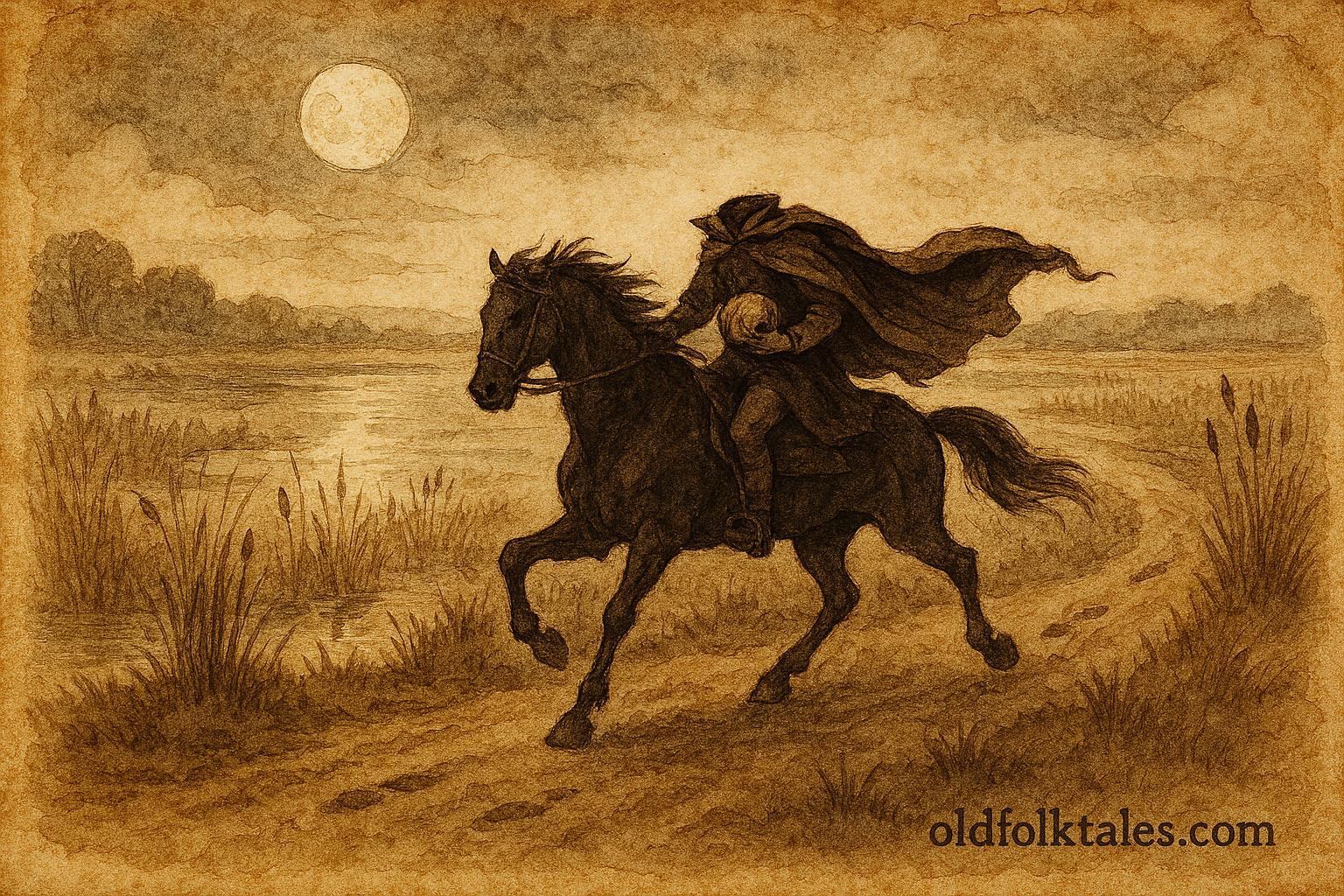
Before the Haarlemmermeer was drained and reshaped into orderly fields and straight canals, it was a vast, treacherous lake, an inland sea feared as much as it was relied upon. Villages clung to its edges, connected by narrow roads that cut through marshland, reed beds, and damp soil that swallowed sound. At night, these roads were avoided whenever possible, for the darkness carried more than silence. It carried memory.
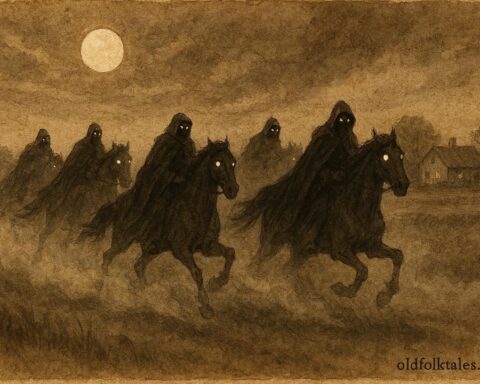
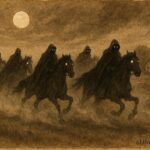
Among the most enduring stories of the region was the tale of the Headless Horseman of the Haarlemmermeer, a restless figure said to ride the old paths after sunset. Travelers told of hearing hooves long before they saw anything at all, slow, deliberate strikes against earth and stone, echoing where no horse should be. Those who ignored the sound often wished they had not.
The rider always appeared the same.
A tall figure sat upright upon a dark horse, its coat slick as if wet from mist or lake water. The rider wore a long cloak that moved unnaturally, even when the air was still. Where a head should have been, there was only shadow. Some claimed to see a faint glow rising from the neck, others swore the space was utterly empty, absorbing all light around it.
The horse never neighed. The rider never spoke.
Yet everyone knew what the apparition meant.
The Headless Horseman was not said to chase the innocent. He appeared to those burdened by guilt, men who had cheated neighbors, broken oaths, or committed injustices they believed unseen. He also showed himself to travelers who moved through the night with reckless intent, mocking old warnings or believing themselves beyond consequence.
To see him was not always to die. But to see him was never meaningless.
Old accounts describe merchants riding late to avoid tolls, only to find the road stretching endlessly before them, no matter how fast they urged their horses onward. Behind them, the sound of hooves followed, steady and patient. When they turned, the Headless Horseman rode at a constant distance, neither gaining nor falling back, until fear broke their resolve and they fled into the marsh, often with disastrous results.
In other tellings, unjust landowners returning from midnight dealings encountered the rider blocking the road ahead. No matter which path they chose, the figure reappeared, silent and unmoving, until the traveler confessed aloud to crimes long hidden. Only then would the road clear, leaving the shaken rider alone beneath the stars.
The origins of the Horseman were debated even in early times. Some believed he was once a local magistrate who abused his power, condemned falsely, and was executed by beheading. Others said he was a brutal tax collector murdered by villagers and cursed to wander forever. A few whispered he had been a soldier who committed atrocities during wartime and was struck down without burial rites.
But all versions agreed on one truth: his punishment did not end with death.
The people of Haarlemmermeer understood the tale not as mere fright, but as instruction. Parents warned children not to wander at night. Elders reminded neighbors that wrongdoing leaves traces, even when hidden from human eyes. The Horseman was proof that justice could arrive without warning, mounted on fear itself.
As centuries passed, the great lake was finally drained, its waters disciplined by dikes and windmills. Roads became straighter, nights brighter, and travel safer. Yet the legend did not fade. Farmers still spoke of strange hoofprints found at dawn along old paths. Travelers reported sudden chills, the sense of being watched, the echo of hooves where no rider stood.
And so the Headless Horseman of the Haarlemmermeer remains, not as a relic of terror, but as a guardian of moral order, riding the boundary between justice and fear, reminding the living that guilt does not vanish simply because the night is dark.
Moral Lesson
The Headless Horseman of the Haarlemmermeer teaches that injustice leaves a mark that cannot be outrun. Fear serves as a reminder that moral order endures beyond human law, and that wrongdoing inevitably calls forth consequence.
Knowledge Check
1. Who does the Headless Horseman appear to?
He appears to travelers at night, particularly those who have acted unjustly or carry guilt.
2. What region does this folktale come from?
The Haarlemmermeer area of North Holland, Netherlands.
3. What does the Horseman symbolize in Dutch folklore?
Moral retribution, unresolved guilt, and supernatural justice.
4. Is the Horseman always fatal to those who see him?
No. He serves primarily as a warning and punishment through fear.
5. Why did the legend function as social control?
It discouraged nighttime crime and unethical behavior through fear of consequence.
6. Why did the story survive after the lake was drained?
Because it reflects enduring cultural values about justice and accountability.
Source: Regional Dutch ghost lore; later folklore collections, c. 17th century CE
Cultural Origin: Haarlemmermeer, North Holland, Netherlands