In the green northern lands of Barcelos, in the Minho region of Portugal, ancient roads wind through valleys of vineyards, stone villages, and mist-covered hills. These paths have long carried farmers, merchants, and pilgrims traveling between towns and shrines. But before the age of lantern-lit roads and marked routes, these journeys were not always safe.
Night could fall suddenly across the hills. Fog could swallow the path. And travelers sometimes found themselves alone, lost between villages.
It was in these uncertain landscapes that the legend of the Pilgrim’s Cross of Barcelos was born, a story passed quietly from generation to generation among the rural people of northern Portugal.
They say that when a traveler loses the road and calls upon heaven for guidance, a mysterious cross may appear.
And that cross will lead them home.
The Old Roads of Minho
In earlier centuries, the roads near Barcelos were little more than dirt tracks carved by carts and worn by countless footsteps. Pilgrims traveling north toward Galicia or south toward the great Portuguese towns often crossed these paths on their journeys.
Among them were those walking the long pilgrimage routes toward sacred destinations. They carried staffs and cloaks, their hats marked with shells or simple emblems of faith.
Most journeys passed quietly.
But the Minho countryside could be treacherous after dark.
Rain often rolled down from the Atlantic coast, turning paths into mud. The dense forests that once covered the hills muffled sound and blurred direction. A traveler who wandered too far from the road might walk in circles for hours.
And so the people prayed often during their travels.
The First Appearance
The earliest telling of the legend describes a weary pilgrim who had been traveling for many days across northern Portugal. He carried little more than a walking staff, a small pouch of bread, and a wooden rosary worn smooth by prayer.
One evening, as clouds gathered and darkness fell quickly across the valley, the pilgrim realized he had lost the road.
He searched for landmarks, church towers, village lights, even the sound of distant bells. But the hills around him were silent.
Rain began to fall.
The pilgrim walked for some time, hoping to recognize a familiar path, but each turn led only deeper into unfamiliar fields. The night grew colder, and his strength began to fade.
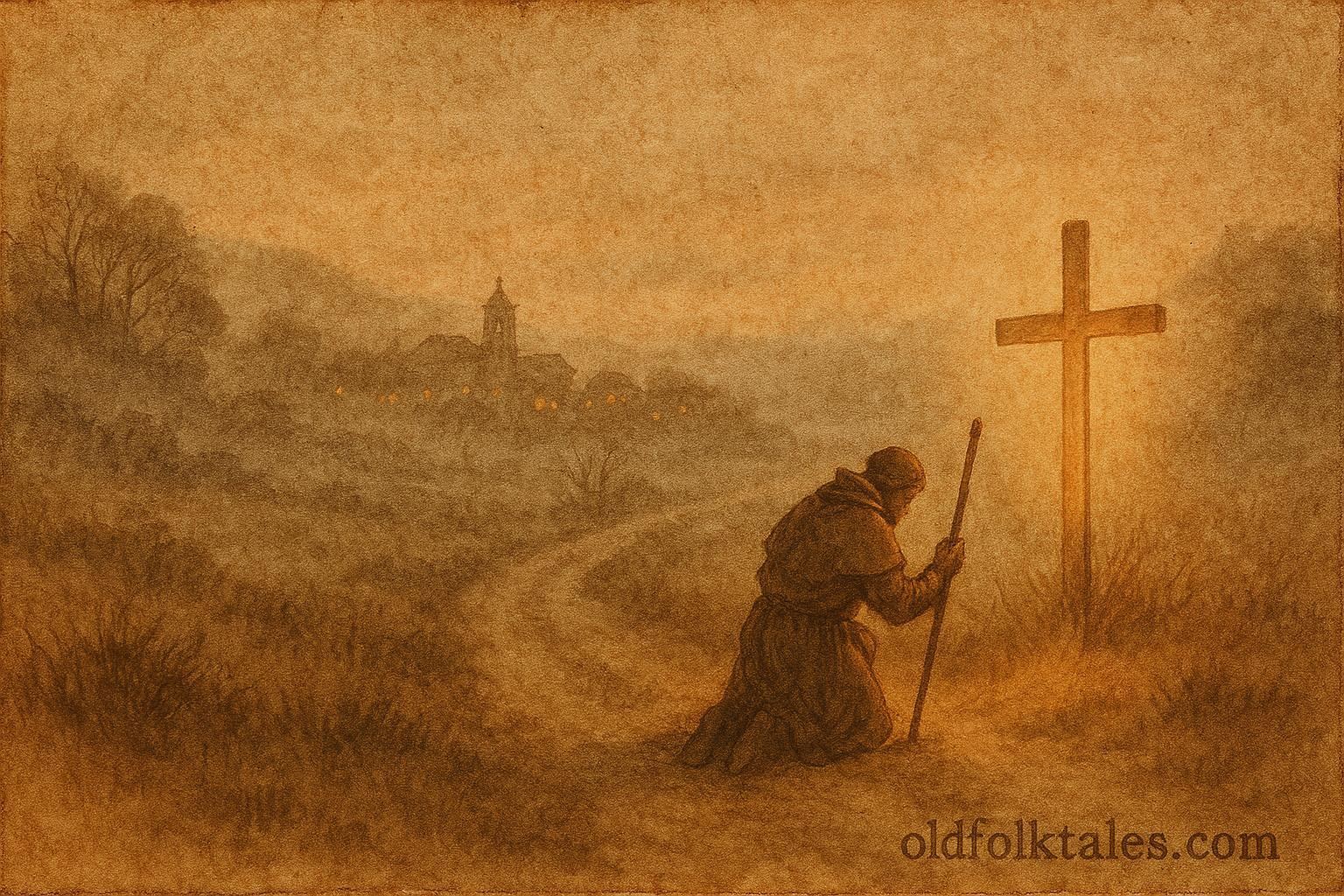
At last, he stopped beside a large oak tree and knelt.
He prayed quietly, asking only for guidance and safe passage home.
When he lifted his head, something unusual stood before him.
A small cross.
It was not there moments before.
The cross appeared simple, made of dark wood, planted firmly in the earth at the edge of a narrow path he had not noticed earlier.
The pilgrim approached cautiously.
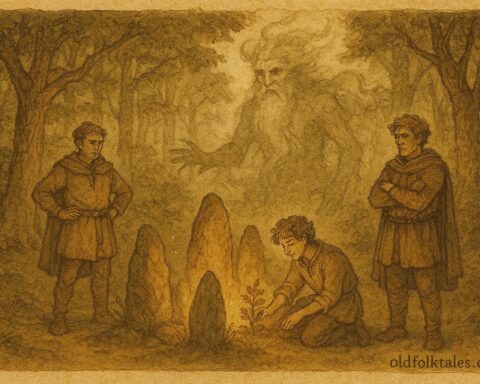
At its base lay a small cluster of stones arranged as if someone had once knelt there before.
Taking it as a sign, he followed the path.
Within an hour, the lights of a nearby village appeared beyond the trees.
The next morning, grateful for his safety, the pilgrim returned to thank those who had placed the cross. But when he reached the spot, the cross was gone.
Only the quiet path remained.
The Travelers Who Followed
Stories like this began to circulate throughout the villages surrounding Barcelos.
Another traveler, a farmer returning late from market, claimed he too had seen the mysterious cross after losing his way in thick evening fog. When he followed the path beside it, he arrived safely at his own village before midnight.
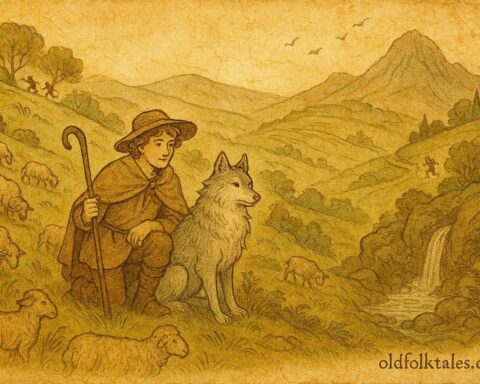
A shepherd once told of finding the cross on a lonely hillside after searching for a lost lamb long into the night. The path beside it led him not only home, but directly back to the small stone bridge that crossed the river near his fields.
In each telling, the details remained the same.
The traveler became lost.
They prayed sincerely.
And the cross appeared, quietly guiding them back to safety.
A Place of Prayer
Over time, villagers began to mark the places where the cross had reportedly appeared.
Small piles of stones were left along certain paths. Some travelers placed wooden crosses beside the roads in memory of the stories they had heard. Others paused to pray before continuing their journey.
No one could say for certain whether the mysterious cross was the same each time, or whether it appeared in different places depending on who needed guidance.
But the tradition remained strong.
Travelers walking through the Minho countryside often whispered a simple prayer if night began to fall before they reached their destination.
And many said they felt comfort simply remembering the legend.
Faith in the Countryside
The people of northern Portugal have long lived close to the rhythms of land and weather. Faith was not only practiced within churches, it traveled with them through fields, forests, and winding roads.
The legend of the Pilgrim’s Cross became part of this quiet devotion.
Parents told the story to children who would one day travel beyond their villages. Pilgrims heard it from innkeepers and fellow travelers along the road. Farmers shared it while resting beside stone walls during long afternoons in the vineyards.
The story carried a simple message:
Even when the road disappears, faith can reveal the way forward.
The Quiet Hills of Barcelos
Today, the countryside surrounding Barcelos still holds the same gentle beauty, green valleys, small white chapels, and narrow country roads lined with ancient trees.
Pilgrims continue to walk these paths as they have for centuries.
Some travelers say that if you walk quietly enough at dusk, you may feel the stillness that once guided those before you.
And if you lose the road and pray with a sincere heart, perhaps, just perhaps, the Pilgrim’s Cross will appear again.
Not to perform miracles of spectacle.
But to guide the lost safely home.
Explore the warmth and wit of Mediterranean storytelling, where love and wisdom intertwine
Moral Lesson
Faith and humility can guide us even when the path ahead seems uncertain. Those who seek help with sincere hearts often find the guidance they need.
Knowledge Check
1. What is the mysterious object that appears in the legend?
A simple wooden cross that appears to guide lost travelers near Barcelos.
2. Where does this Portuguese legend originate?
The Minho region of northern Portugal, near the town of Barcelos.
3. When does the cross usually appear?
When travelers become lost and sincerely pray for guidance.
4. What does the cross lead travelers to?
A safe path back to a village or familiar road.
5. What theme does the legend emphasize?
Divine guidance and protection for those traveling in faith.
6. What cultural tradition does the story reflect?
Rural Portuguese devotion and pilgrimage traditions.
Source: Regional Minho folklore archives recorded in 19th-century folklore studies (c. 1875–1890).
Cultural Origin: Barcelos, Northern Portugal.