Along the windswept coast of Zeeland, where dunes meet the restless North Sea and fishing villages cling to land reclaimed from water, there lies the memory of a tale older than stone dikes and wooden boats. It is a story whispered among fishermen, carried in the cry of seabirds, and remembered in the changing moods of the tide. This is the story of the Mermaid of Westenschouwen—a being born of the sea, taken by human hands, and mourned by land and water alike.
The Coast of Westenschouwen
In the time before great harbors and fortified seawalls, Westenschouwen stood close to the water’s edge. The village depended entirely on the sea: for fish, for trade, for survival itself. Nets were mended daily, boats launched at dawn, and prayers spoken at dusk for safe returns.
The people knew the sea as both giver and taker. Storms could erase years of labor overnight, yet calm waters filled nets and sustained families. It was widely believed that the sea was alive, watched over by spirits older than humankind, forces that demanded respect rather than conquest.
Among these beliefs was the quiet understanding that merfolk existed beneath the waves.
The Encounter at Sea
One morning, after days of unsettled weather, a group of fishermen cast their nets farther than usual, hoping for a rich catch. As the nets were drawn in, they felt an unfamiliar weight, too heavy and too alive to be fish alone.
When the net broke the surface, the men froze.
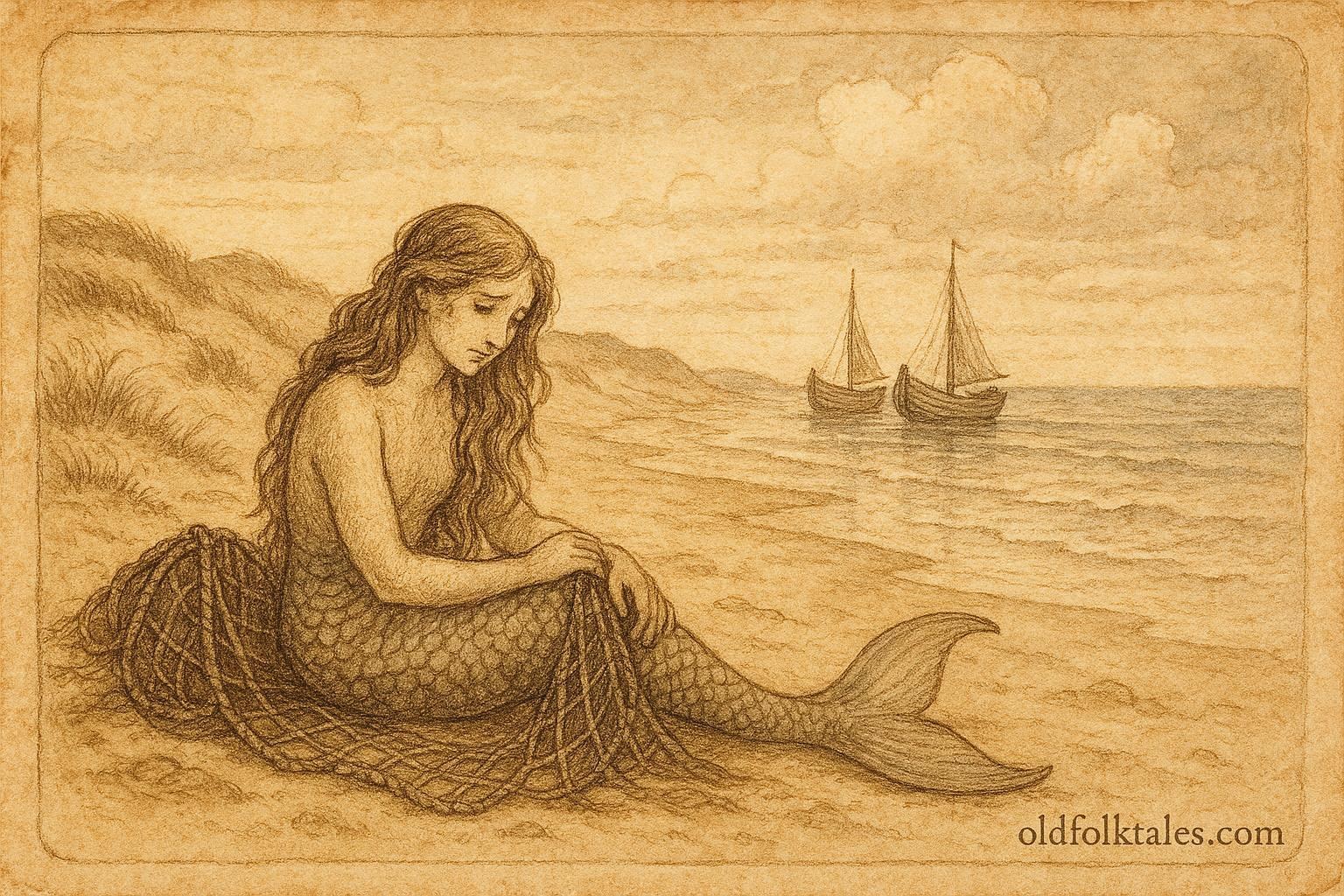
Entangled among the ropes was a mermaid, her form unmistakable. From the waist upward, she appeared as a young woman, pale and glistening with seawater, her hair long and dark like wet kelp. Below, her body ended in a powerful tail, scaled and shimmering, moving weakly against the net’s hold.
She did not cry out. Her eyes, wide and clear, fixed on the men with a gaze that held fear, sorrow, and something deeper, recognition.
Taken from the Sea
The fishermen argued among themselves. Some urged her release at once, fearing the consequences of angering the sea. Others, driven by curiosity and the belief that such a being must be valuable, insisted on bringing her ashore.
In the end, greed and wonder outweighed caution.
The mermaid was carried inland, away from the shore, and placed in confinement. Though she was given water and shelter, the salt air faded from her skin. Her strength diminished. She ate little, spoke not at all, and spent her days gazing toward the distant sea.
Each night, villagers reported hearing strange sounds carried on the wind, low, mournful tones like songs broken by grief.
The Mermaid’s Decline
As days passed, the mermaid’s sorrow deepened. Her once-bright eyes dulled. Her movements slowed. The sea, too, seemed to respond.
The weather turned unpredictable. Fishing yields dropped. Boats returned empty or damaged. A sudden storm destroyed nets that had withstood harsher seas before. Livestock fell ill, and accidents multiplied among those who had mocked or dismissed the mermaid’s suffering.
Elders began to whisper that the calamities were no coincidence.
Warnings Ignored
Among the villagers were those who remembered older stories—tales of sea spirits wronged and balance disturbed. They urged the fishermen to return the mermaid to the water, warning that no good could come from denying a being her home.
But others argued that the misfortunes were mere chance, that releasing her would mean losing a marvel that could bring fame or fortune.
The mermaid remained captive.
Her health worsened with each tide she could no longer feel.
The Turning Point
One night, after a violent storm battered the coast, flooding low-lying land and tearing apart boats at their moorings, the villagers could no longer deny the connection.
The sea roared louder than memory recalled. Waves struck the shore with fury, as if searching for something stolen.
At dawn, the mermaid was found barely moving, her breath shallow, her body losing its shimmer. Those who stood beside her felt an overwhelming sense of guilt, not fear, but shame.
They had taken what was never theirs.
Return to the Sea
The decision was finally made.
The mermaid was carried back toward the shore, her body wrapped in cloth soaked with seawater. As she was lowered into the surf, something remarkable occurred: the waves calmed. The wind softened. The sea seemed to hold its breath.
The mermaid stirred.
As the water closed around her, color returned to her skin. Her tail moved with strength once more. She looked back only once, not with anger, but with quiet sadness, and then disappeared beneath the waves.
She was never seen again.
Aftermath and Memory
In the days that followed, the sea gradually returned to its former rhythm. Fishing improved. Storms lessened. Life resumed, though changed by memory.
The people of Westenschouwen spoke of the mermaid no longer as a curiosity, but as a guardian wronged. Her story was passed down as a warning, not against the sea, but against human cruelty and disregard.
Children were taught never to take what belongs to the water. Fishermen poured libations before long voyages. Respect replaced entitlement.
A Living Warning
Even centuries later, sailors along the Zeeland coast claim that on quiet nights, a figure can be seen just beyond the breakers, a shadow that watches but does not approach. Some say it is the mermaid, ensuring that the lesson of her suffering is not forgotten.
Whether spirit or memory, her presence remains tied to the sea itself.
Discover the timeless charm of French, Dutch, and Belgian stories filled with cleverness and heart
Moral Lesson
The Mermaid of Westenschouwen teaches that nature’s gifts are not possessions, and that cruelty toward the vulnerable, human or otherwise, invites consequence. Respect for freedom and balance is essential to coexist with the natural world.
Knowledge Check
1. Where does the story of the Mermaid of Westenschouwen originate?
In Zeeland, the Netherlands, along the North Sea coast.
2. How is the mermaid captured?
She becomes entangled in fishermen’s nets.
3. What happens when she is kept from the sea?
She withers in sorrow, and misfortune strikes the village.
4. What causes the calamities faced by the villagers?
Their refusal to respect the mermaid’s need to return home.
5. How is balance restored?
By returning the mermaid to the sea.
6. What lesson does the story emphasize?
Respect for nature, freedom, and the consequences of cruelty.
Source: Zeeland oral tradition; early Dutch folklore records, c. 15th century CE
Cultural Origin: Zeeland, Netherlands