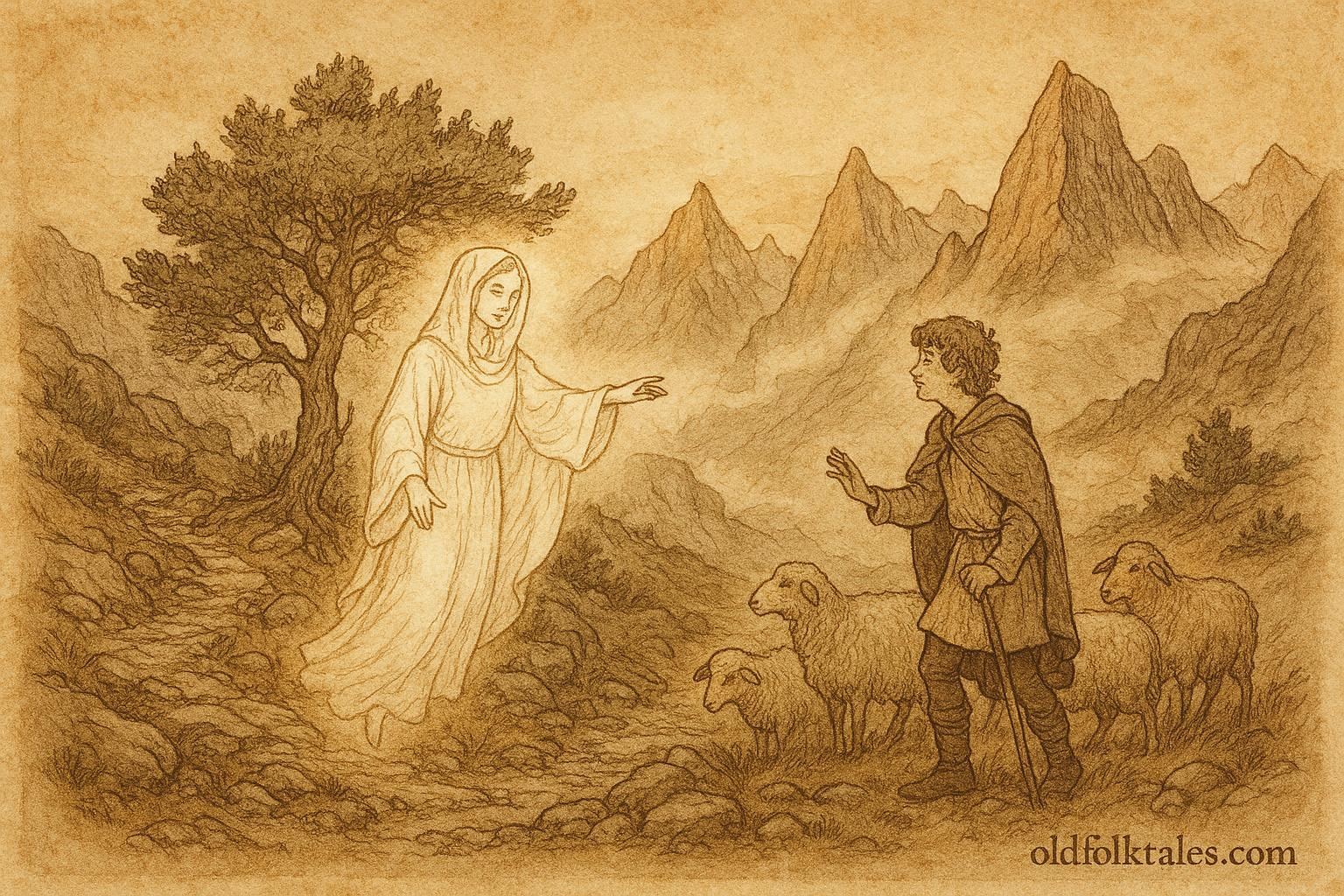
High in the northern mountains of Albania, where stone paths cling to steep slopes and the wind carries the voices of ancestors, people have long believed that no one walks alone. Every man, every woman, every child is said to be born with an Ora, a guardian spirit bound to their fate, unseen by most, but always present.
An Ora does not command. She does not interfere lightly. She watches, warns, and withdraws if her charge forgets the old ways.
In one such mountain village lived a young shepherd named Mark, whose life followed the quiet rhythm of the highlands. At dawn, he led his flock to the upper pastures; at dusk, he returned them to stone pens built by his grandfather’s hands. His days were shaped by weather, grass, and the slow passing of clouds over sharp peaks.
Mark was known as steady and respectful. He greeted elders properly, shared bread when asked, and never mocked the old stories. When men spoke of Oras around the hearth fire, he listened.
One summer morning, as the sun lifted pale gold over the mountains, Mark guided his sheep toward a high meadow seldom visited by others. The grass there was thick and sweet, and the flock spread eagerly across the slope. The air was still, and the only sound was the soft clinking of bells.
Then the wind changed.
Mark felt it before he heard anything, a sudden hush, as though the mountains were holding their breath. The sheep grew restless, bunching together without command. Mark turned, uneasy.
That was when he saw her.
She stood near a lone juniper tree, where no one had been moments before. She appeared as a woman clothed in pale white, her hair dark and loose, her eyes sharp as mountain water. Though her feet touched the ground, the grass beneath her did not bend.
Mark knew at once who she was.
“My Ora,” he whispered, lowering his head.
She did not smile.
“You walk today toward danger,” she said, her voice calm but firm. “Someone you trust does not wish you well.”
Mark’s heart tightened. “Who?” he asked.
She shook her head. “I do not name. I warn.”
She stepped closer, and though the air remained cool, Mark felt warmth pass through him, strength and fear intertwined.
“Leave this meadow before the sun stands high,” she said. “Do not follow any path but the old one. Speak kindly. Share what you have. Remember who you are.”
Then she was gone.
The wind returned. The sheep settled. The mountain breathed again.
Mark stood for a long time, shaken but certain. He did not question what he had seen. In the highlands, disbelief was more dangerous than fear.
He gathered his flock earlier than planned and began the descent along the narrow ancestral path, the one worn smooth by generations. Halfway down, he met Luan, a fellow shepherd from a nearby village, who greeted him with unusual warmth.
“You leave early,” Luan said. “Come, there is a shortcut through the ravine. It will save you time.”
Mark hesitated. The ravine path was steep and unstable, known for sudden rockfalls.
“The old path is safer,” Mark replied.
Luan laughed. “You are too cautious.”
Mark remembered the warning. He remembered respect. He remembered the unseen.
“I will keep to what I know,” he said calmly.
Luan’s smile faded for a moment, just long enough for Mark to notice.
Later that evening, word reached the village: a shepherd had fallen in the ravine, crushed beneath stone. It was not Mark.
That night, as Mark poured a small libation of milk onto the earth beside his home, a quiet offering known only to the old customs, he felt a presence near him. Not seen, but known.
His Ora did not speak again.
She did not need to.
Mark lived long, not because he was stronger than others, but because he listened, to warnings, to tradition, to the unseen ties between fate and conduct. And in the mountains, that is the greatest wisdom of all.
Moral Lesson
This folktale teaches that destiny is guided, not forced, and that survival comes through respect for tradition, humility, and attentiveness to spiritual warnings. Those who honor the unseen world and live rightly are protected; those who ignore it risk their fate.
Knowledge Check
1. What is an Ora in Albanian folklore?
An Ora is a personal guardian spirit bound to an individual’s fate and life.
2. How does the Ora protect the shepherd?
By warning him of danger without directly interfering or naming the threat.
3. Why does the Ora refuse to explain everything?
Because Oras guide through wisdom and choice, not control.
4. What role do traditions play in the story?
Respecting ancient customs maintains harmony between humans and the spiritual world.
5. What causes the danger the shepherd avoids?
A betrayal by someone he trusts, revealed through spiritual warning.
6. From which cultural tradition does the Ora originate?
Northern Albanian (Gheg) highland folklore.
Source: Edith Durham, High Albania, 1909
Cultural Origin: Northern Albania (Gheg Albanian highlands)