In the candlelit alleys of old Innsbruck, the air once rang with laughter and the chatter of townsfolk gathering near the Inn River. Amidst the hum of the markets stood a cheerful barber, well-liked, talkative, and skilled with his gleaming razors. Nobles, merchants, and soldiers alike sought his chair for the comfort of his conversation as much as the sharpness of his blade. But behind the barber’s smile grew a shadow that no one suspected: greed.
One cold evening, as the bells of the cathedral tolled midnight, a weary traveler entered the barber’s shop. His purse, heavy with gold, caught the barber’s eye. Temptation clawed at his heart. When the stranger sat, trusting and weary, the barber’s razor flashed, not for grooming, but for murder. The deed was swift. Shaken and sweating, he buried the body beneath the cellar floor, muttering a trembling prayer that none would ever know.
At first, it seemed he had escaped punishment. His gold multiplied; his shop was full. But soon, the instruments of his pride betrayed him. His finest razors dulled no matter how he honed them. His polished mirrors cracked overnight. The laughter in his shop vanished. The air thickened with an unseen presence. Customers began to cross the street rather than pass his door.
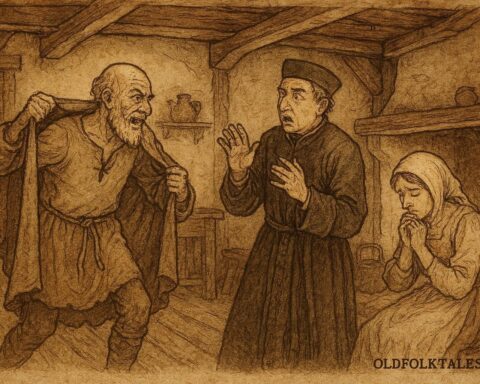
Whispers spread through Innsbruck. Some said he was cursed. Others claimed his mirrors reflected not faces but the accusing eyes of the man he had slain. Tormented by sleepless nights and phantom whispers from the cellar, the barber’s sanity unraveled. At last, overcome by guilt, he staggered into the square and confessed to the priest, begging for absolution. He was sentenced to death. Before the gallows, he wept not for his life, but for the soul he had stolen.
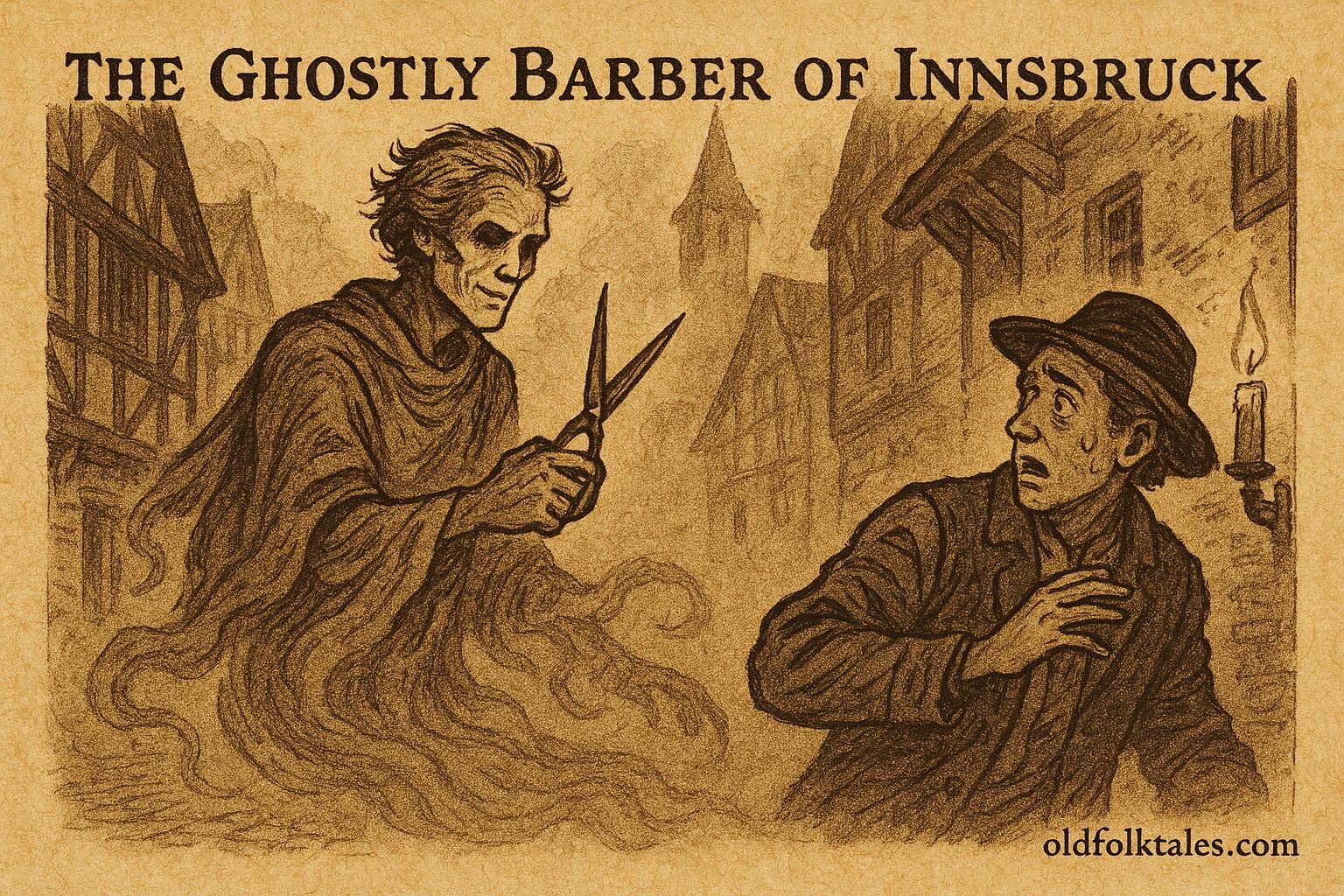
But the story did not end with his death. From that night forward, when the cathedral bells struck twelve, townsfolk spoke of a pale figure drifting through the fog-bound streets, the ghost of the barber, scissors glinting faintly, razors whispering in the cold air. Some swore they heard the faint snip of blades near the cathedral or glimpsed the shimmer of steel in a moonlit window.
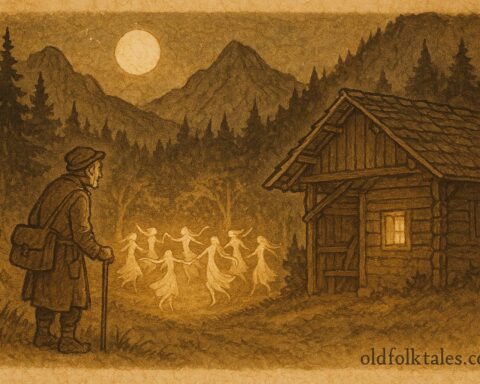
The ghost was said to appear only once a year, on the anniversary of his crime, gliding silently toward the same narrow street where his shop once stood. He offered what he had always given: a free shave. Few dared accept. But one winter, a baker, honest, hardworking, and unafraid—took the ghostly offer. The spectre guided him into the empty ruins of the old shop, where phantom candles flickered though no flame burned.
The barber’s cold hands brushed the baker’s cheeks as the razors hummed like wind through hollow pipes. The baker closed his eyes and whispered a prayer. When dawn came, he was found seated outside the ruins, pale but alive, half his hair turned white as snow. He said he had felt sorrow more than fear, and that the ghost wept softly as he shaved. Since that night, no one has seen the spectre again.
To this day, the people of Innsbruck tell the story of the Spectre Barber as a warning and a prayer. The mountain fog that rolls through the city’s alleys at midnight still seems to whisper, “Repent before it is too late.” And so the legend lives, half penance, half mercy, reminding all who hear it that guilt can bind even the dead, and that forgiveness, though hard-won, may yet bring peace.
Moral Lesson
This Austrian folktale teaches that guilt cannot be silenced by wealth or denial. Only confession, remorse, and the courage to seek forgiveness can free the soul from its own haunting. Greed may bring momentary gain, but only integrity and repentance bring lasting peace.
Knowledge Check
1. Who is the main character in “The Spectre Barber of Innsbruck”?
The story centers on a barber from Innsbruck whose greed leads to murder and a ghostly curse.
2. What causes the barber’s downfall in the folktale?
His greed for gold drives him to commit murder, leading to guilt, execution, and eternal haunting.
3. What moral lesson does the Austrian folktale teach?
It teaches lessons on guilt, repentance, and the redemptive power of confession.
4. Why does the ghost of the barber return each year?
His spirit returns seeking forgiveness and release from the sin that binds him.
5. What symbolizes the barber’s guilt and corruption in the tale?
The cracked mirrors and dulled razors represent his moral decay and inner torment.
6. How does the folktale reflect Austrian cultural beliefs?
It blends Catholic moral themes of sin and absolution with Tyrolean ghost lore and moral storytelling.
Cultural Origin: Austrian folktale, Tyrol region
Source: Adapted from Tales and Legends of the Tyrol by Marie A. von Günther (1874), and Austrian Legends Archive (oaks.nvg.org).