In the rolling plains and misty valleys of ancient Ulster, there lived a boy whose name would one day strike awe across Ireland: Cú Chulainn. From his earliest days, it was clear that he was no ordinary child. Born to the warrior Sualtam and the divine Deichtine, his presence radiated a rare intensity, a spark that seemed destined for greatness. Even in his youth, Cú Chulainn displayed unusual strength, agility, and a fierce will, remarkable traits that would soon carry him into legend.
The boy’s early years were spent in the forests and hills surrounding his home. He learned to hunt with precision, to track silently through dense undergrowth, and to wield a spear with skill that astonished his elders. His teachers and mentors recognized that his abilities surpassed those of any ordinary warrior. Yet it was not mere strength that set Cú Chulainn apart, it was his courage, his unyielding sense of honor, and a fiery determination to defend his people, Ulster, from all threats.
The first great trial of Cú Chulainn came when he was still young, barely a man, yet already feared and respected. A band of raiders threatened to pillage the lands near Emain Macha, the royal seat of Ulster. The king, Conchobar mac Nessa, called upon his warriors, but the enemy’s strength was formidable. When Cú Chulainn arrived, armed with his spear and clad in simple armor, the soldiers looked upon him skeptically. He was small in stature compared to seasoned warriors, yet his gaze burned with resolve.
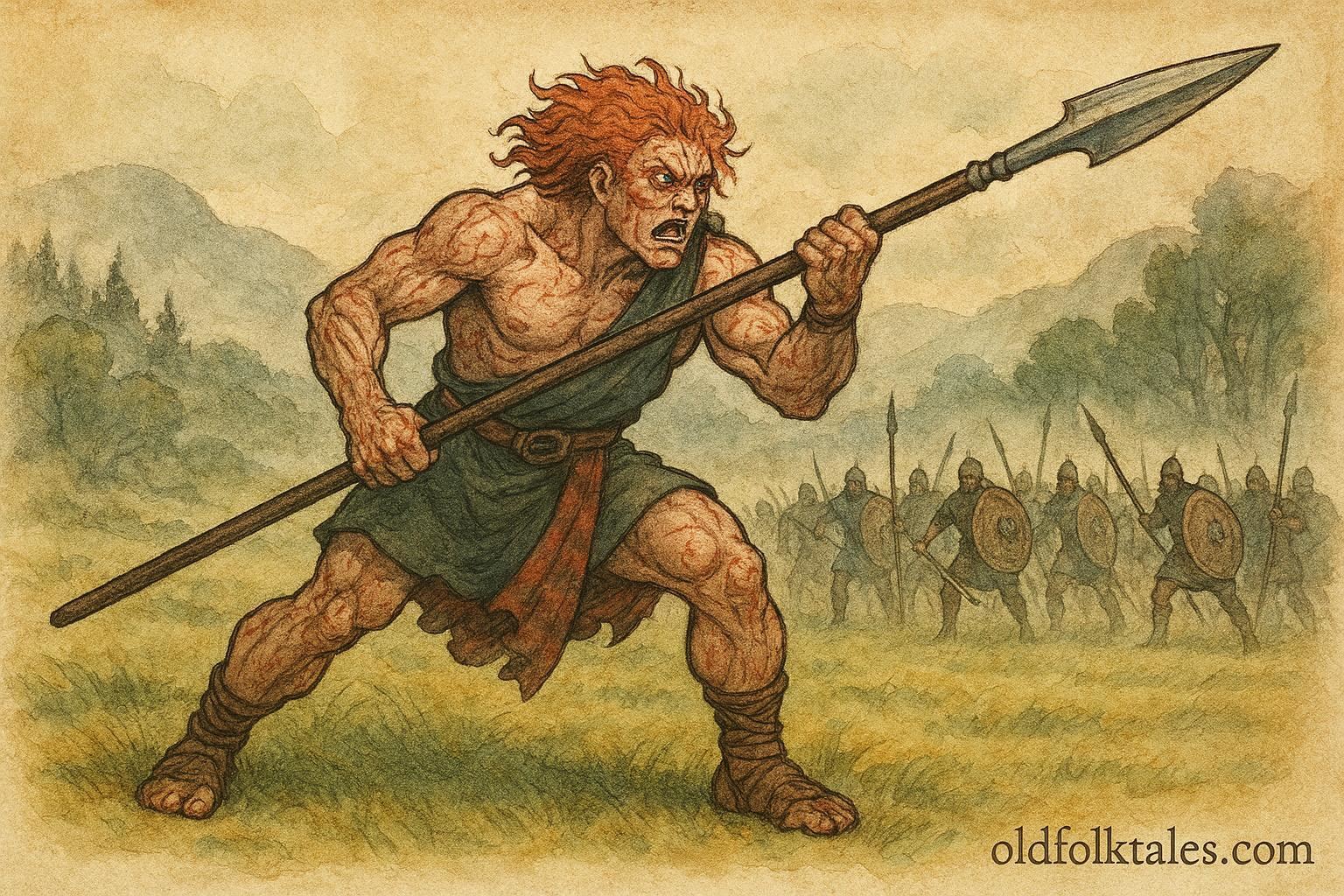
In the battle that followed, Cú Chulainn’s prowess became undeniable. He moved with the swiftness of a deer, striking foes before they could raise shields or prepare their swords. His spear, known later as the Gáe Bulg, pierced enemy ranks with deadly accuracy. Time and again, he leapt into the fray, defying danger, rallying Ulster’s warriors, and protecting those who faltered. By nightfall, the raiders had fled, and the young hero stood victorious. The people of Ulster whispered in awe: “This boy is touched by destiny, a warrior beyond measure.”
As Cú Chulainn grew, so too did his challenges. His fame spread across the kingdoms of Ireland, and with fame came both honor and peril. He faced champions from rival lands, monsters of legend, and trials that tested not only his strength but his honor and loyalty. The young hero’s body seemed imbued with supernatural power, yet his spirit remained tethered to duty. In times of peace, he trained tirelessly, mastering weapons, strategy, and the arts of war, always guided by a vision of protecting Ulster from looming threats.
One of the most remarkable events in Cú Chulainn’s youth was his confrontation with the formidable warrior Ferdia, once a friend, now an enemy compelled by circumstance. In a battle that would be remembered for generations, the two met on the slopes of the battlefield, each embodying courage, loyalty, and skill. Spears clashed, and earth shook beneath their feet. Though bound by friendship, destiny demanded that one triumph, and the duel raged with fury and precision. Cú Chulainn emerged victorious, yet his heart bore the weight of grief for having struck down one he had once loved. This episode became a testament not only to his strength but to the tragic burden of heroism: that courage often comes entwined with sorrow.
Throughout his life, Cú Chulainn faced countless enemies, from invading armies to monstrous beings that lurked in the wilds of Ireland. One legend tells of a monstrous hound threatening the village near the River Boyne. The beast, larger than any ox, with fangs like swords, had terrorized the people for months. Cú Chulainn tracked the creature through forests, across rivers, and into shadowed glens. At the heart of the chase, he confronted the hound, his spear flashing in the sunlight. With a single, masterful strike, he subdued the beast, ensuring safety for the villagers and cementing his reputation as protector of Ulster.
Yet even as his strength and deeds inspired awe, Cú Chulainn remained bound by the prophecy of his fate. It was foretold that he would live a life of glory, but one cut short by the hands of destiny. This knowledge did not weaken him; instead, it sharpened his resolve. Every battle fought, every enemy defeated, was an act of devotion to his people and to the honor he carried within. He trained relentlessly, pushing his body to the limits, mastering every skill necessary to safeguard Ulster from mortal and supernatural threats alike.
Cú Chulainn’s courage extended beyond the battlefield. When famine struck or the land was threatened by natural forces, he was first to lead efforts to protect the people. Fields were guarded, livestock defended, and villages patrolled. Even in the harshest winters, when winds howled across the plains and snow blanketed the hills, the hero’s vigilance never waned. His name became synonymous not only with bravery but with the steadfastness of a leader who would never abandon those in need.
As tales of his deeds spread, poets and bards traveled across Ireland to recount his battles. Songs of Cú Chulainn’s valor echoed through mead halls, carried by wandering minstrels who praised the hero who could leap into battle against armies and monstrous foes alike. Children in villages would practice feats of strength and skill, imagining themselves as the young warrior, protector of Ulster. The stories served as inspiration, reminding all who heard them that courage, honor, and loyalty were virtues worth cultivating.
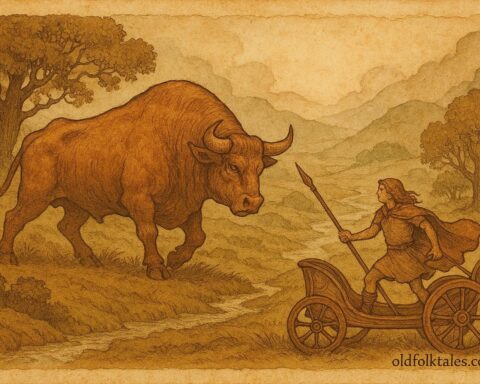
One of the defining moments of Cú Chulainn’s legend came when Ulster faced the invasion of Queen Medb of Connacht. Her forces, vast and relentless, sought the prized Brown Bull of Cooley, an animal whose strength and beauty symbolized power and prestige. Cú Chulainn, though young, was tasked with defending Ulster alone, for the warriors were weakened by a mysterious illness. Facing overwhelming odds, he engaged in a series of single combats, challenging the champions of Connacht one by one. Time and again, his spear found its mark, his reflexes unmatched, and his courage unwavering. Even when his body ached and his strength waned, he fought with a ferocity and strategy that astonished both friends and foes.
During these trials, Cú Chulainn underwent the legendary ríastrad, or warp-spasm, transforming his body in moments of extreme battle fury. His eyes bulged, his muscles swelled, and his appearance became monstrous yet awe-inspiring. Enemies were struck with terror, unable to withstand the fury of a warrior whose courage transcended mortal limits. Through this extraordinary display, he defended his people, earning their eternal admiration and respect.
Though Cú Chulainn’s life was filled with battle, it was also intertwined with loyalty, love, and the bonds of kinship. He cherished the guidance of mentors and the camaraderie of fellow warriors, and he bore the weight of leadership with humility and purpose. Every challenge, whether against human adversaries or supernatural forces, revealed a deeper layer of his destiny: that courage must be tempered with wisdom, strength with honor, and heroism with compassion.
In the end, the tale of Cú Chulainn is more than the story of battles and feats of strength. It is a portrait of a young hero growing into his destiny, bound by fate, yet shaping it through courage, loyalty, and unwavering devotion to his people. The plains and forests of Ulster witnessed a life that would echo through the centuries, a life of legend, courage, and inspiration for all who sought to defend what was just and honor-bound.
The story of Cú Chulainn teaches that greatness comes not only from strength but from the courage to face destiny, the wisdom to honor obligations, and the resolve to protect one’s people at all costs. His legend endures in song, poetry, and folklore, reminding all who hear it that heroism is measured not by the absence of fear, but by the unwavering courage to confront it.
Moral Lesson
The Tale of Cú Chulainn teaches that true heroism combines courage, loyalty, and honor. Strength alone is insufficient; greatness is achieved when one acts to protect others, confronts destiny with bravery, and upholds justice and duty above personal gain.
Knowledge Check
- Who is the protagonist of the story?
- Cú Chulainn, the young hero of Ulster renowned for his strength and bravery.
- What is the Gáe Bulg?
- A legendary spear wielded by Cú Chulainn, known for deadly precision and power.
- Which kingdom did Cú Chulainn defend?
- Ulster, protecting it from raiders, invading armies, and supernatural threats.
- What is the ríastrad or warp-spasm?
- A supernatural transformation Cú Chulainn undergoes in moments of extreme battle fury.
- What themes are central to this Irish folktale?
- Courage, honor, loyalty, heroism, and acceptance of destiny.
- How does the story reflect Irish cultural elements?
- It highlights Ulster landscapes, Celtic mythology, warrior traditions, and the role of prophecy in guiding heroes.
Source: Táin Bó Cúailnge, 12th century, Ireland.
Cultural Origin: Irish