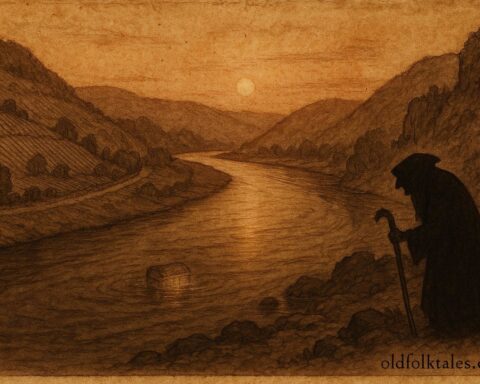
Along the upper reaches of the Rhine, where the river winds through the northern lands of Switzerland with quiet strength and steady purpose, the water has long been said to hold more than its visible current. To the eye, it is a river like any other, broad in places, narrow in others, reflecting the sky above and carrying with it the life of the valleys it nourishes.
But to those who have lived beside it for generations, the Rhine is not merely water.
It is watched.
It is guided.
And at times, it is judged.
In the old days, when fishermen cast their nets at dawn and small boats drifted along the gentle flow, there were stories whispered among those who depended on the river for their livelihood.
Stories of three sisters.
They were not seen as ordinary beings, nor fully as spirits in the way one might speak of shadows or ghosts. They were something older, part of the river itself, as constant as its movement and as mysterious as its depths.
They were called the Maidens of the Rhine.
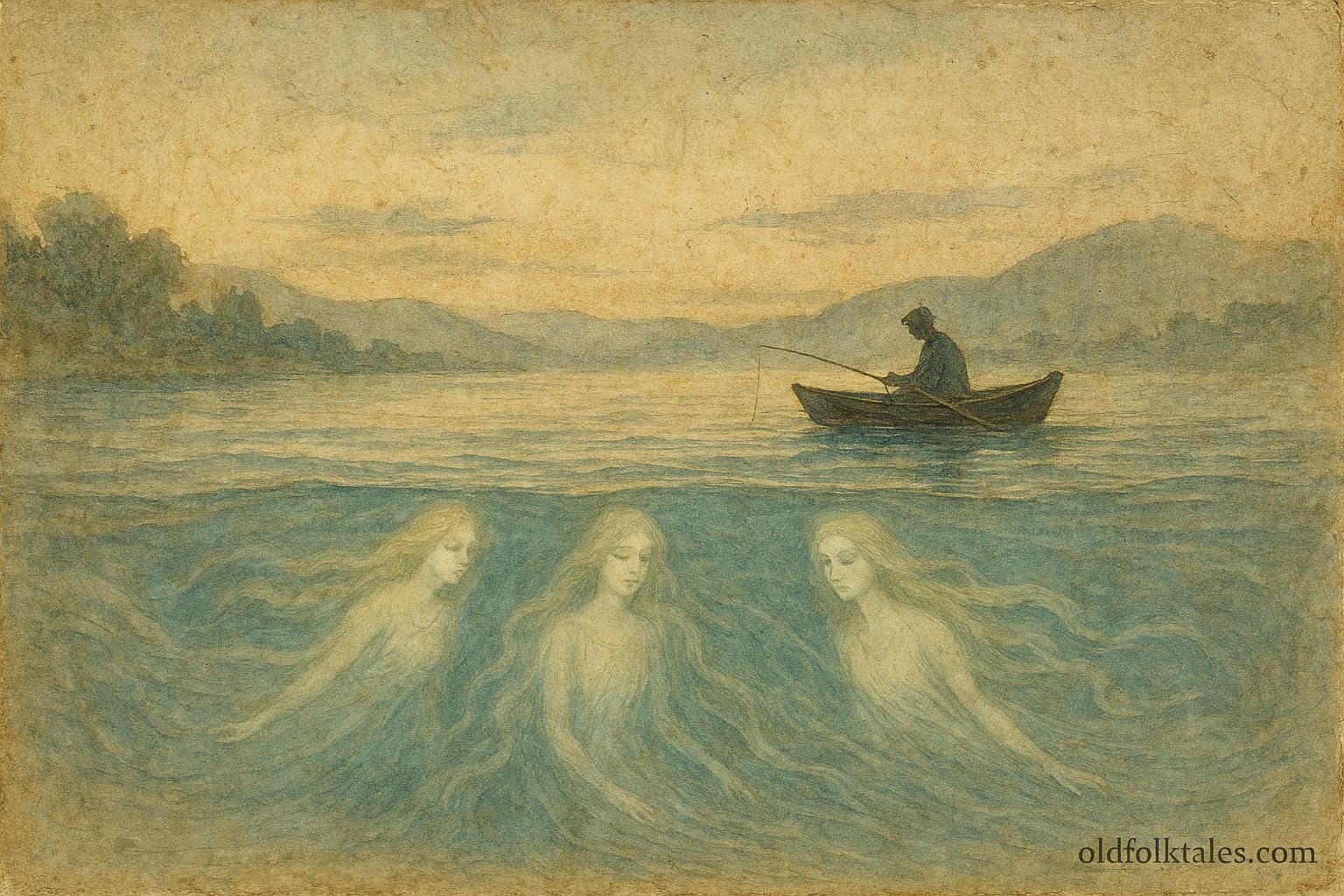
It was said that the three sisters dwelled beneath the surface, hidden within the flowing waters where no human could reach. From there, they watched over the currents, guiding their path and shaping their strength.
The river did not move as it pleased.
It moved as they willed.
Each sister was believed to hold her own influence over the water. One governed the calm stretches, where the river flowed gently and allowed safe passage. Another ruled the shifting currents, where the waters twisted and turned, testing the skill of those who navigated them. The third, it was said, held dominion over the storms, over the sudden rise of wind and wave that could turn a peaceful crossing into a deadly struggle.
Together, they maintained a balance.
And that balance was not given lightly.
The fishermen knew this well.
Before casting their nets, many would pause, offering a quiet word of respect to the unseen maidens. Some would leave a small token, nothing grand, nothing boastful, simply a gesture of gratitude for the river’s gifts.
Those who did so often found the waters kind to them.
Their nets returned full. Their boats moved with ease. The currents seemed to guide rather than resist.
They spoke of the sisters not with fear, but with reverence.
But not all who came to the Rhine showed such care.
There were those who saw the river only as a resource to be taken from, a path to profit, a source of wealth to be claimed without thought for balance or restraint. Traders seeking to move their goods quickly, fishermen eager to take more than they needed, travelers who ignored the warnings of those who knew the river best.
To such people, the stories of the sisters were nothing more than superstition.
And so they paid them no mind.
One tale speaks of a fisherman who grew dissatisfied with the modest catches he had long accepted. Though the river had always provided enough, he began to desire more—to take greater harvests, to gain wealth beyond what his simple life required.
At first, he fished as he always had.
But gradually, his methods changed.
He cast his nets more frequently, took from the river without pause, and ignored the quiet traditions of respect that others still observed. Where once he had offered thanks, he now offered nothing.
The river, for a time, remained still.
Then one evening, as the sun sank low and the water darkened with the coming night, he set out once more.
The air was calm.
The surface smooth.
Everything seemed as it should be.
But beneath the surface, something had shifted.
As he cast his net, the water stirred, not violently at first, but with a subtle change, as though the current had taken on a life of its own. The boat rocked gently, then more sharply.
The fisherman frowned, adjusting his position.
The wind rose.
What had been a quiet evening became something else entirely.
The sky darkened, clouds gathering with unnatural speed. The river, once calm, began to churn, its surface breaking into restless waves that pushed against the small vessel.
The fisherman tried to steady himself, but the current no longer obeyed him.
It pulled.
It twisted.
It resisted every attempt to control it.
In the chaos, he glimpsed something.
Not clearly, not fully, but enough.
Shapes in the water.
Three forms moving beneath the surface, their presence felt more than seen.
The storm intensified.
The boat was no longer his to command.
Some say he was thrown into the river, swallowed by the very waters he had taken for granted. Others claim he survived, carried ashore far from where he had begun, his spirit broken, his ambition gone.
But all agree on one thing:
He never fished the same way again.
In contrast, there are gentler stories, of those who respected the river and found themselves rewarded in ways they could not explain.
A fisherman, patient and humble, might find his nets filled beyond expectation, though he had cast them only once. A traveler, uncertain of the currents, might feel his boat guided safely through waters that had seemed impossible to cross.
Such moments were not seen as coincidence.
They were understood.
The sisters had chosen to help.
And then there were the oldest stories, those that spoke of treasures hidden beneath the river’s depths.
Gold, it was said, lay buried where the current ran strongest, guarded by the three maidens who watched over it. But these treasures were not meant to be taken.
Those who sought them out of greed found only danger.
The currents would shift against them, the water rising and falling without warning, as though the river itself rejected their presence.
The treasure remained where it had always been.
Untouched.
Protected.
Over time, the legend of the Three Sisters of the Rhine became a quiet guide for those who lived alongside the river.
It was not written in laws or enforced by authority.
It lived in practice.
In respect.
In restraint.
The river, they understood, was not theirs to control.
It was something to live with.
To honor.
To approach with humility.
Even now, along the upper Rhine, there are those who speak of moments when the water behaves in ways that defy expectation, when the current seems to guide rather than resist, when the wind rises without warning, when the river feels alive with a presence just beyond sight.
Few claim to have seen the sisters.
But many believe they are still there.
Watching.
Balancing.
Deciding.
For the Rhine flows as it always has, carrying with it not only water, but memory.
And beneath its surface, the maidens of the flowing waters remain, keeping their quiet watch over those who pass.
Moral Lesson
The Three Sisters of the Rhine teach that nature rewards respect and punishes greed. Balance, humility, and gratitude are essential when living alongside forces greater than ourselves.
Knowledge Check
1. Who are the Three Sisters of the Rhine in Swiss folklore?
They are mystical water maidens believed to control the river’s currents and guard hidden treasures.
2. What powers do the Rhine maidens have?
They influence calm waters, shifting currents, and storms along the river.
3. How do the sisters treat respectful fishermen?
They reward them with safe journeys and plentiful catches.
4. What happens to greedy or careless travelers?
They may face storms, dangerous currents, or even drowning.
5. What do the hidden treasures in the Rhine symbolize?
They represent wealth that should not be taken without respect for nature.
6. Where does this folktale originate?
It comes from the Upper Rhine region in northern Switzerland, shared across Rhine folklore traditions.
Source: Rhine-region folklore recorded in 19th-century collections
Cultural Origin: Northern Switzerland (Upper Rhine region)