In a rugged Norwegian valley, where steep mountains pressed close around scattered farms and the wind carried stories as easily as snow, there lived a young man named Per Gynt. He was quick of tongue, sharp of mind, and endlessly confident in his own cleverness. Yet for all his wit, Per had little love for honest work.
While others rose early to tend fields or livestock, Per lingered by the hearth, spinning grand tales of deeds he had never done. He spoke of hunts where beasts fell before him, of journeys to places no one else had seen. Some laughed at him, some scolded him, and others simply shook their heads.
Discover the spiritual depth and wisdom hidden in the ancient folklore of Eastern and Balkan Europe
“Per Gynt,” they said, “your head is full of stories, but your hands are empty.”
Per smiled at such words. In his mind, cleverness mattered more than sweat.
Restlessness and the Road
Though Per avoided labor, he could not escape restlessness. The mountains that hemmed in the valley seemed to whisper promises of adventure. He believed the world owed him excitement, fortune, and admiration, without demanding much in return.
One morning, after a quarrel with villagers who had tired of his boasting, Per slung a bundle over his shoulder and set out. If they would not appreciate him here, he would prove himself elsewhere.
The forest welcomed him with shadow and silence. Paths twisted. Rocks jutted from the earth like broken teeth. Yet Per walked with confidence, whistling as if the world were already impressed.
The Troll Country
As Per ventured deeper into the mountains, he crossed into lands avoided by sensible folk. The air grew heavy. Moss thickened. Stones seemed to watch him.
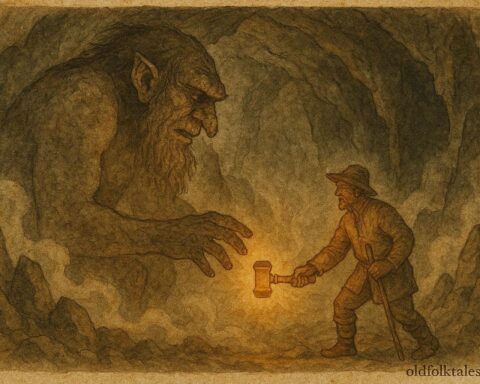
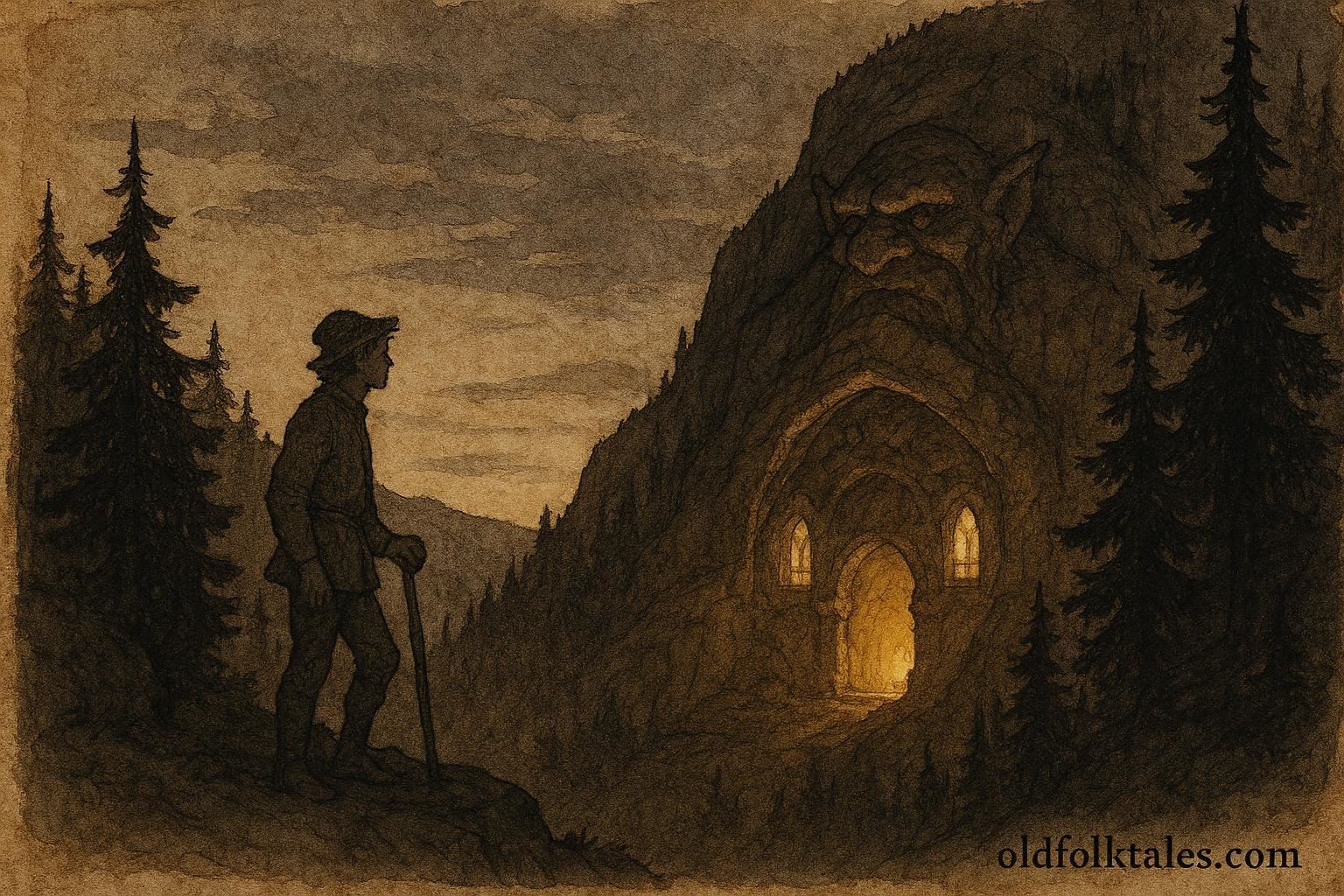
By nightfall, he stumbled upon a great hall carved into the mountainside, lit from within by flickering firelight. Hunger overcame caution, and Per crept closer.
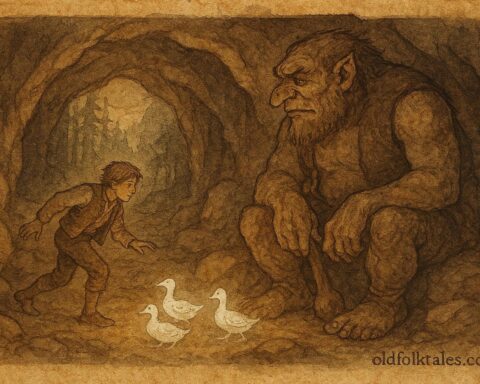
Inside, he found trolls, huge, misshapen beings with heavy brows and greedy eyes. They feasted noisily, boasting much as Per himself often did.
Before he could retreat, he was spotted.
Instead of panicking, Per did what came most naturally: he spoke.
He praised their strength, laughed at their jokes, and claimed kinship in cleverness. The trolls, flattered and amused, allowed him to stay. They tested him with riddles and tricks, expecting him to fail.
Per answered quickly, twisting words and meanings until confusion favored him. Each challenge he turned aside, not with honesty, but with sharp wit.
The trolls roared with laughter.
A Dangerous Bargain
Pleased with his cleverness, the trolls offered Per a place among them. All he needed to do was live by their rule: Be yourself enough and never care for others.
The words stirred something uneasy within him. Per liked cleverness, but even he sensed that such a life would hollow him completely.
Feigning agreement, he asked for time to consider. When night deepened and the trolls drank themselves into stupor, Per slipped away, heart pounding.
For the first time, his wit had nearly trapped him.
Wandering Further
Per wandered for many days afterward, shaken but unchanged in habit. He told himself he had escaped by intelligence alone, ignoring the narrowness of his escape.
He traveled from valley to valley, living by tricks and quick thinking. Sometimes his cleverness brought him food or shelter. Other times, it earned him suspicion or anger.
He began to see that wit opened doors but rarely kept them open.
Encounters with the Supernatural
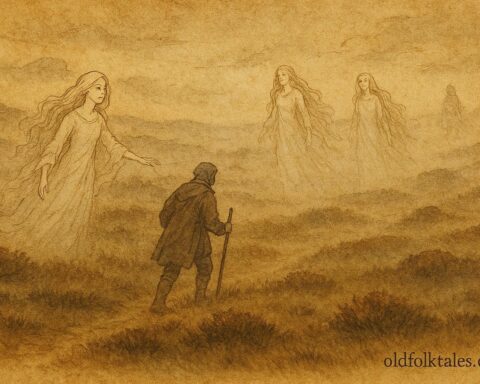
On lonely paths, Per met strange beings: spirits of mountain and stream, shadows that spoke in riddles, shapes that vanished when approached. Each encounter tested him.
When he lied, the road grew harder. When he mocked, misfortune followed. Slowly, though reluctantly, he learned restraint.
Not all dangers could be laughed away.
Loss and Reflection
One winter night, Per found himself alone in a storm, shelterless and exhausted. No trick remained. No clever words could warm him.
As he huddled beneath a pine, he remembered the valley he had left, the fires he had scorned, the work he had avoided, the people he had mocked.
For the first time, shame outweighed pride.
Return Toward Home
When spring came, Per turned back toward familiar mountains. He was leaner now, quieter, and less eager to boast. The road had taken from him the illusion that cleverness alone was enough.
He returned not as a hero, but as someone changed.
A New Understanding
Back among his people, Per no longer spoke of impossible hunts or troll feasts. When he spoke at all, it was carefully. He worked when asked. He listened more than he talked.
Some still remembered the old Per Gynt, but others noticed the difference.
He had not lost his wit, but it no longer ruled him.
Discover the moral heart and wild spirit of the north through timeless Nordic storytelling
Moral Lesson
This folktale teaches that cleverness without responsibility leads to emptiness, while true growth comes from humility, honesty, and learning when wit must yield to wisdom.
Knowledge Check
-
Who is Per Gynt in Norwegian folklore?
Per Gynt is a clever but irresponsible young man who matures through adventure. -
How do trolls function in the story?
They represent selfishness and moral emptiness disguised as freedom. -
What flaw defines Per at the beginning?
Pride in cleverness and avoidance of responsibility. -
What changes Per during his journey?
Isolation, hardship, and near loss force self-reflection. -
Is Per Gynt a traditional hero?
No, he is a flawed folk figure whose growth is central to the tale. -
What cultural value does the story express?
Norwegian respect for balance between wit, labor, and humility.
Source: Norske Folkeeventyr, collected by Peter Christen Asbjørnsen & Jørgen Moe, 1841
Cultural Origin: Norwegian folk tradition