In a quiet valley surrounded by steep mountains and deep forests in old Norway, there lived a poor farmer with his three sons. The two eldest were strong, capable, and proud of their abilities. They worked diligently in the fields, spoke with confidence, and carried themselves as men destined for success.
The youngest, however, was quite different.
He was known simply as the Ash Lad.
While his brothers labored and planned their futures, the Ash Lad often sat by the hearth, idly poking at the ashes with a stick. His clothes were plain, his habits unremarkable, and his demeanor quiet. To those around him, he seemed lazy, even foolish. His brothers mocked him openly, calling him useless and good-for-nothing.
Yet the Ash Lad listened more than he spoke. He observed the world carefully, noticing small details others ignored. Beneath his calm and unassuming nature lay a sharp mind, one that would soon prove far more valuable than strength or pride.
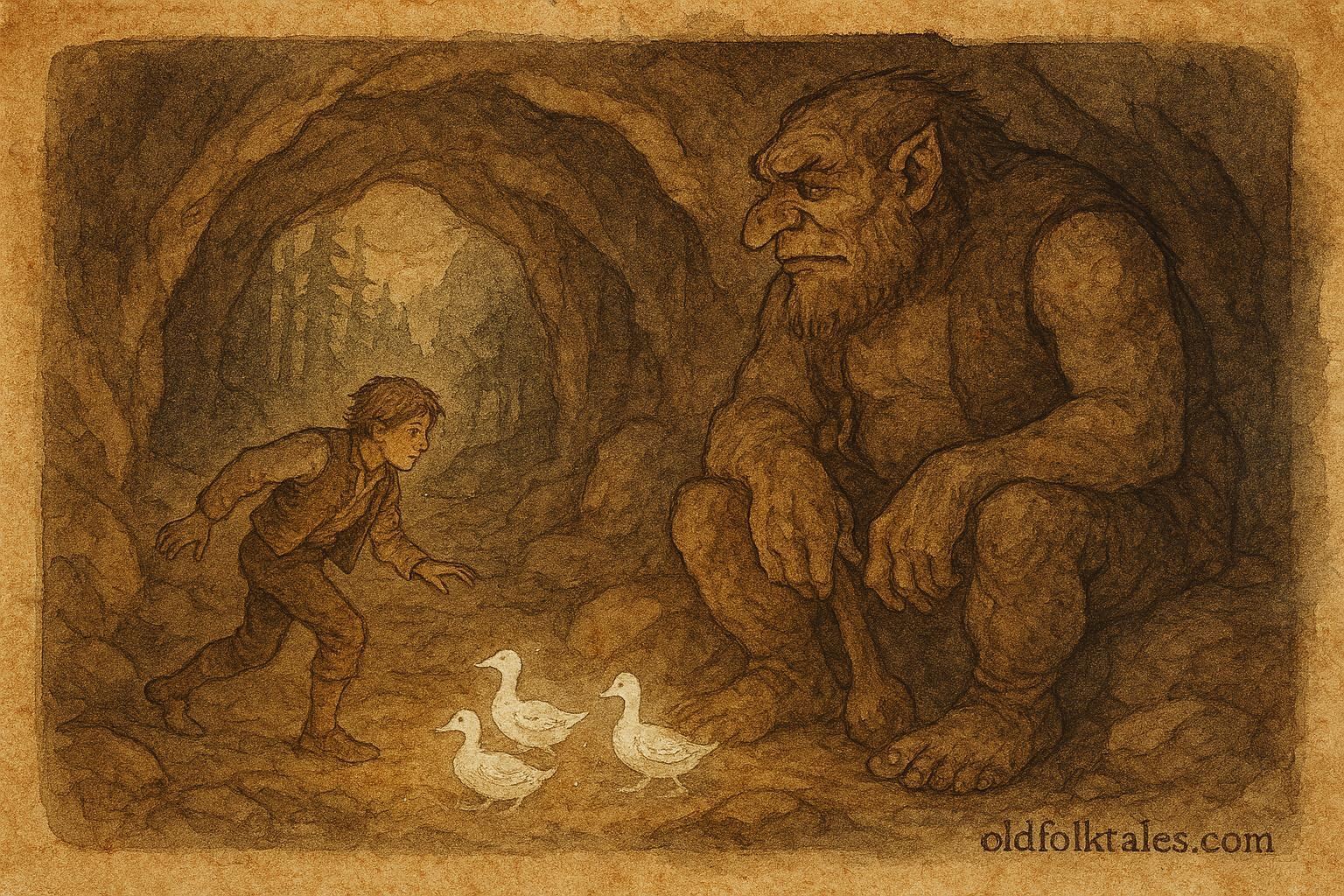
One day, news spread through the valley of a fearsome troll who lived deep within the forested mountains. This troll guarded a strange and marvelous treasure: silver ducks, enchanted creatures that shone like moonlight and were said to possess great value.
Many had heard of these silver ducks, but none dared to approach the troll who protected them. The creature was known to be cunning and dangerous, and those who crossed its path rarely returned.
Still, the promise of such treasure stirred ambition.
The farmer’s two eldest sons decided they would seek out the troll and claim the silver ducks for themselves. Confident in their strength and courage, they prepared for the journey, boasting of their inevitable success.
The Ash Lad listened quietly.
When he announced that he, too, would go, his brothers laughed loudly.
“You?” they scoffed. “You can barely lift a tool, let alone outwit a troll!”
But the Ash Lad remained calm. He did not argue. Instead, he simply prepared in his own way, gathering a few simple items that seemed insignificant to others but held potential in the right hands.
The two older brothers set out first.
They traveled deep into the forest, where the trees grew tall and the light dimmed beneath thick branches. Eventually, they came upon the troll’s dwelling, a place both imposing and unsettling.
But strength alone could not save them.
When they confronted the troll, they relied on boldness and directness. They demanded the silver ducks, believing that their confidence would be enough to intimidate the creature.
It was not.
The troll, far more experienced and cunning than they had imagined, quickly overcame them. Their journey ended in failure, and they returned home with nothing but shame.
Later, the Ash Lad began his journey.
Unlike his brothers, he did not rush. He moved steadily, taking note of his surroundings and thinking carefully about each step. The forest did not seem as threatening to him, for he treated it with quiet respect.
When he reached the troll’s dwelling, he did not announce himself with demands or threats. Instead, he approached with caution and curiosity.
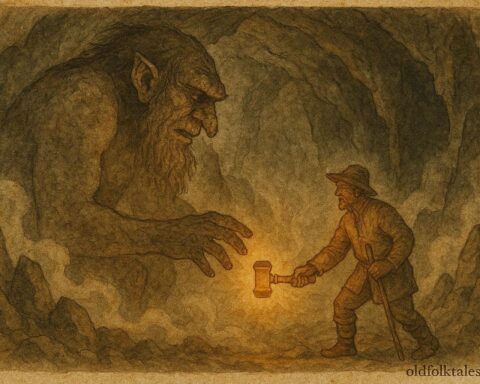
The troll soon appeared, large and fearsome, its presence enough to make most men tremble.
But the Ash Lad did not panic.
He greeted the troll calmly and began to speak, not with arrogance, but with cleverness. He engaged the creature in conversation, carefully choosing his words and observing its reactions.
The troll, intrigued by this unusual visitor, allowed the Ash Lad to remain.
What followed was not a battle of strength, but a contest of wit.
The Ash Lad used his simple items in unexpected ways, turning ordinary objects into tools of deception and advantage. Through clever tricks and quick thinking, he began to confuse and outmaneuver the troll.
He created situations that played on the troll’s assumptions, leading it to misunderstand what was happening. Each step brought him closer to his goal, while the troll remained unaware of the true nature of the Ash Lad’s intentions.
The Ash Lad never rushed. He allowed the troll to believe it was in control, even as he carefully shifted the balance in his favor.
At last, the moment came.
Through his cunning, the Ash Lad managed to gain access to the silver ducks. Their shimmering forms glowed softly, a testament to their magical nature.
Without alerting the troll, he secured the treasure.
By the time the creature realized what had happened, it was too late. The Ash Lad had already set his plan in motion, slipping away with the silver ducks before the troll could stop him.
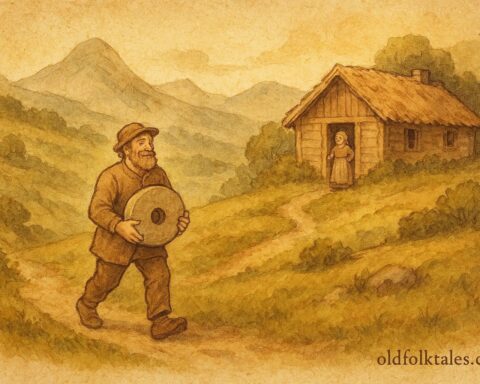
The journey home was long, but the Ash Lad carried his prize with quiet satisfaction.
When he returned to the valley, the people could hardly believe what they saw. The boy who had been dismissed as lazy and foolish had succeeded where others had failed.
His brothers, once so confident, stood in stunned silence.
The Ash Lad did not boast or mock them. He simply presented the silver ducks, allowing his actions to speak for themselves.
From that day on, he was no longer seen as the idle boy by the hearth.
The Ash Lad had proven that strength alone is not the measure of a person’s worth. Cleverness, patience, and the ability to see beyond the obvious can achieve what brute force cannot.
And so, his story spread throughout the land, a reminder that greatness often lies hidden where few think to look.
Discover the moral heart and wild spirit of the north through timeless Nordic storytelling
Moral Lesson
This Norwegian folktale teaches that intelligence and resourcefulness can overcome even the greatest challenges. Those who are underestimated may possess hidden strengths that, when used wisely, lead to success.
Knowledge Check
- Who is the Ash Lad in Norwegian folktales?
The Ash Lad is a clever but underestimated young man who often succeeds through wit rather than strength. - What treasure does the Ash Lad seek?
He sets out to steal magical silver ducks guarded by a troll. - Why do the Ash Lad’s brothers fail?
They rely on strength and arrogance instead of strategy and cleverness. - How does the Ash Lad defeat the troll?
He uses tricks, patience, and intelligence to outsmart the troll. - What is the main theme of the story?
The story emphasizes cleverness, hidden potential, and resourcefulness. - What does the troll represent in the folktale?
The troll symbolizes brute force and ignorance, which can be overcome by intelligence.
Source: Norske Folkeeventyr (1841)
Cultural Origin: Norwegian folklore