Far from the king’s roads, where the land rose unevenly into hills and the soil was thin and stubborn, there lived a poor widow and her only son. Their house stood where pine forest met stone, its roof patched with old boards, its door hanging slightly askew. In winter the wind crept through every crack; in summer the sun burned the fields before grain could ripen.
The youth was not lazy, but neither was he remarkable. He rose early, worked until dusk, and spoke little. The villagers remembered him only as the widow’s boy, useful enough for errands, too quiet for notice.
Experience legends where mountains breathe magic and heroes face moral choices that shape destiny
When other young men boasted of strength or cleverness, he stayed silent. When they laughed at him, he lowered his eyes. Yet there was something steady in him, something patient, as though he had learned early that the world did not bend for loud voices.
The Horse No One Wanted
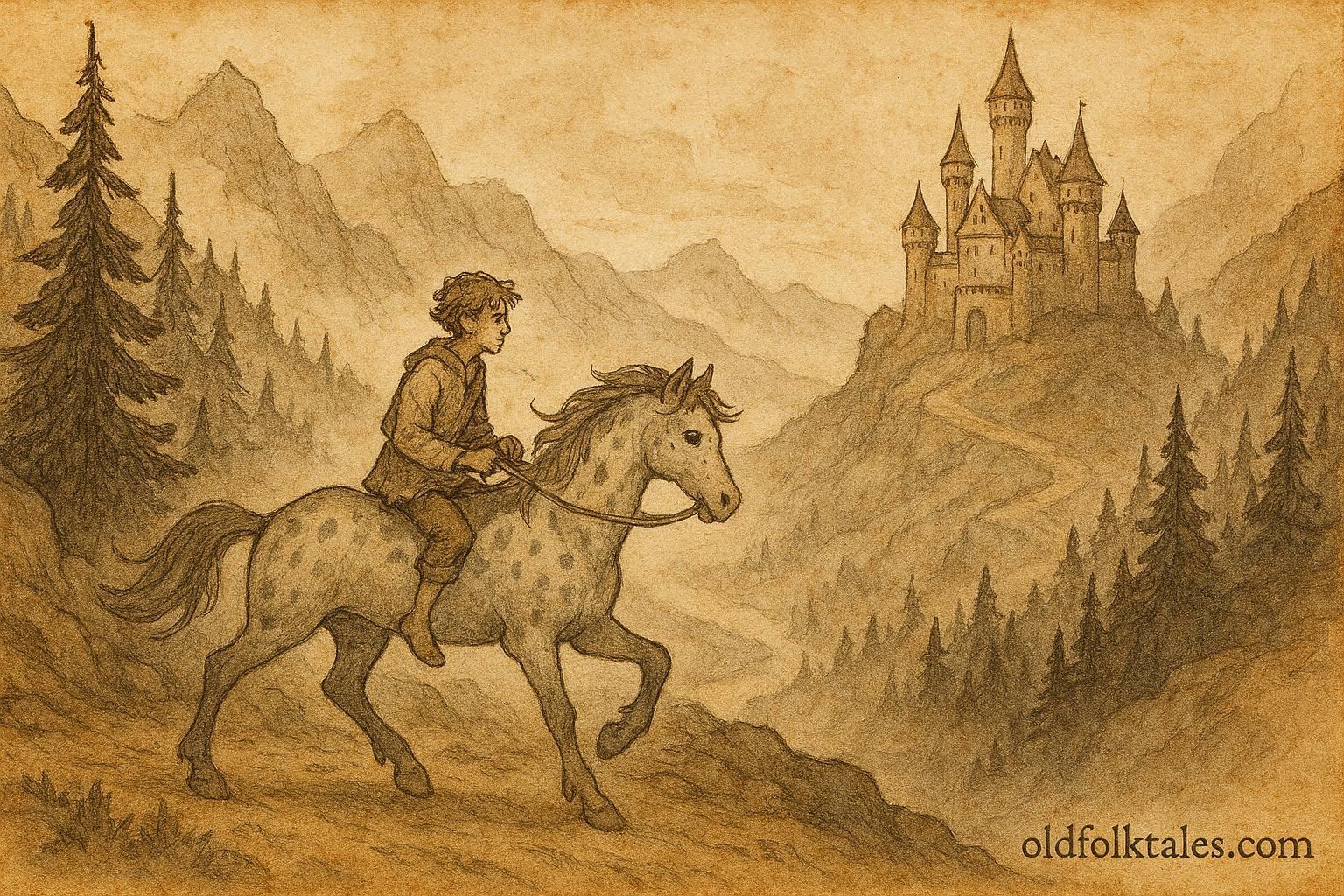
One autumn evening, when frost already silvered the grass, the youth passed a small pasture where a horse stood alone. The animal was thin, dappled gray, its mane tangled, its ribs too visible for comfort. No one claimed it.
“An old thing,” someone had said earlier. “Not worth the feed.”
The youth slowed his steps.
The horse lifted its head and met his gaze, not like a beast waiting for grain, but like a mind waiting to be recognized.
“Are you truly unwanted?” the youth murmured.
The horse stamped once, then spoke.
“Unchosen,” it said. “That is not the same thing.”
The youth froze. His breath caught. But fear did not take him, only a deep, quiet certainty.
“If you take me,” the horse continued, “you must do as I tell you. Not once or twice, but always. If you trust me, your road will lead farther than you think.”
The youth swallowed.
“I have nothing,” he said honestly.
“Then you will not lose anything,” said the horse. “Only gain.”
The Promise of the King
Not long after, news spread through valley and fjord alike:
The king had proclaimed that his daughter would marry the man who could complete three impossible trials. Rich men came with silver. Strong men came with swords. Clever men came with schemes.
Many did not return.
When the youth announced he would try, the laughter was not cruel, it was dismissive.
“You?” they said. “And that scarecrow of a horse?”
The horse merely flicked its tail.
“Let them laugh,” it said later. “They laugh because they look only once.”
The First Road
Before dawn, Dapplegrim led the youth away from the king’s highway and into a narrow forest path where roots clawed the ground and mist curled low.
“Why this way?” the youth asked.
“Because the straight road belongs to those who hurry,” said Dapplegrim. “And hurrying blinds the eyes.”
They walked for days.
They crossed streams where stepping stones shifted underfoot. They slept beneath leaning firs while owls watched from above. Once, the youth stumbled and would have fallen into a ravine, but the horse braced itself and held him steady.
“Why do you help me so?” the youth asked one night.
“Because you listen,” said Dapplegrim. “That is rarer than strength.”
The First Trial: The Thing That Must Not Be Taken
At the king’s court, the youth stood among men clad in fine wool and iron. The king barely glanced at him.
“The first trial,” the king declared, “is this: beyond the northern ridge lies an object guarded by beings older than men. Bring it back. Take nothing else. Fail, and you lose your claim.”
That night, Dapplegrim spoke softly.
“When you reach the place, do not take what shines brightest.”
The Guardians
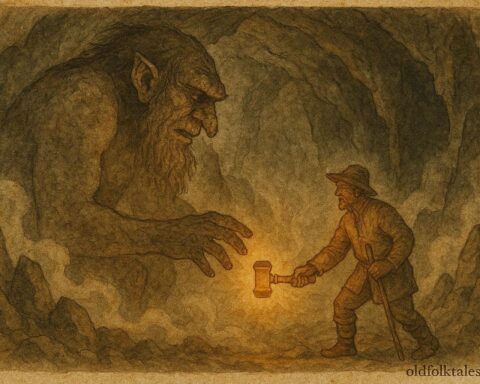
Beyond the ridge lay a stone field where the wind never rested. Shapes moved there, tall, slow beings whose faces were carved like cliffs.
Many challengers had rushed forward and vanished.
When the youth approached, he bowed his head.
“I was told to take only what is given,” he said.
The guardians watched.
At last, one extended a hand, not toward the gleaming treasure piled behind them, but toward a plain, weathered object half-buried in stone.
The youth took it.
The wind fell silent.
The Second Trial: The Thing That Must Be Endured
The king frowned when the youth returned alive.
“The second trial,” he said, “is not to take, but to endure.”
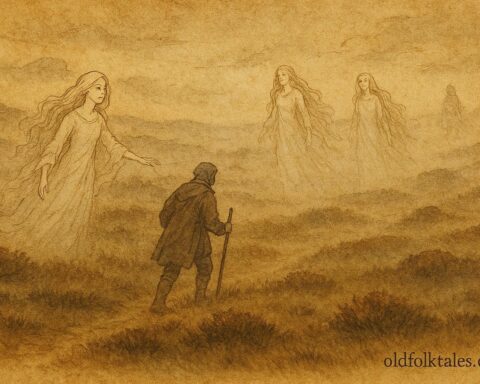
He was sent to a place where night lasted longer than day, where whispers followed every step and fear crept inward like cold.
Dapplegrim warned him.
“Do not answer voices that know your name.”
For three nights, the youth heard every doubt he had ever carried spoken aloud. He clenched his jaw and said nothing.
When dawn came, the voices faded.
The Third Trial: The Thing That Must Be Released
The final trial was the cruelest.
“To win the princess,” the king said, “you must let go of what you value most.”
The youth felt his chest tighten.
That night, he wept beside Dapplegrim.
“I cannot lose you,” he said.
Dapplegrim lowered its head.
“Then you have already lost,” it replied gently.
At sunrise, the youth stepped forward.
“I give up my claim,” he said. “I will not abandon my companion.”
The court fell silent.
The king rose slowly.
“Then you have passed,” he said.
Revelation
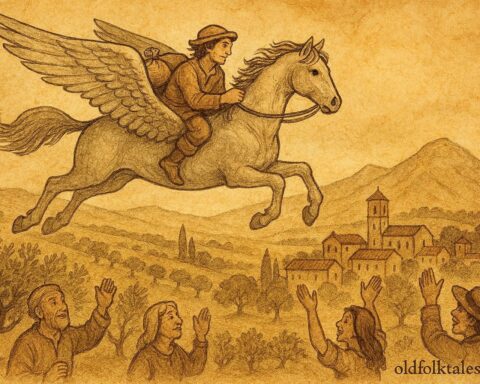
Only then did Dapplegrim change.
Its thin frame straightened. Its coat shone like moonlit stone. Its voice deepened.
“I was bound,” it said, “to aid only one who would choose loyalty over reward.”
The princess stepped forward, not because of crowns, but because she saw clearly.
The Parting
Before dawn, Dapplegrim stood at the forest’s edge once more.
“Will I see you again?” the youth asked.
“Whenever you choose trust over fear,” the horse replied.
Then it was gone.
Moral Lesson
Dapplegrim teaches that loyalty and trust between companions, human or otherwise, are stronger than brute force or ambition, and that true success comes to those who listen as much as they act.
Knowledge Check
-
Who is Dapplegrim in Norwegian folklore?
A magical horse who guides and protects a worthy youth. -
Why does the youth succeed where others fail?
Because he trusts wisdom over strength. -
What do the trials symbolize?
Tests of character, patience, and humility. -
Is Dapplegrim merely an animal?
No, he is a supernatural helper bound by ancient magic. -
What role does loyalty play in the story?
It is the foundation of success and survival. -
What cultural value does the tale reflect?
Norwegian respect for partnership, endurance, and quiet wisdom.
Source: Norske Folkeeventyr, collected by Peter Christen Asbjørnsen & Jørgen Moe, 1841
Cultural Origin: Norwegian folklore