In the rolling hills of Norway, where green pastures met the misty mountains and rivers sparkled in the morning light, there lived a man named Gudbrand. He was a hardworking farmer, known for his steady hands, practical mind, and devotion to his family. Alongside him was his wife, a woman of warmth, understanding, and quiet wisdom. Together, they shared a life shaped by the rhythms of the land and the simplicity of daily labor.
One day, Gudbrand set out on a journey to the nearby market, leading his sturdy horse along the winding paths that cut through the hillsides. His task was simple: to sell the horse and bring back something that would benefit his household. Little did he know, this ordinary errand would turn into a series of decisions that would test trust, perception, and the strength of marital harmony.
Gudbrand began his journey with optimism. His horse was strong and healthy, and he hoped to secure a fair price at the market. Yet as he walked along the familiar paths, a thought occurred to him: perhaps he could trade the horse for something even more useful. And so, at the first opportunity, he exchanged his horse for a cow. It was a reasonable trade, though some might say he was trading a swift means of transport for a slower, less versatile animal.
When he returned home that evening, he recounted his choice to his wife with honesty. He expected perhaps a frown or a questioning glance, but instead, she praised his decision warmly.
“You did well, Gudbrand,” she said. “A cow will give us milk, cheese, and nourishment for the winter. I trust your judgment.”
Gudbrand smiled, reassured by her approval, and continued his journey the next day, walking with a sense of calm.
As he traveled further, the opportunity for another trade presented itself. A man offered him a pig in exchange for the cow. Gudbrand considered this carefully, then agreed. To many, it might have seemed a less valuable trade, after all, a cow could provide milk year-round, but Gudbrand’s wife saw the wisdom in his action.
Upon his return, she clapped her hands in delight and said, “A pig will provide us meat and future piglets. You have thought of our household’s needs. I am pleased.”
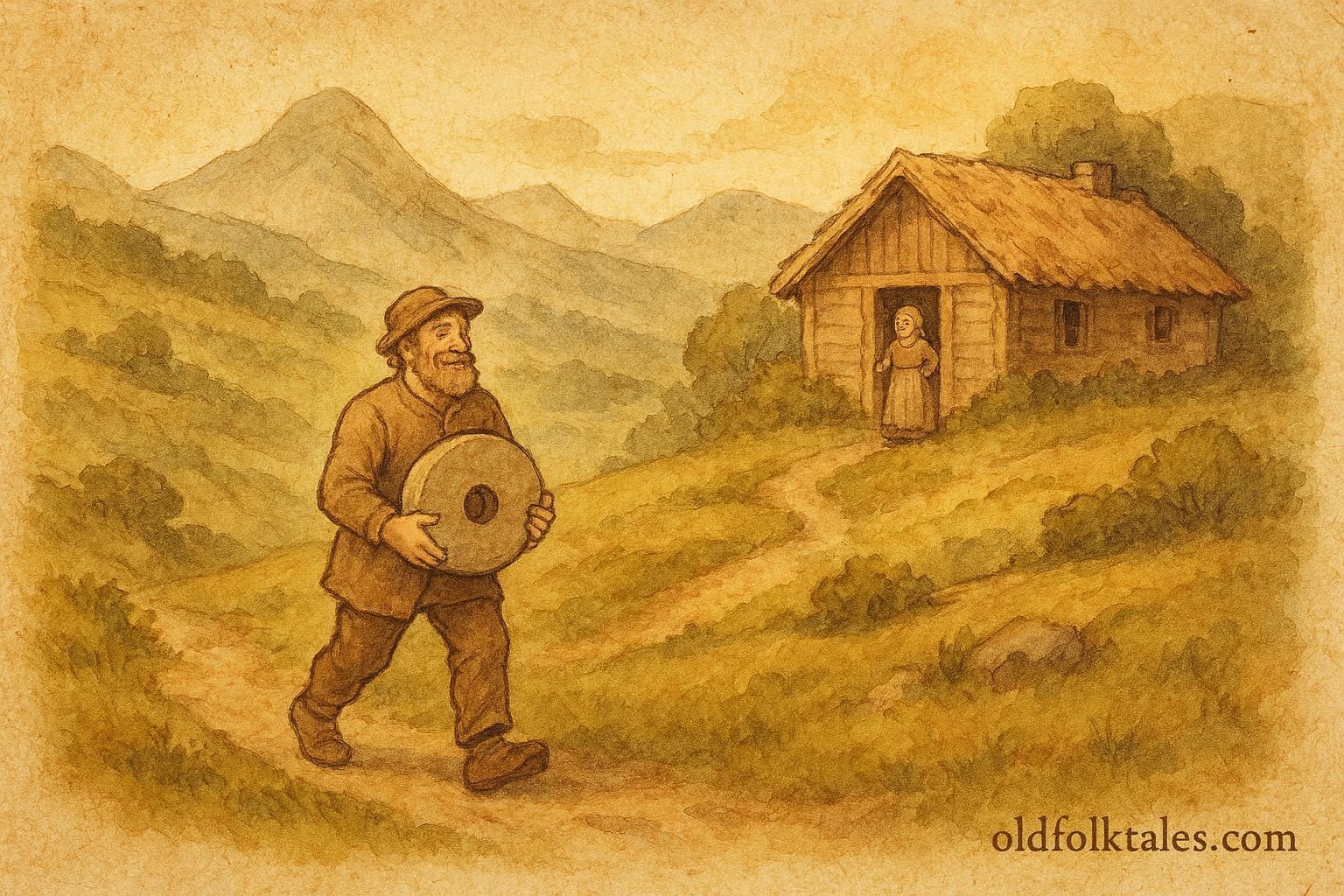
Encouraged by her unwavering support, Gudbrand continued his trades along the hillside. Next, he exchanged the pig for a goose, then the goose for a rooster, then the rooster for a hen, and finally, the hen for a humble grindstone. Each step seemed to reduce the material value of his possessions, yet each time he returned home, his wife praised his decisions without complaint.
“You are clever, Gudbrand,” she said, smiling at each exchange. “Though the items change, your intentions are sound. Our lives are richer for your care and thoughtfulness.”
The neighbors, hearing of Gudbrand’s unusual trades, shook their heads in disbelief. “He has traded a horse for a grindstone?” they murmured. “Surely he has lost his wits!”
But in Gudbrand’s home, there was no discord. Each trade, while seemingly foolish to outsiders, became a lesson in trust, perspective, and contentment. His wife’s approval reminded him that value was not only measured by wealth or usefulness but by the love and confidence shared between two people who truly understood one another.
By the time Gudbrand returned from his final trade, the grindstone in hand, the journey had transformed from a simple errand into a story of mutual respect and partnership. The grindstone, though modest, represented the strength of a marriage rooted in trust, the ability to see beyond immediate material gain, and the joy of shared perspective.
The story of Gudbrand on the Hillside spread throughout the village and beyond. People laughed at the humor in the trades but also marveled at the deeper lesson: in a world often obsessed with wealth, success, and comparison, true contentment comes from understanding, support, and the quiet wisdom of those who stand beside you.
Gudbrand and his wife lived on, continuing their daily life with laughter and trust, showing that happiness often lies not in possessions but in perspective and the strength of loving partnership.
Moral Lesson
This Norwegian folktale teaches that contentment, trust, and unconditional support in relationships outweigh material wealth. Even seemingly foolish decisions can lead to harmony and happiness when guided by understanding and perspective.
Knowledge Check
- Who is Gudbrand in the folktale?
Gudbrand is a hardworking Norwegian farmer who demonstrates patience and cleverness in his trades. - What does Gudbrand trade on his journey?
He trades his horse for a cow, then a pig, a goose, a rooster, a hen, and finally a grindstone. - How does Gudbrand’s wife respond to his trades?
She praises and trusts his decisions, showing support and contentment at every step. - What is the main theme of “Gudbrand on the Hillside”?
The story emphasizes trust, contentment, perspective, and the strength of marriage. - Why do the neighbors react negatively to Gudbrand’s trades?
They view the trades as foolish and diminishing in value, not understanding the wisdom behind them. - What does the grindstone symbolize in the story?
It represents humility, contentment, and the enduring value of trust and partnership over material wealth.
Source: Norske Folkeeventyr (1841)
Cultural Origin: Norwegian folklore